
Constantin von Tischendorf
German theologian and biblical scholar
About Constantin von Tischendorf
Lived 1815 – 1874 (aged 59). Constantin von Tischendorf was a German protestant theologian, new Testament scholar, hebraist, writer, editor and theologian.
Lobegott Friedrich Constantin (von) Tischendorf (18 January 18157 December 1874) was a German biblical scholar. In 1844, he discovered the world's oldest and most complete Bible dated to around the mid-4th century and called Codex Sinaiticus after Saint Catherine's Monastery at Mount Sinai.
Tischendorf was made an honorary doctor by the University of Oxford on 16 March 1865, and by the University of Cambridge on 9 March 1865 following his discovery. While a student gaining his academic degree in the 1840s, he earned international recognition when he deciphered the Codex Ephraemi Rescriptus, a 5th-century Greek manuscript of the New Testament.
Early life and education
Tischendorf was born in Lengenfeld, Saxony, the son of a forensic physician. After attending primary school in Lengenfeld, he went to grammar school in nearby Plauen. Despite his father's death in 1835 and his mother's just a year later, he was still able to achieve his doctorate in 1838,
In 1845 before he left paris, decipherment of the palimpsest Codex Ephraemi Syri Rescriptus and the Old Testament were completed. His success in dealing with a manuscript that, having been over-written with other works of Ephrem the Syrian, had been mostly illegible to earlier collators, made him more well known, and gained support for more extended critical expeditions. He now became professor extraordinarius at Leipzig, where he was married in 1845. He also began to publish Reise in den Orient, an account of his travels in the east (in 2 volumes, 1845–46, translated as Travels in the East in 1847). Even though he was an expert in reading the text of a palimpsest (this is a document where the original writing has been removed and new writing added), he was not able to identify the value or meaning of the Archimedes Palimpsest, a torn leaf of which he held and after his death was sold to the Cambridge University Library.
Tischendorf briefly visited the Netherlands in 1841 and England in 1842. In 1843 he visited Italy for thirteen months, before continuing on to Egypt, Sinai, and the Levant, returning via Vienna and Munich.
Discovery of the Codex Sinaiticus Bible manuscripts
In 1844 Tischendorf travelled the first time to Saint Catherine's Monastery at the foot of Mount Sinai in Egypt, where he found a portion of what would later be hailed as the oldest complete known New Testament.
Of the many pages which were contained in an old wicker basket (the kind that the monastery hauled in its visitors as customary in unsafe territories) he was given 43 pages containing a part of the Old Testament as a present. He donated those 43 pages to King Frederick Augustus II of Saxony (reigned 1836–1854), to honour him and to recognise his patronage as the funder of Tischendorf's journey. (Tischendorf held a position as Theological Professor at Leipzig University, also under the patronage of Frederick Augustus II.) Leipzig University put two of the leaves on display in 2011.
Tischendorf reported in his 1865 book Wann Wurden Unsere Evangelen Verfasst, translated to English in 1866 as When Were Our Gospels Written in the section "The Discovery of the Sinaitic Manuscript" that he found, in a trash basket, forty-three sheets of parchment of an ancient copy of the Greek Old Testament, reporting that the monks were using the trash to start fires. And Tischendorf, horrified, asked if he could have them. He deposited them at the University of Leipzig, under the title of the Codex Friderico-Augustanus, a name given in honour of his patron, Frederick Augustus II of Saxony, king of Saxony. The fragments were published in 1846, although Tischendorf kept the place of discovery a secret.
Many have expressed skepticism at the historical accuracy of this report of saving a 1500-year-old parchment from the flames. J. Rendel Harris referred to the story as a myth. The Tischendorf Lesebuch (see References) quotes that the Librarian Kyrillos mentioned to Tischendorf that the contents of the basket had already twice been submitted to the fire. The contents of the baskets were damaged scriptures, the third filling apparently, so cited by Tischendorf himself.[see Tischendorf Lesebuch, Tischendorf's own account]. In 1853 Tischendorf made a second trip to the Syrian monastery but made no new discoveries. He returned a third time in January 1859 under the patronage of Tsar Alexander II of Russia with the active aid of the Russian government to find more of the Codex Frederico-Augustanus or similar ancient Biblical texts. On 4 February, the last day of his visit, he was shown a text which he recognized as significant – the Codex Sinaiticus – a Greek manuscript of the complete New Testament and parts of the Old Testament dating to the 4th century.
Tischendorf persuaded the monks to present the manuscript to Tsar Alexander II of Russia, at the cost of the Tsar it was published in 1862 (in four folio volumes). Those ignorant of the details of his discovery of the Codex Sinaiticus accused Tischendorf of buying manuscripts from ignorant monastery librarians at low prices. Indeed, he was never rich, but he staunchly defended the rights of the monks at Saint Catherine's Monastery when he persuaded them eventually to send the manuscript to the Tsar. This took approximately 10 years because the abbot of St Catherines had to be re-elected and confirmed in office in Cairo and in Jerusalem, and during those 10 years no one in the monastery had the authority to hand over any documents. However the documents were handed over in due course following a signed and sealed letter to the Tsar Alexander II (Schenkungsurkunde). Even so, the monks of Mt. Sinai still display a receipt-letter from Tischendorf promising to return the manuscript to them in the case that the donation can not be done. This token-letter had to be destroyed, following the late issue of a "Schenkungsurkunde". This donation act regulated the Codex exchange with the Tsar, against 9000 Rubels and Rumanian estate protection. The Tsar was seen as the protector of Greek-Orthodox Christians. Thought lost since the Russian revolution, the document (Schenkungsurkunde) has now resurfaced in St Petersburg 2003, and has also been long before commented upon by other scholars like Kurt Aland. The monastery has disputed the existence of the gift certificate (Schenkungsurkunde) since the British Library was named as the new owner of the Codex. Now following the late find of the gift certificate by the National Russian Library the existence cannot be disputed in earnest.
In 1869 the Tsar awarded Tischendorf the style of "von" Tischendorf as a Russian noble. 327 facsimile editions of the Codex were printed in Leipzig for the Tsar (instead of a salary for the three-year work of Tischendorf the Tsar gave him 100 copies for reselling) in order to celebrate the 1000th anniversary of the traditional foundation of the Rus' state in 862 with the publication of this most amazing find. Supporting the production of the facsimile, all made with special print characters for each of the 4 scribes of the Codex Sinaiticus, was shift work and contributed to Tischendorf's early demise due to exhausting work for months also during nights. Thus the Codex found its way to the Imperial Library at St. Petersburg. and of the Septuagint version of the Old Testament (7th edition, 1887); in 1852, amongst other works, his edition of the Codex Claromontanus. In 1859, he was named professor ordinarius of theology and of Biblical paleography, this latter professorship being specially created for him; and another book of travel, Aus dem heiligen Lande, appeared in 1862. Tischendorf's Eastern journeys were rich enough in other discoveries to merit the highest praise.
Besides his fame as a scholar, he was a friend of both Robert Schumann, with whom he corresponded, and Felix Mendelssohn, who dedicated a song to him. His colleague Samuel Prideaux Tregelles wrote warmly of their mutual interest in textual scholarship. His personal library, purchased after his death, eventually came to the University of Glasgow, where a commemorative exhibition of books from his library was held in 1974 and can be accessed by the public.
Death Lobegott Friedrich Constantin (von) Tischendorf died in Leipzig on 7 December 1874, aged 59.
Codex Sinaiticus
The Codex Sinaiticus contains a 4th-century manuscript of New Testament texts. Two other Bibles of similar age exist, though they are less complete: Codex Vaticanus in the Vatican Library and Codex Alexandrinus, currently owned by the British Library. The Codex Sinaiticus is deemed by some to be the most important surviving New Testament manuscript, as no older manuscript is as nearly complete as the Codex. The codex can be viewed in the British Library in London, or as a digitized version on the Internet.
Tischendorf's motivation
Throughout his life, Tischendorf sought old biblical manuscripts, as he saw it as his task to give theology a Greek New Testament that was based on the oldest possible manuscripts. He intended to be as close as possible to the sources. Tischendorf's greatest discovery was in the monastery of Saint Catherine on the Sinai Peninsula, which he visited in May 1844, and again in 1853 and 1859 (as Russian envoy).
In 1862, Tischendorf published the text of the Codex Sinaiticus for the 1000th Anniversary of the Russian Monarchy in both an illustrious four-volume facsimile edition and a less costly text edition, the latter to enable as many scholars as possible to have access to the contents of the Codex.
Tischendorf pursued a constant course of editorial labors, mainly on the New Testament, until he was broken down by overwork in 1873. Prof. (Leipzig University, Prof. of Theology) explained in a publication on Tischendorf's Letter that he was motivated to prove scientifically that the words of the Bible were trustworthily transmitted over the centuries.
Works
His magnum opus was the "Critical Edition of the New Testament."
The great edition, of which the text and apparatus appeared in 1869 and 1872, was called by himself editio viii; but this number is raised to twenty or twenty-one, if mere reprints from stereotype plates and the minor editions of his great critical texts are included; posthumous prints bring the total to forty-one. Four main recensions of Tischendorf's text may be distinguished, dating respectively from his editions of 1841, 1849, 1859 (ed. vii), and 1869–72 (ed. viii). The edition of 1849 may be regarded as historically the most important, from the mass of new critical material it used; that of 1859 is distinguished from Tischendorf's other editions by coming nearer to the received text; in the eighth edition, the testimony of the Sinaitic manuscript received great weight. The readings of the Vatican manuscript were given with more exactness and certainty than had been possible in the earlier editions, and the editor had also the advantage of using the published labours of his colleague and friend Samuel Prideaux Tregelles.
Of relatively lesser importance was Tischendorf's work on the Greek Old Testament. His edition of the Roman text, with the variants of the Alexandrian manuscript, the Codex Ephraemi, and the Friderico-Augustanus, was of service when it appeared in 1850, but, being stereotyped, was not greatly improved in subsequent issues. Its imperfections, even within the limited field it covers, may be judged by the aid of Eberhard Nestle's appendix to the 6th issue (1880).
Besides this may be mentioned editions of the New Testament apocrypha, De Evangeliorum apocryphorum origine et usu (1851); Acta Apostolorum apocrypha (1851); Evangelia apocrypha (1853; 2nd edition, 1876); Apocalypses apocryphae (1866), and various minor writings, partly of an apologetic character, such as Wann wurden unsere Evangelien verfasst? (When Were Our Gospels Written?; 1865; 4th edition, 1866, digitized by Google and available for e-readers), Haben wir den echten Schrifttext der Evangelisten und Apostel? (1873), and Synopsis evangelica (7th edition, 1898).
Facsimile of manuscripts Codex Ephraemi Syri rescriptus, sive Fragmenta Novi Testamenti, Lipsiae 1843 Codex Ephraemi Syri rescriptus, sive Fragmenta Veteris Testamenti, Lipsiae 1845 Notitia editionis codicis Bibliorum Sinaitici (Leipzig 1860) Anecdota sacra et profana (Leipzig 1861)
Editions of Novum Testamentum Graece Novum Testamentum Graece. Editio stereotypa secunda, (Lipsiae 1862) Novum Testamentum Graece. Editio Quinta, Lipsiae 1878 Novum Testamentum Graece. Editio Septima, Lipsiae 1859
Editio Octava Gospels: Novum Testamentum Graece: ad antiquissimos testes denuo recensuit, apparatum criticum omni studio perfectum, vol. I (1869) Acts–Revelation: Novum Testamentum Graece. Editio Octava Critica Maior, vol. II (1872) Prolegomena I–VI: Novum Testamentum Graece. Editio Octava Critica Maior, vol. III, Part 1 (1884) Prolegomena VII–VIII: Novum Testamentum Graece. Editio Octava Critica Maior, vol. III, Part 2 (1890) Prolegomena IX–XIII: Novum Testamentum Graece. Editio Octava Critica Maior, vol. III, Part 3 (1894) Novum Testamentum graece: recensionis Tischendorfianae ultimae textum. Lipsiae 1881
LXX Vetus Testamentum Graece iuxta LXX interpretes: Vetus Testamentum Graece iuxta LXX (Volume 1) Vetus Testamentum Graece iuxta LXX interpretes: Vetus Testamentum Graece iuxta LXX (Volume 2)
His publications continued
Doctrina Pauli apostoli de vi mortis Christi satisfactoria. Leipzig, 1837 Google Fritz der junge Mystiker, oder die drei letzten Festzeiten aus seinem Leben...: eine biographische Skizze. Leipzig, Disputatio de Christo, pane vitae, sive de loco Evang. Ioann. c. VI. vv. 5159 Leipzig, 1839 Die Geissler: namentlich die große Geißelfahrt nach Straßburg im Jahre 1349. Leipzig, 1840 De ev. Matth. c. 19. v. 16 et 39. Leipzig, 1840 De recensionibus quas dicunt textus Novi Testamenti ratione potissimum habita Scholzii: dissertatio historica exegetica critica. Leipzig, 1840 [Hochschulschrift] Novum Testamentum Graece / Ad Antiquos Testes Recensuit Lectionesque Variantes Elzeviriorum Stephani Griesbachii Notavit Constantinus Tischendorf. Paris, 1842 Hē Kainē Diathēkē / In Antiquis Testibus Textum Versionis Vulgatae Latinae Indagavit Lectionesque Variantes Stephani Et Griesbachii Notavit V. S. Venerabili Jager in Consilium Adhibito Constantinus Tischendorf. Paris, 1842 Codex Ephraemi Syri rescriptus sive fragmenta utriusque testamenti. T.1. Fragmenta Veteris testamenti, T. 2. Fragmenta Novi testamenti. Leipzig, 1843 Weihnachtspredigt ... in Lengefeld. Leipzig, 1845 Monumenta sacra inedita sive reliquiae antiquissimae textus Novi testamenti Graeci: ex novum plus mille annorum codicibus per Europam dispersis. Leipzig, 1846 Codex Friderico-Augustanus sive fragmenta Veteris Testamenti: e codice Graeco, omnium qui in Europa supersunt facile antiquissimo; in Oriente detexit, in patriam attulit. Leipzig, 1846 De Israelitarum per mare rubrum transitu: cum tabula. Leipzig, 1847 Evangelium Palatinum ineditum sive reliquiae textus Evangeliorum Latini ante Hieronymum versi: ex Codice Palatino Purpureo quarti vel quinti p. Chr. saeculi. Leipzig, 1847 Der Geist der Wahrheit: Zeitpredigt am Sonntag Cantate den 6. Mai 1849 in der Universitätskirche zu Leipzig gehalten. Leipzig, 1849 Novum Testamentum: Latine interprete Hieronymo; ex celeberrimo codice Amiatino omnium et antiquissimo et praestantissimo. Leipzig, 1850 Acta apostolorum apocrypha. Leipzig, 1851 Google Synopsis evangelica: ex quattuor evangeliis ordine chronologico concinnavit. Leipzig, 1851 Google-USA* (5. Aufl. 1884) De evangeliorum apocryphorum origine et usu. In: Verhandelingen / uitg. door het Haagsche Genootschap tot Verdediging van de christelijke Godsdienst, Bd. 12, Den Haag, 1851 Codex Claromontanus sive Epistulae Pauli omnes Graece et Latine: ex Codice Parisiensi celeberrimo nomine Claromontani plerumque dicto sexti ut videtur post Christum saeculi. Leipzig, 1852 Evangelia apocrypha: adhibitis plurimis codicibus graecis et latinis maximam partem nunc primum consultis atque ineditorum copia insignibus. Leipzig, 1853 Google Editio Altera 1874: Google-USA* Novum Testamentum Triglottum: graece, latine, germanice; graecum textum addito lectionum variarum delectu recensuit, latinum Hieronymi notata Clementina lectione ex auctoritate codicum restituit, germanicum ad pristinam lutheranae editionis veritatem revocavit. Leipzig, 1854 Anecdota sacra et profana ex oriente et occidente allata sive notitia codicum Graecorum, Arabicorum, Syriacorum, Copticorum, Hebraicorum, Aethiopicorum, Latinorum: cum excerptis multis maximam partem Graecis et 35 scripturarum antiquissimarum speciminibus. Leipzig, 1855 Google Editio repetita 1861: Michigan, Google, Google Pastor: Graece; ex fragmentis Lipsiensibus. Leipzig, 1856 Novum Testamentum Graece et Latine: Graecum textum addito lectionum variarum delectu rec.; Latinum Hieronymi notata Clementina lectione ex auct. codicum. Leipzig, 1858 Notitia editionis Codicis Bibliorum Sinaitici auspiciis imperatoris Alexandri II. susceptae. Leipzig, 1860 Aus dem heiligen Lande: nebst fünf Abbildungen in Holzschnitt und einer lithographirten Tafel. Leipzig, 1862 Vorworte zur sinaitischen Bibelhandschrift zu St. Petersburg : unter den Auspicien seiner Kaiserlichen Maiestät Alexander II. dem Dunkel entzogen, nach Europa überbracht, zur Hebung und Verherrlichung christlicher Wissenschaft. Leipzig, 1862 Novum Testamentum Sinaiticum sive Novum Testamentum cum Epistola Barnabae et Fragmentis Pastoris : ex codice Sinaitico ... Leipzig, 1863 Die Anfechtungen der Sinai-Bibel. Leipzig, 1865 Google Aus Dem Heiligen Lande. Leipzig, 1865 Google Wann wurden unsere Evangelien verfasst? Leipzig, 1865 Google, 2. Expl. Google Novum Testamentum Graece: ex sinaitico codice omnium antiquissimo vaticana itemque Elzeviriana lectione notata. Leipzig, 1865 Apocalypses apocryphae Mosis, Esdrae, Pauli, Johannis, item Mariae Dormitio: additis Evangeliorum et actuum Apocryphorum supplementis. Leipzig, 1866 Internet Archive Internet Archive Appendix Codicum celeberrimorum Sinaitici, Vaticani, Alexandrini cum imitatione ipsorum antiqua manu scriptorum. Leipzig, 1867 Philonea: inedita altera, altera nunc demum recte ex vetere scriptura eruta. Leipzig, 1868 Internet Archive Responsa ad calumnias romanas: item supplementum novi testamenti ex sinaitico codice anno 1865 editi. Leipzig, 1870 Novum Testamentum graece: ad antiquissimos testes denuo recensuit, apparatum. Leipzig, 1869–1872. 1. Band 1869 Google-USA*, 2. Band 1872 Google-USA* Die Sinaibibel, ihre Entdeckung, Herausgabe und Erwerbung. Leipzig, 1871 Google-USA* Die evangelische Alliance-Deputation an Kaiser Alexander zu Friedrichshafen: zur Abwehr der groben Entstellungen und Verleumdungen des Herrn von Wurstemberger (zu Bach bei Bern). Leipzig, 1872 Clementis Romani epistulae. Ad ipsius codicis alexandrini fidem ac modum repetitis curis edidit Constantinus de Tischendorf. Leipzig, 1873. Internet Archive Haben wir den ächten Schrifttext der Evangelisten und Apostel? Leipzig, 1873 Google-USA* (2. Aufl.) Liber Psalmorum: hebraicus atque latinus ab Hieronymo ex hebraeo conversus. Leipzig, 1874
Cooperation
Textum ... recensuit, brevem apparatum criticum una cum variis lectionibus Elzevirorum, Knapii, Scholzii, Lachmanni subjunxit, argumenta et locos parallelos indicavit, commentationem ... edd. Stephanicae tertiae atque Millianae, Matthaeianae, Griesbachianae praemisit Aenoth. Frid. Const. Tischendorf. Leipzig, 1841 Clementinorum Epitomae duae: altera edita correctior, inedita altera nunc primum integra ex codicibus Romanis et excerptis Tischendorfianis, cura Alberti Rud. Max. Dressel. Accedunt Friderici Wieseleri Adnotationes criticae ad Clementis Romani quae feruntur homilias. Leipzig, 1859 Internet Archive Ad Vetus Testamentum Graecum ex auctoritate Sixti V. Pont. Max. a. 1587 editum a Leandro van Ess quoad textum accuratissime recusum trecentis annis post editionem originalem novis curis iteratum prolegomena et epilegomena. Bredt, 1887 Novum Testamentum : Constantin Tischendorf: griechisch, lateinisch, englisch, Ostervald: französisch, Martin Luther, DeWette, Richard Nagel: deutsch ... Hrsg. Eugen Niethe Berlin, 1891
Second Author
Ezra Abbot: The late Professor Tischendorf. Aus: The Unitarian Review and Religious Magazine. März 1875 (Festschrift Konstantin von Tischendorf) Caspar René Gregory: Tischendorf, Lobegott Friedrich Constantin. In: Allgemeine Deutsche Biographie. Band 38. Duncker & Humblot, Leipzig 1894, S. 371–373
Don’t just read it —
keep it.
Full-length biographies made to live with: read them, listen on the way to work, watch them tonight.
- E-book
- Audio
- Video
Instant download · yours to keep · every purchase keeps this site free
Important facts
People in Constantin von Tischendorf's life
Named in this biography and alive at the same time


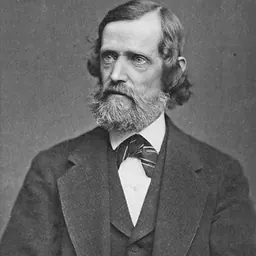
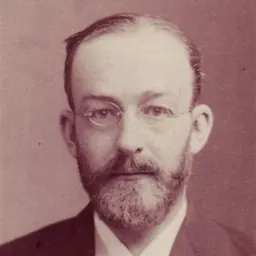


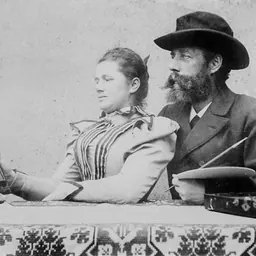
Related people
Same field, nearest in time
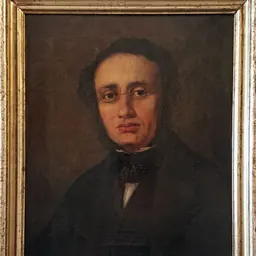


Contemporaries
People whose lives overlapped Constantin von Tischendorf's




Frequently asked questions
Who was Constantin von Tischendorf?
German theologian and biblical scholar (1815-1874)
When was Constantin von Tischendorf born?
Constantin von Tischendorf was born on 18 January 1815 in Lengenfeld, Leipzig.
When did Constantin von Tischendorf die?
Constantin von Tischendorf died on 7 December 1874 in Leipzig.
What was Constantin von Tischendorf's occupation?
Constantin von Tischendorf was a protestant theologian, new Testament scholar, hebraist, writer, editor and theologian.
What nationality was Constantin von Tischendorf?
Constantin von Tischendorf was German.
Sources & further reading
· Wikipedia: Constantin von Tischendorf
· DBpedia: Constantin von Tischendorf
Cite this page
APA: Biography.guide. (2026). Constantin von Tischendorf. https://biography.guide/constantin-von-tischendorf/
MLA: "Constantin von Tischendorf." Biography.guide, https://biography.guide/constantin-von-tischendorf/.
Chicago: "Constantin von Tischendorf." Biography.guide. https://biography.guide/constantin-von-tischendorf/.
Data last updated: 2026-09-20 · Spot an error? Report a correction.
Page generated 2026-09-27 05:24 UTC