
About Constantin C. Arion
Lived 1855 – 1923 (aged 68). Constantin C. Arion was a Romanian politician, diplomat and lawyer.
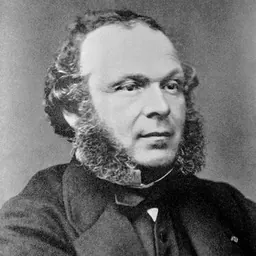
Constantin C. Arion (also known as Costică Arion; June 18, 1855 – June 27, 1923) was a Romanian politician, affiliated with the National Liberal Party, the Conservative Party and, after 1918, the People's Party. He served two terms as Minister of Religion and Public Instruction, one term as Minister of Agriculture, and another one as Interior Minister before World War I. His career peaked in 1918, when he was Minister of Foreign Affairs.
A young lawyer who supported political reform, Arion moved progressively to the right, and, ca. 1885, became involved with the political club Junimea. As a Conservative policymaker and disciple of Alexandru Marghiloman, he rewrote legislation on education reform and brought the Romanian Orthodox Church under the control of its high clergy. Like Marghiloman, Arion supported the Central Powers during most of World War I, a position which seemed to carry most weight during the 1918 armistice. His participation in the Marghiloman government recovered for Romania the region of Bessarabia, but the subsequent return of Ententist forces made him a political suspect. He spent the remainder of his life as a marginal.
In addition to his presence in political life, Arion was an art patron, university professor, and philanthropist. He was the brother of Virgil Arion, and the father of Dinu C. Arion.
Biography Early life and career The Arions were an old Wallachian family, first attested in Brăila ca. 1696, and integrated into the boyar aristocracy in the mid-18th century. Its reputation was stained by two members: Constantin Eracle Arion and Anton I. Arion, who had committed massive bank fraud throughout the early 1870s.
Constantin (born in Bucharest on June 18, 1855) and Virgil C. Arion were the sons of Appellate Judge Constantin Arion and Sevastița, née Urlățeanu. Constantin C. followed in his father's footsteps, graduating in Law from the University of Paris (Doctorate in 1876) and in Political Science from Sciences Po. and became editor of the academic journal, Revista Critică de Drept, Legislație și Jurisprudență ("Critical Review of Law, Legislation and Jurisprudence"). Virgil had a similar career in law and academia, while a third brother, Scarlat Arion, was a landowner and a Romanian consul in Bitola.
C. C. Arion made his debut in politics as a National Liberal, ran in the elections of 1884, and was elected to the Assembly of Deputies in Ilfov County. He first attended Junimea club meetings around 1885, when he met and befriended the Junimist leader, Titu Maiorescu. The group had past its prime, and, as Maiorescu recorded in his private notes, the sessions attended by Arion were "rather dull". The conservative association had been traditionally hostile toward Arion's "unproductive" and "lawyerly" liberalism. As Junimist poet-critic Mihai Eminescu once wrote, the Arion brothers were "the runts, the intellectual and moral plebs... everything basest and most degraded that one can expect to find in the cities of the Romanian nation".
In later years, Arion focused on his cultural projects. From 1896, he was president of the national school and public libraries board (Casa Şcoalelor), where he employed the services of poet George Coșbuc. Arion and Delavrancea both were celebrity guests at the Bucharest lecture tour of Joséphin Péladan, the French mystic and novelist (1898).
Conservative politico Returning to public life as a "constitutionalist" conservative, Arion joined Junimea and served as Minister of Religion and Public Instruction under Premier Petre P. Carp. His efforts centered on bringing the Romanian Orthodox Church under government control, with the purpose of regulating religious education. He oversaw the collecting and publishing historical documents, edited by Nicolae Iorga.
Arion made significant efforts to reverse the policies adopted by Spiru Haret, his National Liberal predecessor. He sacked Haret's favorites and replaced them with Junimea men, but also introduced legislation which made bureaucratic office incompatible with a teaching position. The two politicians also differed in matters of church policies. Haret had favored the married clergy over the elitist Romanian Synod, creating a Consistory to represent both sides. Arion reversed that reform, and unwittingly prolonged the conflict well into the 20th century.
After the Carp government was dissolved in 1901, Arion returned to academic life. He was still active with the constitutionalist Junimists, worked as editorial adviser for their magazine, Convorbiri Literare, and, in 1907, followed them into their merger with the Conservative Party. By also appointing Arion at Convorbiri Literare, Maiorescu was reaffirming his directorial role. Arion and other new staff members were supposed to undermine the editorial policies of Ioan Bogdan and Mihail Dragomirescu. Maiorescu dismissed Bogdan's previous management as a triumph of mârlănie ("churliness"), and hoped to reverse the trend.
This period saw Arion networking and organizing political cabals. He personally intervened to ensure the full-time employment of aspiring jurists, including Paul Negulescu and his own nephew, Ion Peretz. At the time, Arion also made public his approval of Romanian irredentism, in respect to Bessarabia region (taken by the Russian Empire in 1812). He gave his approval to commemorative marches, and engaged in a publicized row with anti-irredentist Conservatives, such as Mayor Dimitrie Greceanu.
World War I and after Arion was close to the Conservative leaders Carp and Alexandru Marghiloman, and detested their competitor, Nicolae Filipescu. As noted by his Conservative colleagues, Arion was "an optimist" committed to the Entente, but followed Marghiloman's lead.
Eventually, in June 1916, the government announced that Romania had joined the Entente, and a trans-party war cabinet was suggested. Arion refused to be part of this project, declaring his sympathy for the Central Powers, and the Conservative Party split in half. Constantin's brother Virgil and his son, Dinu (who was secretary of the Conservative Study Circle) shared his ideas on national politics.
Following the German advance into southern Romania, C. C. Arion remained behind enemy lines, in Bucharest; the National Liberal cabinet and its Filipescu Conservative backers had relocated to a temporary home in Iaşi. He still represented Marghiloman's Conservative Club: traveling to Focșani, on the front line, he met representatives of the legitimate government and communicated to them the situation in Bucharest. Virgil Arion was a more radical Germanophile: he agreed to take over as Minister of Public Instruction in the puppet government of Lupu Kostaki, answering to the occupiers.
After the shock of the October Revolution and the Treaty of Brest-Litovsk, Romania yielded to the Central Powers. Marghiloman was appointed Premier, and agreed to sign Romania's withdrawal from the war (May 1918). Arion, as Marghiloman's "second fiddle" and Foreign Minister up until October 24, was one of the signatories of the Treaty of Bucharest. He was privately enthusiastic about the turn of events, since he believed that Romania would recover at the same time some of its irredenta, claimed from the Russian Republic, and the territories held by the Central Powers. His son followed in his footsteps, running on the Conservative list in the 1918 elections. In early 1919, Virgil Arion was arrested by the Romanian authorities, on charges of collaborationism. He was freed in short while, but virtually disappeared from public life until 1930. Despite his own displays of loyalty, C. C. Arion was also marginalized as a Germanophile by the returning National Liberals. He died in Bucharest on June 27, 1923.
Don’t just read it —
keep it.
Full-length biographies made to live with: read them, listen on the way to work, watch them tonight.
- E-book
- Audio
- Video
Instant download · yours to keep · every purchase keeps this site free
Important facts
People in Constantin C. Arion's life
Named in this biography and alive at the same time

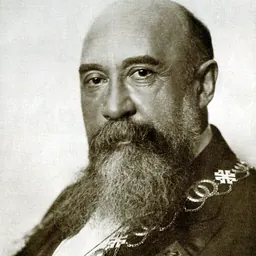


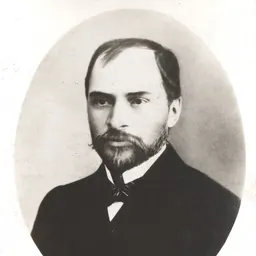


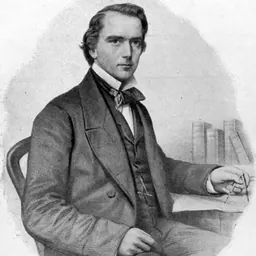
Related people
Same field, nearest in time




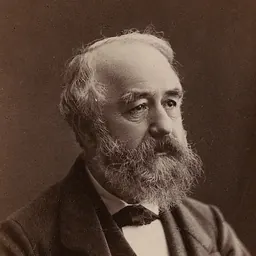
Contemporaries
People whose lives overlapped Constantin C. Arion's




Frequently asked questions
Who was Constantin C. Arion?
Romanian politician
When was Constantin C. Arion born?
Constantin C. Arion was born on 18 June 1855 in Bucharest.
When did Constantin C. Arion die?
Constantin C. Arion died on 27 June 1923 in Bucharest.
What was Constantin C. Arion's occupation?
Constantin C. Arion was a politician, diplomat and lawyer.
What nationality was Constantin C. Arion?
Constantin C. Arion was Romanian.
Sources & further reading
· Wikipedia: Constantin C. Arion
· DBpedia: Constantin C. Arion
Cite this page
APA: Biography.guide. (2026). Constantin C. Arion. https://biography.guide/constantin-c-arion/
MLA: "Constantin C. Arion." Biography.guide, https://biography.guide/constantin-c-arion/.
Chicago: "Constantin C. Arion." Biography.guide. https://biography.guide/constantin-c-arion/.
Data last updated: 2026-09-20 · Spot an error? Report a correction.
Page generated 2026-09-27 05:21 UTC