
Constand Viljoen
South African military officer and politician
About Constand Viljoen
Lived 1933 – 2020 (aged 86). Constand Viljoen was a South African politician, military personnel and commander.
General Constand Laubscher Viljoen (28 October 19333 April 2020) was a South African Army officer and politician. As the Chief of the South African Defense Forces from 19801985, he oversaw military attacks on the anti-apartheid movement both within South Africa and neighbouring countries. During South Africa's transition from apartheid to democracy, he co-founded the Afrikaner Volksfront, a separatist group, and planned to lead an armed insurgency. After participating in discussions with Nelson Mandela and leading a failed armed incursion in Bophuthatswana, Viljoen left the Volksfront and founded the Freedom Front political party. His decision to participate in elections was instrumental in quashing the plans of white separatists to pursue armed insurgency. He served seven years in parliament.
Early life and education In 1933, Viljoen and his identical twin brother, Abraham (Braam), were born in the town of Standerton, Mpumalanga. Their ancestors were 17th century European settlers.
Constand and Braam grew up on Potfontein, the family farm. Viljoen graduated from Standerton High School in 1951. He was awarded the Master Gunner badge (crossed-barrels) in 1984.
Angola
Viljoen was the senior SADF military officer directing Operation Savannah in 1975.
Viljoen is credited with having planned the first major airborne assault in South African military history, the Battle of Cassinga, in 1978 in Angola. Despite his rank, Viljoen was present, offering what was described as a "swashbuckling" front-line leadership, which won him the respect of many fellow soldiers. According to Viljoen, it was an attack on a base belonging to SWAPO, the Namibian independence movement. In 2007, Viljoen stated that some civilians were present but that most of the dead were fighters. Of the black soldiers in the SADF, he once stated: "If they can fight for South Africa, then they can vote for South Africa." Viljoen considered the uMkhonto weSizwe (MK), the armed wing of the African National Congress, to be weak, believing that the SADF could indefinitely hold them off.
While Viljoen was chief of the SADF, Botha directed the army to undertake operations with the security police against the ANC in the townships and in neighboring countries. Zimbabwe, Botswana, and Mozambique. In June, Viljoen led a Volksfront protest outside the negotiations for the South African constitution. Despite his attempts to control the crowd, they ignored him and stormed the Kempton Park World Trade Centre. He told General George Meiring, "You and I and our men can take this country in an afternoon". Meiring responded: "but what do we the morning after the coup?"
In January 1994, Mandela stated that the Afrikaaners would not be permitted to create a homeland. Viljoen stated for the first time that the Volksfront was willing to use violence. At the time, polls showed that most Afrikaaners did not support a separate homeland. In March 1994, Viljoen led an incursion by several thousand Volksfront militia into Bophuthatswana, a bantustan. Viljoen was attempting to support the government against protesters who wanted the bantustan to join the Republic of South Africa. Despite being requested not to participate in the action because of extremist views, militants of the AWB also advanced into Bophuthatswana, sparking clashes with the security forces. After their efforts in Bophuthatswana failed, Viljoen left the Volksfront
Viljoen helped to convince other white right-wingers against pursuing violence during the transition from apartheid to democracy. He later credited Mandela as the primary reason for this decision saying: "The important thing when you sit down and negotiate with the enemy is the character of the people you have across the table from you and whether they carry their people's support. Mandela had both."
In post-apartheid South Africa
In the 1994 general election, the Freedom Front, under the leadership of Viljoen, received 2.2% of the national vote and nine seats in the National Assembly. As the VF became the strongest party outside Nelson Mandela's Government of National Unity, as the provisional 1993 Constitution required the participation of all parties over 5% of the vote, Viljoen became the de facto leader of the opposition in South Africa until the NP's departure from government in 1996, although he did not officially hold the position.
In August 1996, Viljoen appeared before the Truth and Reconciliation Commission (TRC) and said that both sides had committed human rights violations. He said that Afrikaaners were responsible for not pressuring their leaders to negotiate with the ANC sooner. He also said that the TRC should be careful not to focus on past transgressions to avoid exacerbating conflict. In December 1996, Mandela expanded the eligibility for amnesty applications to the TRC. Previously, people could apply for amnesty for acts committed until 10 December 1993, but that was extended to 10 May 1994. As a result, Viljoen was able to apply for amnesty for his abandoned plan to mount an insurgency in the period before the 1994 election.
Although his supporters were at odds with the government and the ANC, Viljoen praised Mandela on the occasion of his retirement from politics in 1999, ending his Parliamentary speech speaking in Mandela's native language, Xhosa: "Go and have yourself a well-earned rest. Go rest in the shadow of a tree at your home."
In 2001, Viljoen handed over the leadership of the Freedom Front to Pieter Mulder and retired from politics, citing his frustration working with a parliament dominated by the ANC. On the occasion of his retirement from politics, the South African government recognised him for preventing bloodshed during the transition from apartheid to democracy.
In 2008 Viljoen, aged 74, put up what was described as a spirited fight against two would-be muggers, who were subsequently arrested.
In 2014, he criticized ANC leadership and South African democracy, saying: "President Nelson Mandela took his special brand of leadership to the grave with him."
Death
Viljoen died of natural causes on his farm in Ohrigstad, Limpopo, on 3 April 2020, age 86.
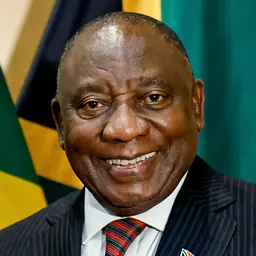
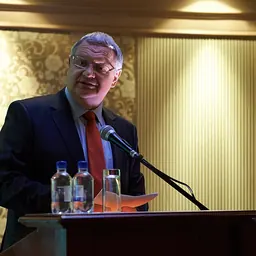
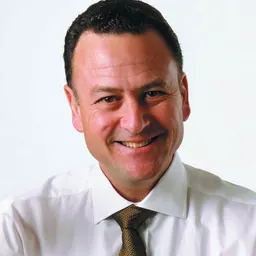
President Cyril Ramaphosa, the Nelson Mandela Foundation, and John Steenhuisen praised Viljoen for choosing to negotiate with the ANC instead of waging an insurgency, thus assisting in the transition from apartheid to democracy in South Africa. Former Democratic Alliance politician Tony Leon called Viljoen "one of the heroes of our democracy".
Awards and decorations
+ Proficiency badges
Don’t just read it —
keep it.
Full-length biographies made to live with: read them, listen on the way to work, watch them tonight.
- E-book
- Audio
- Video
Instant download · yours to keep · every purchase keeps this site free
Important facts
People in Constand Viljoen's life
Named in this biography and alive at the same time



Related people
Same field, nearest in time






Contemporaries
People whose lives overlapped Constand Viljoen's




Frequently asked questions
Who was Constand Viljoen?
South African military officer and politician (1933–2020)
When was Constand Viljoen born?
Constand Viljoen was born on 28 October 1933 in Standerton.
When did Constand Viljoen die?
Constand Viljoen died on 3 April 2020 in Ohrigstad.
What was Constand Viljoen's occupation?
Constand Viljoen was a politician, military personnel and commander.
What nationality was Constand Viljoen?
Constand Viljoen was South African.
Sources & further reading
Cite this page
APA: Biography.guide. (2026). Constand Viljoen. https://biography.guide/constand-viljoen/
MLA: "Constand Viljoen." Biography.guide, https://biography.guide/constand-viljoen/.
Chicago: "Constand Viljoen." Biography.guide. https://biography.guide/constand-viljoen/.
Data last updated: 2026-09-25 · Spot an error? Report a correction.
Page generated 2026-09-27 05:12 UTC