
About Conrad Baker
Lived 1817 – 1885 (aged 68). Conrad Baker was an American politician, lawyer, colonel, governor and jurist.
Conrad Baker (February 12, 1817 – April 28, 1885) was an American attorney, military officer, and politician who served as state representative, 15th lieutenant governor, and the 15th governor of the U.S. state of Indiana from 1867 to 1873. Baker had served in the Union Army during the American Civil War, rising to the rank of colonel, but resigned following his election as lieutenant governor, during which time he played an important role in overseeing the formation and training of states levies. He served as acting-governor for five months during the illness of Governor Oliver Morton, and was elevated to Governor following Morton's resignation from office. During Baker's full term as governor, he focused primitively on the creation and improvement of institutions to help veterans and their families that had been disaffected by the war. He also championed the post-war federal constitutional amendments, and was able to successfully advocate their acceptance.
Early life
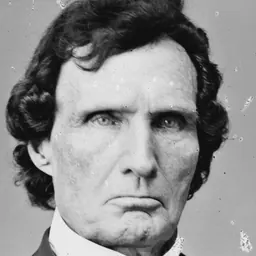
Family and background Conrad Baker was born in Franklin County, Pennsylvania, on February 12, 1817, the son of Conrad Baker, a Presbyterian minister, and Mary Winternheimer Baker. He worked on the family farm until age fifteen and attended common school. He then enrolled in Pennsylvania College in Gettysburg where he studied law, but quit before graduating. He continued to study law in the office of Thaddeus Stevens. He met Matilda Escon Sommers and the couple married in 1838. They had two children. Baker was admitted to the bar in 1839 and opened his own office in Gettysburg.
Early political career Bakers closed his practice in 1841, and moved his family west to settle in Evansville, Indiana. He opened a new law office there, and took an interest in the city's civics. In 1845 he ran as the Whig candidate for representative of Vanderburgh County in the Indiana House of Representatives. He served one one-year term before returning to his practice. He was elected to serve on a county court in 1852 but resigned in 1854. His brother, William Baker, had also become active in the local politics, and served four terms as major of Evansville during the same time period.
Baker was outspokenly anti-slavery, and following the break-up of the Whig party, he joined the newly formed Republican Party in 1854. At the state convention in 1856, he was nominated to run as lieutenant governor on the ticket with Oliver Morton a governor. The election was one of the most divisive in state history, with both sides making scathing attacks on the other. Despite the party's merger with several other third parties, the Republicans lost the election and Baker returned to his law practice in Evansville.
Baker led his regiment in defensive and garrison duty across the western theater of the war, and remained in regular communication with Governor Oliver Morton, who had become governor a few months earlier. Baker was most involved in coordinating supplies, and became a valuable organizer. Morton soon promoted him to serve as provost marshal of the state, and ordered him to return to Indianapolis to oversee operations. There he oversaw the formation of dozens of state regiments, tens of thousand of men, the shipment of tons of supplies, the distributions of weapons, and the management of the state arsenal. Another of Baker's acts as governor was to establish the governor's portrait collection. The assembly agreed to spend up to $200 per portrait for the creation of the collection. Baker then hired painters and sought out the families of the former governors to procure photos and paintings from which official portraits could be created.
Baker's most difficult goal to achieve was the ratification of the post-war amendments that, among other things, banned slavery and granted blacks the right to vote. His advocacy on the issues, though, managed to secure each of their ratifications, with the fourteenth amendment being the last ratified in 1869. The Democrats had resigned office en masse when the bill was put up for a vote to deny quorum, but the Republicans went ahead to approve the amendment. When the Democrats took the legislature in the following election, they revoked the ratification of the amendments, but it was too late and the federal government, which was Republican-dominated at the time, had already added them to the constitution.
Baker also advocated for African American rights through additional school reform. In 1869 he signed legislation which addressed an 1865 school law which prevented the establishment of public schools for non-white children. The new law extended current public school funding to establish schools for African Americans and repealed all laws inconsistent herewith.
Death and legacy
After Baker's term as governor expired he retired from public office and reopened his law office. His new partner was his former political opponent, Thomas Hendricks. After Hendricks was elected governor in 1872, Baker took on state attorney general Oscar B. Hord and Chief Justice of the Indiana Supreme Court Samuel Perkins as partners. The law firm was passed on to Baker's son, and has since become one of the leading law firms in the United States, Baker & Daniels LLP.
Baker remained active in public affairs and urged the state schools to grant equal opportunities. He became fairly active in the woman's suffrage movement and delivered an address to one of their meetings. He died on April 28, 1885, and was buried in Evansville, Indiana.
Don’t just read it —
keep it.
Full-length biographies made to live with: read them, listen on the way to work, watch them tonight.
- E-book
- Audio
- Video
Instant download · yours to keep · every purchase keeps this site free
Important facts
People in Conrad Baker's life
Named in this biography and alive at the same time

Related people
Same field, nearest in time




Contemporaries
People whose lives overlapped Conrad Baker's




Frequently asked questions
Who was Conrad Baker?
American politician (1817-1885)
When was Conrad Baker born?
Conrad Baker was born on 12 February 1817 in Franklin County.
When did Conrad Baker die?
Conrad Baker died on 28 April 1885 in Evansville.
What was Conrad Baker's occupation?
Conrad Baker was a politician, lawyer, colonel, governor and jurist.
What nationality was Conrad Baker?
Conrad Baker was American.
Sources & further reading
Cite this page
APA: Biography.guide. (2026). Conrad Baker. https://biography.guide/conrad-baker/
MLA: "Conrad Baker." Biography.guide, https://biography.guide/conrad-baker/.
Chicago: "Conrad Baker." Biography.guide. https://biography.guide/conrad-baker/.
Data last updated: 2026-09-20 · Spot an error? Report a correction.
Page generated 2026-09-27 05:20 UTC