
About Connie Zehr
Lived 1938 – 2025 (aged 86–87). Connie Zehr was a photographer, sculptor and artist.
Connie Zehr (January 17, 1938 – April 4, 2025) was an American installation artist whose work involved sand, clay, glass, and sculpture. Zehr was a key artist in the Los Angeles Light and Space Movement and was most notable for her mounded sand installations. One of Zehr's sand installations was exhibited at the 1975 Whitney Biennial. An extensive collection of Zehr's work is included in the Archives of American Art at the Smithsonian. Zehr often shares a memory of when she was 6 years old receiving gifts at Christmas. She recounts that her mother received colored pencils while Zehr received perfume. She remembers distinctly saying that she should have received the colored pencils because she was "an artist."
At 16 years old, and while in high school, Zehr lived in India for a short time while her father was there on a Point 4 program. While in India she helped a local artist in her studio. She credits this experience with being her first introduction to what an artist does.
While at Ohio State, Zehr met fellow sculptor David Elder who was a Teaching assistant in one of her courses and whom she married upon graduation.
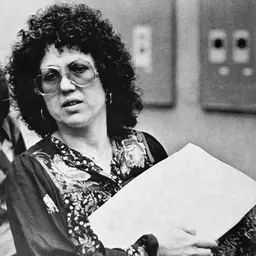
Early career In 1964, while pregnant with her first child, Zehr and her husband moved to Los Angeles where she found a community of artists working with unconventional materials and experimentation which would later define the Light and Space Movement. Zehr mentions her contemporaries at the time, Barry Le Va, Allen Ruppersberg, Robert Irwin, and Judy Chicago, using "a variety of materials in unusual ways." Zehr embraced this experimental process, dabbling in several emerging movement including earth art, conceptual art, feminist art, Op Art, and Minimalism. where she exhibited a large, elongated mound of sand.
In 1982, Zehr began teaching art at the Claremont Graduate University in Southern California while continuing to exhibit nationally and internationally. While at Claremont, Zehr began to expand her installation practice by incorporating glass into her temporary installations.
Installation process Zehr considers her installations as paintings with the floor being a large canvas. Before conceptualizing her installation, she needs to know the traffic flow of the room and where the doors are located because she says she prefers people to be able to walk around her installations. In her early work, Zehr would often create a grid on the floor using tape to mark the mounds and establish the work's diameter. Often she marked the major elements and then went back to fill them in.
Don’t just read it —
keep it.
Full-length biographies made to live with: read them, listen on the way to work, watch them tonight.
- E-book
- Audio
- Video
Instant download · yours to keep · every purchase keeps this site free
Important facts
People in Connie Zehr's life
Named in this biography and alive at the same time


Related people
Same field, nearest in time


Contemporaries
People whose lives overlapped Connie Zehr's




Frequently asked questions
Who was Connie Zehr?
American installation artist (born 1938)
When was Connie Zehr born?
Connie Zehr was born in 1938.
When did Connie Zehr die?
Connie Zehr died on 4 April 2025 in Horseheads.
What was Connie Zehr's occupation?
Connie Zehr was a photographer, sculptor and artist.
Sources & further reading
Cite this page
APA: Biography.guide. (2026). Connie Zehr. https://biography.guide/connie-zehr/
MLA: "Connie Zehr." Biography.guide, https://biography.guide/connie-zehr/.
Chicago: "Connie Zehr." Biography.guide. https://biography.guide/connie-zehr/.
Data last updated: 2026-09-20 · Spot an error? Report a correction.
Page generated 2026-09-27 05:24 UTC