
About Condy Raguet
Lived 1784 – 1842 (aged 58). Condy Raguet was an American diplomat, politician and businessperson.
Condy Raguet (January 28, 1784 – March 22, 1842) was the first chargé d'affaires from the United States to Brazil and a noted politician and free trade advocate from Philadelphia, Pennsylvania. Of French descent, Raguet was educated at the University of Pennsylvania. After graduating he began studying law but had to give up his studies after the death of his father. He briefly worked as supercargo for a counting house, before going into business for himself. He later worked as manager or president for several companies, the most notable being the Philadelphia Savings Fund Society. In 1816 Raguet read about the growth of savings banks in Great Britain and liked the idea; he approached other Philadelphia business associates and together they created the Society, the first savings bank in the United States.
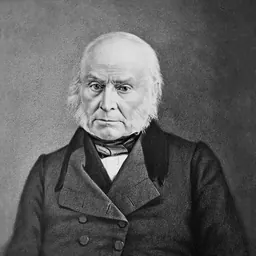
As a member of the Federalist Party Raguet was elected to the Pennsylvania House of Representatives in 1815 and to the Pennsylvania State Senate in 1818. In 1821 President James Monroe made Raguet consul to Brazil. After Brazil became independent, President John Quincy Adams made Raguet the chargé d'affaires to Brazil. In this post, Raguet became increasingly frustrated with Brazil's lack of response to complaints by the United States of its citizens being forced to work on Brazilian warships against their will. Raguet's communications with the Brazilian government became increasingly forceful and undiplomatic to the point that he once wrote to the U.S. State Department that he was so frustrated he could hardly consider the Brazilians a civilized people. Despite urges from Washington, D.C. to improve his approach to Brazil, Raguet abruptly left the country after the Imperial Brazilian Navy seized a former U.S. warship. Adams would later write that, despite having good intentions, Raguet's "rashness and intemperance" nearly "brought this country and Brazil to the very verge of war."
After Adams rejected any possibility of Raguet's returning to diplomatic work, Raguet returned to business in Philadelphia. Having his economic views shaped by the Panic of 1819, he became one of the most prominent advocates of free trade in the United States. He edited numerous journals relating to free trade and wrote and published works on the subject. The most notable was On Currency and Banking; published in 1839, Samuel J. Tilden called it "the best treatise on banking ever published in the country".
Biography Condy Raguet was born on January 28, 1784, in Philadelphia, Pennsylvania. Of French descent, Raguet was educated at the University of Pennsylvania and for eighteen months after graduating he studied law. He had to give up his studies after the death of his father and became a merchant for a counting house. In 1804 he was sent to Santo Domingo as supercargo for a ship. He spent four months there and on his return he wrote and published A Short Account of the Present State of Affairs in St. Domingo. Raguet returned for eight months in 1805 and again published a book about events on the island. On December 23, 1807, Raguet was married to Catherine S. Simmons.
In 1806, Raguet went into business and soon became the president and manager of several companies.
He was elected to the American Philosophical Society in 1822.
Philadelphia Savings Fund Society In 1816, while president of the Pennsylvania Company for Insurances on Lives and Granting Annuities, Raguet read journals and pamphlets about the growth of savings banks in Great Britain. Interested in the idea, he communicated the concept to some other businessmen he knew, and together they created the Philadelphia Savings Fund Society. The first savings bank in the United States, the Philadelphia Savings Fund Society would eventually grow into a respected Philadelphia institution that would last until 1992. Raguet was active in the early workings of the Philadelphia Savings Fund Society, working on committees to set up company operations, drafting by-laws, and creating a charter.
Raguet became the first chargé d'affaires from the United States to Brazil on October 29, 1825. One of the first issues he dealt with was the blockade of Argentine ports by the Imperial Brazilian Navy during the Cisplatine War.
Relations between Brazil and the United States were strained over the recruiting of United States seamen for Brazilian warships through fraud and coercion. United States citizens were enticed onto Brazilian ships and after the end of their voluntary enlistment period were forced to stay. Raguet became exhausted with how the Brazilian government never followed up its promises to investigate the complaints. The issue only got worse as United States merchant ships were seized by Brazil for attempting or intending to bypass the blockade. The crews of the ships were often manipulated into Brazilian service or imprisoned. Tensions over the issue continued to rise particularly after a US Navy commander, backed by force, procured the release of two detained Americans. Eventually the Brazilian Navy ordered all ships to immediately surrender all improperly detained United States citizens. Despite the order, Raguet was increasingly frustrated with what he felt was Brazil's purposeful delay in processing detained United States ships and citizens. After receiving approval from Secretary of State Henry Clay on his efforts, Raguet was emboldened and his notes to the Brazilian government became more forceful and undiplomatic.
After a letter from a Brazilian foreign minister requested that Raguet use more moderation in his communications, he wrote to Clay that the Brazilian government was offended by his communications, that he had lost his patience with them, and that he hardly considered the Brazilians a civilized people. By the end of 1826 copies of letters of Raguet's communications to the Brazilian government had reached the State Department in Washington, D.C. Henry Clay wrote back indicating it would be best to use "language firm and decisive, but at the same time temperate and respectful. No cause is ever benefited by the manifestation of passion, or by the use of harsh and uncourtious language." Responding to a request Raguet made to threaten to sever diplomatic relations with Brazil if they did not release their ships, Clay said "war or threats of war ought not to be employed as instruments of redress until after the failure of every peaceful experiment."
By early 1827 relations with Brazil improved after a new foreign minister took office, but that quickly changed in March when Brazil seized the USS Spark, a recently decommissioned U.S. warship. After a rebuffed offer to the sell the Spark to Brazil, the ship headed for Montevideo. On the way, the ship was seized by a Brazilian man-of-war and its crew imprisoned. Brazil demanded an explanation for what it said were irregularities in the Spark'''s activities and suspected the ship was a privateer going to join Argentina. Raguet didn't believe the Brazilians actually believed the Spark was a privateer, and felt that what he called "the most deliberate and high handed insult" against the United States was planned days in advance. The incident with the Spark was the last straw for Raguet. He sent a letter to the Brazilian government saying "that recent occurrences induce him to withdraw from the court of Brazil, and he therefore requests that his excellency will furnish him the necessary passports." He left his position as chargé d'affaires ended on April 16, 1827.
In 1836 he returned to the Philadelphia Savings Fund Society where he worked until his death a few years later.
After returning to the United States from Brazil, he became a publicist on free trade doctrines contributing to the Port-Folio and other periodicals. He also edited several journals relating to free trade, including The Free-Trade Advocate, The Examiner and The Financial Register. In the late 1830s he continued writing, authoring The Principals of Free Trade (1835) and On Currency and Banking (1839). On Currency and Banking, which was called "the best treatise on banking ever published in the country" by Samuel J. Tilden, was republished in Great Britain in 1839 and translated into French in 1840.
Published worksA Short Account of the Present State of Affairs in St. Domingo (1804)A Circumstantial Account of the Massacre in St. Domingo (1805)An Inquiry into the Causes of the Present State of the Circulating Medium of the United States (1815)The Principals of Free Trade (1835)On Currency and Banking'' (1839)
Don’t just read it —
keep it.
Full-length biographies made to live with: read them, listen on the way to work, watch them tonight.
- E-book
- Audio
- Video
Instant download · yours to keep · every purchase keeps this site free
Important facts
People in Condy Raguet's life
Named in this biography and alive at the same time

Related people
Same field, nearest in time




Contemporaries
People whose lives overlapped Condy Raguet's



Frequently asked questions
Who was Condy Raguet?
American politician (1784-1842)
When was Condy Raguet born?
Condy Raguet was born on 28 January 1784 in Philadelphia.
When did Condy Raguet die?
Condy Raguet died on 22 March 1842 in Philadelphia.
What was Condy Raguet's occupation?
Condy Raguet was a diplomat, politician and businessperson.
What nationality was Condy Raguet?
Condy Raguet was American.
Sources & further reading
Cite this page
APA: Biography.guide. (2026). Condy Raguet. https://biography.guide/condy-raguet/
MLA: "Condy Raguet." Biography.guide, https://biography.guide/condy-raguet/.
Chicago: "Condy Raguet." Biography.guide. https://biography.guide/condy-raguet/.
Data last updated: 2026-09-20 · Spot an error? Report a correction.
Page generated 2026-09-27 05:18 UTC