
About Clodoald
Lived 524 – 560 (aged 35–36). Clodoald was a hermit and catholic priest.
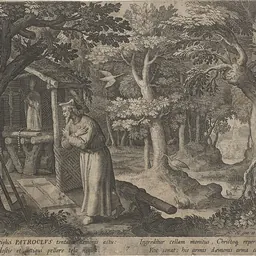
Clodoald (; reconstructed Frankish: *Hlōdōwald; 522 – ), better known as Saint Cloud , was a Merovingian prince, grandson of Clovis I and son of Chlodomer, who preferred to renounce royalty and became a hermit and monk. Clodoald found a hill along the Seine, two leagues below Paris, in a place called Novigentum (the present commune of Saint-Cloud). Here, among the fishermen and farmers, he led a life of solitude and prayer, and built a church, which he dedicated in honor of Martin of Tours.
He is venerated as a saint in both the Eastern Orthodox Church and Roman Catholic Church.
Background Upon the death of Clovis, his sons, Chlodomer, Childebert, Clothaire, and their half-brother Thierry shared the kingdom. In 523–524, at Clotilde's instigation, her sons joined in an expedition against King Sigismund's Burgundians. After the arrest of Sigismund and his family, Chlodomer returned to Orléans. Sigismund's brother, Godomar III, supported by his ally and relative, the Ostrogoth king Theodoric the Great, slaughtered the garrison the Franks had left in Burgundy. In retaliation, Chlodomer then had Sigismund and his sons, Gisald and Gondebaud, murdered. On May 1, 524, Chlodomer set out on a second expedition against the Burgundians and was killed at the Battle of Vézeronce on June 25 of the same year.
Early life Clodoald was the son of King Chlodomer of Orléans and his wife Guntheuc. He was one of three brothers, raised in Paris by their grandmother, the queen dowager Clotilde. Salic law required the division of the kingdom among the sons of Chlodomer. However, the boys' uncles, Childebert I, king of Paris, and his brother Clotaire I, king of Soissons, coveted the kingdom of Orléans and determined to murder the nephews.
By one account, in 525, Childebert and Clotaire asked their mother Clotilde to send them the children so that they might be proclaimed their father's successors. She clothed the brothers in their best clothes and sent them with confidence, unaware of her sons' plans. The two uncles then had the children of Clodomir killed. For some time he remained in his company, to be trained in all the monastic virtues. At the age of twenty, Clodoald left his hermitage and appeared before the Bishop of Paris surrounded by religious and civic leaders and members of the royal family. The bishop cut Cloud's long hair, which was a symbol of his royalty. Childebert and Clotaire, who saw him as no threat, left him undisturbed and even gave him some inheritances to live more comfortably in the place of his retirement.
After Séverin's death, Clodoald left the surroundings of Paris and secretly retired to Provence. The inhabitants of the surrounding area came to him because they learned that Cloud had the gift of healing. Here among the fishermen and farmers, he led a life of solitude and prayer, and built a church, which he dedicated in honor of Martin of Tours.
As soon as the place of his retreat was known, disciples came to place themselves under his direction. Some cells were first built, soon a monastery became necessary. According to tradition, Clodoald had a monastery with a chapel built and endowed with the goods that the kings, his uncles, gave him. He lived seven years in his monastery, among his brothers, giving them an example of all the virtues. He died there on September 7, 560, at the age of thirty-eight. St. Cloud, Wisconsin, St. Cloud, Florida, and St. Cloud, Minnesota, are in turn named after the French town.
Clodoald's feast day is September 7.
In art There is a statue of St. Cloud on the portal of Saint-Germain l'Auxerrois in Paris. In his History of the Franks, Gregory of Tours recounts the struggles for power between the children of Clovis, and after having mentioned the murder of his two brothers, dedicates a few lines to Clodoald: "They could not take the third, Clodoald, who was saved by the help of brave warriors; despising an earthly kingdom, he consecrated himself to God, and, having cut his hair with his own hand, he was made a cleric. He persisted in good works, and died a priest." A painting by Sébastien-Melchior Cornu (1804–1870) depicting Saint-Clodoald decorates the chapel of the Elysée Palace.
Don’t just read it —
keep it.
Full-length biographies made to live with: read them, listen on the way to work, watch them tonight.
- E-book
- Audio
- Video
Instant download · yours to keep · every purchase keeps this site free
Important facts
People in Clodoald's life
Named in this biography and alive at the same time
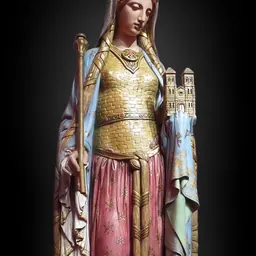

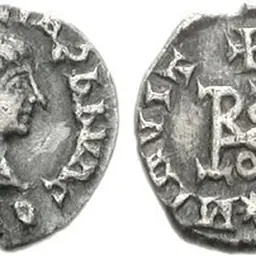
Related people
Same field, nearest in time


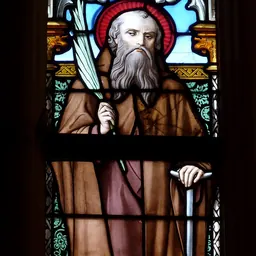
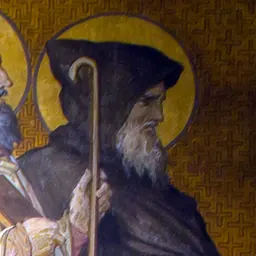
Contemporaries
People whose lives overlapped Clodoald's



Frequently asked questions
Who was Clodoald?
Frankish monk and bishop
When was Clodoald born?
Clodoald was born in 524.
When did Clodoald die?
Clodoald died on 7 September 560 in Saint-Cloud.
What was Clodoald's occupation?
Clodoald was a hermit and catholic priest.
Sources & further reading
Cite this page
APA: Biography.guide. (2026). Clodoald. https://biography.guide/clodoald/
MLA: "Clodoald." Biography.guide, https://biography.guide/clodoald/.
Chicago: "Clodoald." Biography.guide. https://biography.guide/clodoald/.
Data last updated: 2026-09-20 · Spot an error? Report a correction.
Page generated 2026-09-27 05:26 UTC