
About Clint Courtney
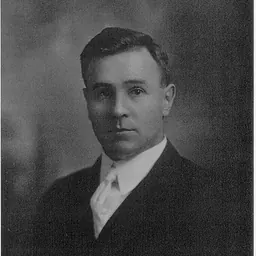
Lived 1927 – 1975 (aged 48). Clint Courtney was an American baseball player.
Clinton Dawson Courtney (March 16, 1927 – June 16, 1975), nicknamed "Scrap Iron", was an American professional baseball catcher who played in Major League Baseball (MLB) for the New York Yankees, St. Louis Browns / Baltimore Orioles (1952–1954, 1960, 1961), Chicago White Sox (1955), Washington Senators (1955–1959) and Kansas City Athletics (1961). He batted left-handed and threw right-handed.
Courtney was born in Louisiana, growing up there and in Arkansas. After serving in the United States Army during World War II, he was signed as a catcher by the New York Yankees. Playing minor league baseball for them for the next few seasons, he was involved in several fights. After one game with the Yankees in 1951, he was traded to the Browns in 1952 at the urging of Rogers Hornsby, St. Louis's manager. Courtney won The Sporting News American League Rookie of the Year, batting .286. Both that season and the next, he was involved in on-the-field fights with Billy Martin, whom he had battled in the minor leagues several seasons before. Courtney remained the starting catcher for the Browns when they moved to Baltimore in 1954 and became the Orioles. Then, he was traded to the White Sox.
Used as the backup to Sherm Lollar by Chicago, Courtney only lasted half a season with the White Sox before he was traded to the Senators. He finished out the 1955 season with Washington and spent the next four years there, appearing in a career-high 134 games for the ballclub in 1958. Injuries afflicted him in 1959, and he was traded back to Baltimore for the 1960 season, where he became the first catcher to wear an oversized mitt while catching knuckleball pitcher Hoyt Wilhelm. Traded to Kansas City for 1961, he was returned to Baltimore after playing one game for the Athletics. Accepting an assignment to the minor leagues halfway through the 1961 season, he played minor league ball for the next few seasons, following Oriole manager Paul Richards into the Houston Colt .45's organization.
Once his playing career ended, Courtney managed in the minor leagues, first in Houston's organization, and then for affiliates of the Atlanta Braves. He hoped to be a major league manager one day and came close to being named Atlanta's manager in 1974, though the team settled on Clyde King instead. However, while serving as the manager of the Richmond Braves in 1975, Courtney died of a heart attack while on a road trip with the team.
Early life Clinton Dawson Courtney was born on March 16, 1927, in Hall Summit, a village in tiny Red River Parish, Louisiana. His parents, C.D. and Ethel Murray Courtney, divorced when Clint was about three or four. Courtney had a sister named Fleta, as well as two stepsisters, Cecil and Jo, from his father's remarriage to Gladys Woods.
The Courtneys did not have much money. "I was so poor as a boy, my shoes were so bad that I could step on a dime and tell you if it was heads or tails," Courtney recalled in 1958. The Courtneys lived in Louisiana until Clint had completed the eighth grade, at which point they moved to Arkansas so C.D. could get a job in the oilfields. Clint attended Standard-Ulmstead High School in Smackover, where he garnered All-State recognition playing for the basketball team. He had also played baseball since his days in Halls Summit. After graduating, he joined his father working in the Smackover oilfields. He then moved to Orange, Texas, where he worked as a shipyard welder. Courtney still batted left-handed. He served as Kansas City's starting catcher, playing well but drawing attention for conflicts during the year. Later in the season, when Kansas City played the St. Paul Saints, Courtney had a fight with Danny Ozark.
Major league career MLB debut and trade to Browns (1951) Despite his suspension, Courtney was called up by the Yankees in late September 1951. Courtney did not play any other major league games in 1951.
After the season, on November 23, Courtney was traded to the St. Louis Browns. Yankee general manager (GM) George Weiss disliked the catcher for his on-the-field incidents. Meanwhile, Hornsby, who had just been named St. Louis's manager, was excited to acquire one of his favorite players from Beaumont for his team. On May 6, he hit his first major league home run, a go-ahead, two-run blast against Bob Hooper as St. Louis beat the Philadelphia Athletics 5–1. Courtney missed 16 games from June 13 through June 28 after discovering a split finger on his right hand during a game against the Boston Red Sox on June 12. On July 12, in the second inning of a game against the Yankees, Courtney spiked Martin when he slid into second. When Courtney attempted the play again in the eighth inning, Martin hit him with the hand that had been holding the baseball. Courtney got up and tried to retaliate, which resulted in a shower of punches from Martin. A brawl ensued, during which umpire Bill Summers was knocked to the ground with a punch. Courtney was ejected from the game, but Summers allowed Martin to stay in because he thought Martin had merely been defending himself. The Yankees won 5–4 in extra innings, and Courtney was suspended three games and fined $100. He had a game-ending RBI in painful fashion on September 9, getting hit by a pitch by Ray Scarborough with the bases loaded to force in the winning run in the bottom of the ninth, as the Browns defeated the Yankees 5–4.
In 119 games as a rookie, Courtney batted .286 with 38 runs scored, 118 hits, 5 home runs, and 50 RBI. Courtney also won The Sporting News AL Rookie of the Year award.
Sophomore season, move to Baltimore (1953–1954)
Courtney sought a $4,500 raise for 1953, which would bring his salary to $12,000. When owner Bill Veeck countered with an $11,000 offer, Courtney wrote a short letter saying, "Dear Veeck: I changed my mind. I want $14,000, not $12,000. Clint."
In the first game of a doubleheader on July 16, the Browns hit three successive home runs during the first inning of an 8–6 victory over the Yankees. Courtney started the feat, followed by Dick Kryhoski and Jim Dyck. This was an MLB record at the time. Courtney "produced much less with the bat" in 1953 according to Costello, who attributed the diminished performance to broken fingers suffered early in the year. Against the Washington Senators on August 29, Courtney had five hits and two RBI in a 5–0 victory. In 122 games, he batted .270 with 25 runs scored, 107 hits, 4 home runs, and 37 RBI. On November 17, the Orioles made a 17-player trade with the Yankees, acquiring catchers Hal W. Smith and Gus Triandos. "This is a good club to be with — providin’ they gimme some work to do," he told reporters during spring training. However, Courtney played only 19 of the team's first 44 games, serving as the backup to Lollar. In those 19 games, he batted .378 with 7 runs scored, 14 hits, 1 home run, and 10 RBI. He had three RBI as well as a triple on July 19 in a 5–4 victory over the Cleveland Indians. On August 5, he had three hits, two runs scored, and three RBI in a 10–4 victory over the Kansas City Athletics. His three-run home run against Bob Keegan in the first game of an August 28 doubleheader helped Washington beat the White Sox 6–2. Courtney ended the season batting .300 with 31 runs scored, 85 hits, 5 home runs, and 44 RBI. Courtney broke his hand on a foul tip on May 1, not playing again until May 31. Shortly after his injury, he was fined $100 by manager Chuck Dressen for "insubordination". On August 3, he had three hits, two home runs, and four RBI, though the effort came in a 13–4 loss to the Tigers. Courtney ended the season batting .267 with 23 runs scored, 62 hits, 6 home runs, and 27 RBI. Three days later, he had five RBI, including a grand slam against Ken Johnson in an 8–5 victory over Kansas City. Courtney finished the season with career highs in runs scored (46), home runs (8), and RBI (62). He batted .251 and recorded 113 hits. During a spring training game, he collided with Smith at home plate and sustained a hairline fracture to his leg, but he missed only a few games and was ready for Opening Day. His bad luck came to a head when a bout of the mumps kept Courtney off the field until mid-May. In his absence, the Senators acquired Hal Naragon, who split catching duties with Courtney for the rest of the year. Courtney had four three-hit games during the year but never recorded more than two RBI all season. On May 27, Courtney became the first catcher to wear the oversized mitt when he caught Wilhelm in a game against the Yankees. Baltimore won 3–2, and there were no passed balls. Courtney liked the glove but still found Wilhelm challenging. "Boy is he rough to catch. I don’t see how anybody ever hits him." The glove did not solve all problems with catching the knuckleball; in the first game of a doubleheader against Detroit on June 19, while catching Wilhelm, Courtney was twice called for catcher's interference. Against the Yankees again on August 15, Courtney dropped a foul pop up hit by Mickey Mantle, who then hit a two-run home run to defeat Baltimore.
During the 1960 season, Courtney struggled to throw the ball from home plate back to the pitcher, often having to resort to throwing the ball to the third baseman to relay or walking the ball part of the way back to the pitcher. This condition was short-lived. With Baltimore, he again backed up Triandos. Courtney played his last game for the Orioles on June 24, pinch-hitting for Marv Breeding in a 4–1 loss to the Los Angeles Angels. On July 1, the Orioles demoted Courtney to the Rochester Red Wings, who were in need of catching help. "You don’t have to go back to the minors if you don’t want to, but if you did you’d be doing the organization a big favor," pleaded Richards. Richards also made a promise that wherever he was employed, Courtney would be able to catch. Courtney had a reputation for "burning" the ball back to the pitchers when he returned it to the mound. Courtney held the glove in this manner on instruction from Hornsby, who theorized that "the pitchers will miss it enough that they will hit the edge of the plate a lot of the time." Courtney competed for the major league club but was cut in April. Initially, he was assigned to the Triple-A Oklahoma City 89ers of the American Association. After just three games with them, he was sent to the Durham Bulls of the Class B Carolina League, where manager Lou Fitzgerald wanted a veteran around to help the team's catchers. He split 1963 between Durham and the Texas League's San Antonio Bullets, serving as a player and coach at both destinations.
Courtney finished his playing career in 1964 as a player-coach with San Antonio, where he served as the backup catcher to Dave Adlesh. In 37 games, Courtney batted .324 with 1 run scored, 12 hits, 0 home runs, and 3 RBI.
Coaching career In 1965, Courtney returned to the major leagues as the bullpen coach for Houston, their first season under the name Astros and their first year in the indoor Astrodome. After the season, Richards and the entire Astro coaching staff were fired. Hired by the Atlanta Braves in 1967, Richards reemployed Courtney as a travelling catching instructor for Atlanta's minor league teams. The couple had five children: Wendell, Cynthia, Kathleen, Nancy, and Stephen. During his career, Courtney owned a 200-acre ranch in Coushatta, Louisiana, renting up to 500 more acres at times as well. "I aim to own my own land ‘n’ all the cattle I can git," he told sportswriter Bob Broeg in 1953. He was buried in Plot N of the Mount Zion Cemetery in Hall Summit, Louisiana. Bob Lemon replaced him as the manager of Richmond, which finished the 1975 season with a 62–75 record.
Don’t just read it —
keep it.
Full-length biographies made to live with: read them, listen on the way to work, watch them tonight.
- E-book
- Audio
- Video
Instant download · yours to keep · every purchase keeps this site free
Important facts
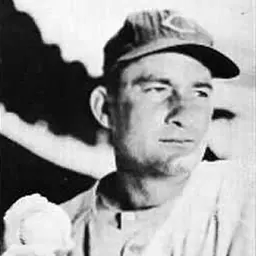
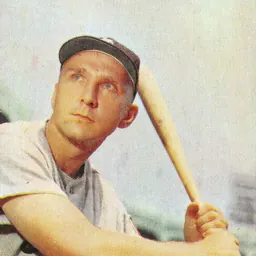
People in Clint Courtney's life
Named in this biography and alive at the same time

Related people
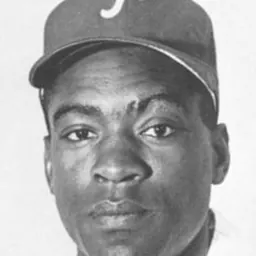
Same field, nearest in time
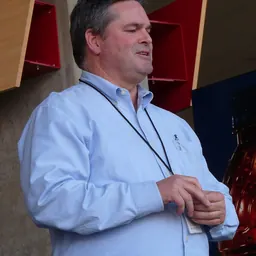
Contemporaries
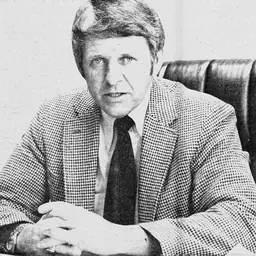
People whose lives overlapped Clint Courtney's
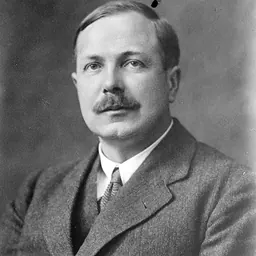
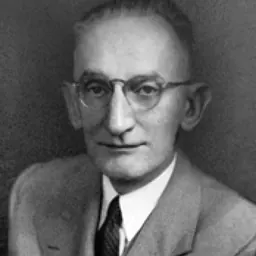


Frequently asked questions
Who was Clint Courtney?
American baseball player and coach
When was Clint Courtney born?
Clint Courtney was born on 16 March 1927 in Hall Summit.
When did Clint Courtney die?
Clint Courtney died on 16 June 1975 in Rochester.
What was Clint Courtney's occupation?
Clint Courtney was a baseball player.
What nationality was Clint Courtney?
Clint Courtney was American.
Sources & further reading
Cite this page
APA: Biography.guide. (2026). Clint Courtney. https://biography.guide/clint-courtney/
MLA: "Clint Courtney." Biography.guide, https://biography.guide/clint-courtney/.
Chicago: "Clint Courtney." Biography.guide. https://biography.guide/clint-courtney/.
Data last updated: 2026-09-25 · Spot an error? Report a correction.
Page generated 2026-09-27 05:08 UTC