
Clifford Grey
English songwriter, actor and screenwriter
About Clifford Grey
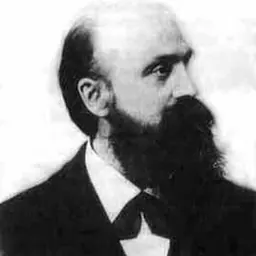
Lived 1887 – 1941 (aged 54). Clifford Grey was a British songwriter, composer, screenwriter, lyricist, film actor and actor.
Clifford Grey (5 January 1887 – 25 September 1941) was an English songwriter, librettist and screenwriter. His birth name was Percival Davis, and he was also known as Clifford Gray.
Grey contributed prolifically to dozens of West End and Broadway shows, for the period from the First World War to the Second World War, as librettist and lyricist for composers including Ivor Novello, Jerome Kern, Howard Talbot, Ivan Caryll and George Gershwin. Among his best-remembered songs are two from early in his career, in 1916: "If You Were the Only Girl (In the World)" and "Another Little Drink Wouldn't Do Us Any Harm". His later hits include "Got a Date with an Angel" and "Spread a Little Happiness". He also wrote lyrics and screenplays for dozens of films released from 1929 to 1941, and they were used in films released posthumously.
For 35 years after 1979 it was widely believed that Grey secretly competed as an American bobsleigher, under the name Clifford "Tippy" Gray, in two Winter Olympics, in 1928 and 1932, winning gold medals, but it was finally shown that the sportsman was a different person.
Life and career Early years Grey was born in Birmingham, Warwickshire, the son of George Davis, a whip manufacturer, and his wife Emma, née Lowe. He was educated at the King Edward VI School. On leaving school in 1903 he had a variety of office jobs, in none of which he had any success. He became a pierrot with a local concert party, and adopted the stage name Clifford Grey, performing in pubs, piers and music halls. On the last show he collaborated with P.G. Wodehouse, who was privately lukewarm about Grey's talent, regarding him as a specialist in adapting other people's work rather than as an original talent.
West End, British films and last years Returning to England in 1932, although apparently spending time in California,
When the Second World War began, Grey joined the Entertainments National Service Association (ENSA), which took shows round the country and overseas to provide relief for serving members of the armed forces. In 1941 he was presenting a concert party in Ipswich, Suffolk, when the town was heavily bombed. Grey died two days later, aged 54, as a result of a heart attack, brought on by the bombing, and exacerbated by asthma. He is buried in Ipswich Old Cemetery.
Olympian bobsleigher myth
After an article written in 1979 by an American journalist, Tim Clark, in Yankee Magazine, it was believed for more than three decades that Grey had competed, secretly, for the US Olympic bobsleigh team in 1928 and 1932 under the name Clifford "Tippy" (or "Tippi") Gray. Many news sources and biographers accepted this idea, based on circumstantial evidence that Clark had found. The evidence also persuaded Grey's daughters that their late father was not only the peripatetic writer that they remembered, but also a secret world-class sportsman who had been too modest to boast of his Olympic success. In the Oxford Dictionary of National Biography the historian James Ross Moore concluded that during Grey's New York years:
Grey made many theatrical and sporting friends. Much later, the secret life of this quiet, retiring, and serious-looking man, so supposedly sedentary and shy behind his horn-rimmed glasses, was revealed. With considerable skill, Grey had invented an American persona, Tippi Gray, and it was under this name that he joined three bobsleighing friends and won gold medals in both the 1928 and the 1932 winter Olympic games. Finally, around 2013, Andy Bull, a sportswriter for The Guardian, was writing a book about the 1932 gold medal-winning bobsleigh team that was published in 2015 under the title Speed Kings. Although Bull had earlier accepted the story, as he looked closer, he became suspicious. He found an interview with "Tippy" Gray from 1948 in the Sarasota Herald-Tribune, seven years after Grey's death. "Tippy" Gray, the Olympic champion, died in April 1968 in San Diego, California. 1916 – The Kodak Girl
1929 – Devil-May-Care – Songs 1929 – The Love Parade – Lyrics 1930 – Call of the Flesh – Songs 1930 – Madam Satan – Songs 1930 – The Florodora Girl – Songs 1931 – The Smiling Lieutenant – Lyrics 1932 – After the Ball – Lyricist 1932 – For the Love of Mike – Script 1932 – Lord Babs – Adaptation, dialogue and lyrics 1932 – Rome Express – Original story and dialogue 1932 – The Midshipmaid – Lyrics 1932 – There Goes the Bride – Lyrics 1933 – Facing the Music – Original story 1933 – King of the Ritz – Lyricist 1933 – No Funny Business – Lyricist 1933 – Sleeping Car – Lyrics 1933 – Soldiers of the King – Lyrics 1933 – The Song You Gave Me – Script 1933 – This Is the Life – Script 1933 – You Made Me Love You – Songs (words and music) 1934 – Doctor's Orders – Script 1934 – Girls Will Be Boys – Scenario and dialogue 1934 – Give Her a Ring – Adaptation, scenario and dialogue 1934 – Love at Second Sight – Music and lyrics 1934 – Mr Cinders – Adaptation, scenario and dialogue 1934 – My Song Goes Round the World – Adaptation and scenario 1934 – The Luck of a Sailor – Script 1935 – Brewster's Millions – Adaptation 1935 – Charing Cross Road – Script 1935 – Dandy Dick – Adaptation, scenario and dialogue 1935 – Drake of England – Additional dialogue 1935 – Heart's Desire – Lyrics 1935 – Invitation to the Waltz – Scenario and additional dialogue 1935 – Me and Marlborough – Musical numbers 1935 – Mimi – Scenario and dialogue 1935 – The Student's Romance – Adaptation and scenario 1935 – Things Are Looking Up – Title song 1936 – Accused – Lyrics 1936 – Land without Music – Lyrics 1936 – Queen of Hearts – Original screenplay 1936 – Southern Roses – Lyrics 1937 – Boys Will Be Girls – Script 1937 – Pearls Bring Tears – Story 1937 – Sing as You Swing – Screen story 1937 – The Lilac Domino – Lyrics 1938 – Luck of the Navy – Script 1938 – Premiere – Lyricist 1938 – Yes, Madam? – Screenplay 1939 – An Englishman's Home – Screenplay 1939 – Lucky to Me – Screenplay 1939 – She Couldn't Say No – Script 1939 – The Lambeth Walk – Continuity and additional scenes 1940 – Band Waggon – Song: "The only one who's difficult is you" 1940 – The Middle Watch – Screenplay 1941 – My Wife's Family – Screenplay 1948 – Sleeping Car to Trieste – Original story 1954 – Hit the Deck – Lyrics
Notes, references and sources
Don’t just read it —
keep it.
Full-length biographies made to live with: read them, listen on the way to work, watch them tonight.
- E-book
- Audio
- Video
Instant download · yours to keep · every purchase keeps this site free
Important facts
People in Clifford Grey's life
Named in this biography and alive at the same time



Related people
Same field, nearest in time

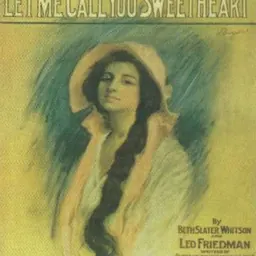
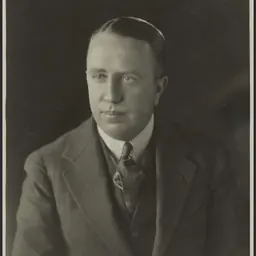

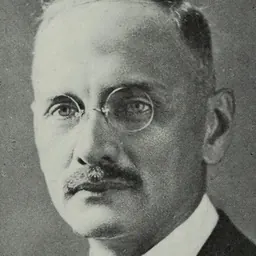
Contemporaries
People whose lives overlapped Clifford Grey's



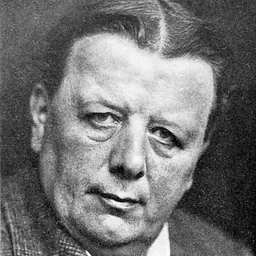

Frequently asked questions
Who was Clifford Grey?
English songwriter, actor and screenwriter (1887–1941)
When was Clifford Grey born?
Clifford Grey was born on 5 January 1887 in Birmingham.
When did Clifford Grey die?
Clifford Grey died on 25 September 1941 in Ipswich.
What was Clifford Grey's occupation?
Clifford Grey was a songwriter, composer, screenwriter, lyricist, film actor and actor.
What nationality was Clifford Grey?
Clifford Grey was British.
Sources & further reading
Cite this page
APA: Biography.guide. (2026). Clifford Grey. https://biography.guide/clifford-grey/
MLA: "Clifford Grey." Biography.guide, https://biography.guide/clifford-grey/.
Chicago: "Clifford Grey." Biography.guide. https://biography.guide/clifford-grey/.
Data last updated: 2026-09-20 · Spot an error? Report a correction.
Page generated 2026-09-27 05:02 UTC