
Clement G. Morgan
African-American lawyer and civil rights activist
About Clement G. Morgan
Lived 1859 – 1929 (aged 70). Clement G. Morgan was a barber, politician, activist and lawyer.
Clement Garnett Morgan (1859-1929) was an African-American attorney, civil rights activist, and city official of Cambridge, Massachusetts. Born into slavery in Virginia and freed by the Emancipation Proclamation, he trained as a barber before moving to Massachusetts to pursue his education. He was the first African American to earn degrees from both Harvard University and its law school; the first African American to deliver Harvard's senior class oration; and the first black alderman in New England. As an attorney he handled many civil rights cases, in one instance closing down a segregated school. He was a founding member of the Niagara Movement and of the Boston branch of the National Association for the Advancement of Colored People.
Early life and education
Clement Garnett Morgan was born into slavery on January 9, 1859, in Stafford County, Virginia. When he and his parents were freed by the Emancipation Proclamation in 1863, they moved to Washington, D.C., where Clement attended the M Street High School and trained as a barber. After finishing high school he moved to St. Louis, Missouri, where he taught for four years in an all-black school.
Determined to acquire the best possible education, Morgan moved to Boston and attended the Boston Latin School for two years in preparation for college. While there he earned a Franklin Medal and won Lawrence Prizes for declamation and reading. In his senior year he held the post of adjutant of the school's battalion. He graduated with high honors in 1886. He was 27 when he enrolled at Harvard University a few months later. and by winning several scholarships. During his senior year he won the Boylston Prize for oratory; his classmate, the noted intellectual and activist W. E. B. Du Bois, came in second. Morgan received his B.A. in 1890, and his LL.B. from Harvard University Law School in 1893. He was the first African American to earn both of those degrees at Harvard. The following year, Du Bois became the first African American to earn both a B.A. and a Ph.D. from Harvard.
Harvard "class day" oration
Each year, Harvard seniors elected a classmate to deliver a speech on "class day", the week before graduation, while the faculty selected six students to speak at the graduation ceremony. In October 1889, the senior class elected Morgan to give the class day oration. Morgan's selection was unprecedented: not only was he Harvard's first African-American class day speaker, he was also the first working-class student to receive an honor normally reserved for those from elite Boston Brahmin families.
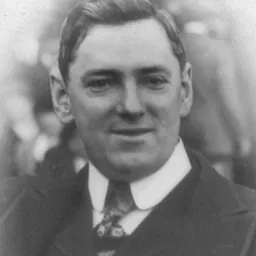
As an attorney, Morgan handled many civil rights cases. In 1902, with his good friend Butler R. Wilson, Morgan tried to fight the extradition of a black factory worker named Monroe Rogers to North Carolina, arguing that he was likely to be lynched there. Reportedly, Rogers had turned off the main water valve of a house at the request of his girlfriend, who worked there as a domestic; for this, he was accused of attempting to burn down the house, and charged with the capital crime of arson. The case inspired angry protests in Boston, where it was widely believed that a black defendant could not get a fair trial in the South. The following year, Morgan successfully represented black parents in Sheffield, Massachusetts, who refused to send their children to the Plain School, a segregated school for the town's 33 black children. The school was subsequently shut down. Morgan was later active in the Boston branch of the National Association for the Advancement of Colored People (NAACP), which was presided over by Wilson. At one rally, Morgan demanded the recall of Mayor James Michael Curley, who refused to ban the film. In the 1920s, New England experienced an increase in anti-Catholic KKK activity; by allying with the Catholic Church, Trotter was able to get the film banned in 1921.
City of Cambridge
Morgan was active in Republican Party politics. In December 1894 he was elected to the Cambridge Common Council from the predominantly white Ward 2, and served two one-year terms. In 1896, he became the first African American to be elected to the Cambridge Board of Aldermen, and the first black alderman in New England. Following his inauguration, city business and political leaders held a banquet in his honor at the Odd Fellows Hall in Cambridgeport. He served on the board in 1897 and 1898. He later ran unsuccessfully for the state legislature. and moved to 265 Prospect Street in the neighborhood of Inman Square. No children are mentioned in his obituary .
The Morgans belonged to several of the city's exclusive social clubs, including the Omar Khayyam Circle, a black literary and intellectual group which met at the Cambridge home of Maria Baldwin. . Clement G. Morgan Park in the Port/Area 4 neighborhood of Cambridge was dedicated to him on February 11, 1991. He is memorialized at the site with a plaque and a mural
Don’t just read it —
keep it.
Full-length biographies made to live with: read them, listen on the way to work, watch them tonight.
- E-book
- Audio
- Video
Instant download · yours to keep · every purchase keeps this site free
Important facts
People in Clement G. Morgan's life
Named in this biography and alive at the same time

Related people
Same field, nearest in time


Contemporaries
People whose lives overlapped Clement G. Morgan's



Frequently asked questions
Who was Clement G. Morgan?
African-American lawyer and civil rights activist
When was Clement G. Morgan born?
Clement G. Morgan was born on 9 January 1859 in Stafford County.
When did Clement G. Morgan die?
Clement G. Morgan died on 1 June 1929 in Brookline, Massachusetts.
What was Clement G. Morgan's occupation?
Clement G. Morgan was a barber, politician, activist and lawyer.
Sources & further reading
· Wikipedia: Clement G. Morgan
Cite this page
APA: Biography.guide. (2026). Clement G. Morgan. https://biography.guide/clement-g-morgan/
MLA: "Clement G. Morgan." Biography.guide, https://biography.guide/clement-g-morgan/.
Chicago: "Clement G. Morgan." Biography.guide. https://biography.guide/clement-g-morgan/.
Data last updated: 2026-09-20 · Spot an error? Report a correction.
Page generated 2026-09-27 05:29 UTC