
About Clément Broutin
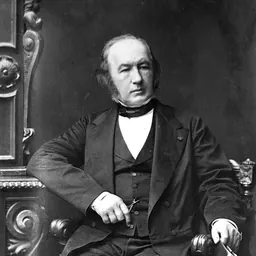
Lived 1851 – 1889 (aged 38). Clément Broutin was a French composer.
Clément Jules Broutin (4 May 1851 – 27 May 1889) was a French composer.
Life Born in Orchies, Broutin studied with Victor Delannoy at the Conservatoire of Lyon from 1871 before joining the Conservatoire de Paris. There he was a pupil of Émile Durand for harmony, César Franck for organ and Victor Massé for musical composition. After an honorary mention in 1877 he won the First Grand Prix de Rome with the three-part scene La Fille de Jephté based on a text by Édouard Guinant.
During his stay at the Villa Medici in Rome, which was associated with the prize, Broutin composed Sinai, a work for soloists choir and orchestra, which was premiered in 1881 in the hall of the Paris Conservatory. The work was received coolly by the audience, but critics praised it for the excellent quality of the composition, its exquisite taste and great intelligence.
In the following years he composed a number of songs and piano pieces, several orchestral pieces and an opera. Most of his works were published by Henry Lemoine.
Broutin died in Roubaix aged 38. In his native town, a street was named after him.
Selected works Stage Rebecca à la fontaine, three-part scene (1877) Jenny, one-act opéra comique, libretto by Edmond Guiraud (1889)
Orchestral music 1er Suite pour orchestre, Op. 9 Danse israélite (1881) Ouverture triomphale, Op. 13 (1885) 1er Fantaisie militaire for wind orchestra (1888)
Large-scale vocal music La Fille de Jephthé, cantata (1878) Sinai, cantata for choir, orchestra and soloists (1881) Choeur de buveurs for male-voice choir (1882) L'Océan, chorus for three equal voices (Arrenaud) (1886) Moïse du Mont Sinaï (Moses at Mount Sinaï), "drame biblique" (Édouard Guinand, English translation by F. Toombs) (1887)
Chamber music Cantabile, Op. 10 for violin and piano (1885) Carentelle, Op. 11 for violin and piano (1885) Deux Pièces for violin and piano (1886)
Piano music Dix Pièces familières (1882) Mazurka lente (1883)
Songs Premier soupir (Victor Hugo) (1879) Connais-tu l'heure enchanteresse (Alphonse Labitte) (1881) Vision (Édouard Guinand) (1881) Berceuse (É. Guinand) (1882) Chanson de printemps (Armand Dayot) (1883) Barcarolle (Paul d'Arras) (1885) Deux Nouvelles mélodies (A. Labitte) (1885). 1: "À l'Angelus"; 2: "Revenez douces hirondelles" Habanera (S. Compon) (1885) Le Rossignol et la rose. Petite scène mélodique (Paul Robert du Costal) for voice and piano with flute ad lib. (1888)
Don’t just read it —
keep it.
Full-length biographies made to live with: read them, listen on the way to work, watch them tonight.
- E-book
- Audio
- Video
Instant download · yours to keep · every purchase keeps this site free
Important facts
People in Clément Broutin's life
Named in this biography and alive at the same time


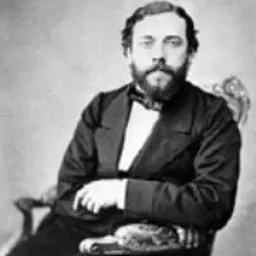
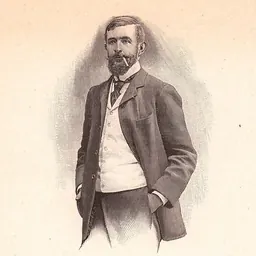
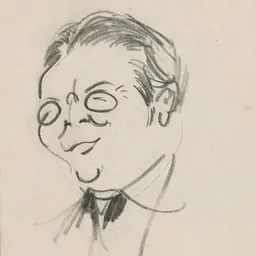


Related people
Same field, nearest in time
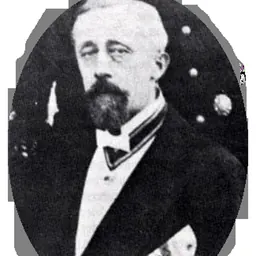


Contemporaries
People whose lives overlapped Clément Broutin's



Frequently asked questions
Who was Clément Broutin?
French composer (1851–1889)
When was Clément Broutin born?
Clément Broutin was born on 4 May 1851 in Orchies.
When did Clément Broutin die?
Clément Broutin died on 27 May 1889 in Roubaix.
What was Clément Broutin's occupation?
Clément Broutin was a composer.
What nationality was Clément Broutin?
Clément Broutin was French.
Sources & further reading
Cite this page
APA: Biography.guide. (2026). Clément Broutin. https://biography.guide/clement-broutin/
MLA: "Clément Broutin." Biography.guide, https://biography.guide/clement-broutin/.
Chicago: "Clément Broutin." Biography.guide. https://biography.guide/clement-broutin/.
Data last updated: 2026-09-20 · Spot an error? Report a correction.
Page generated 2026-09-27 05:18 UTC