
About Clayton Sam White
Lived 1912 – 2004 (aged 91). Clayton Sam White was an American scientist and physician, known for Air embolism and Blast injury.
Clayton "Sam" Samuel White (October 11, 1912 – April 26, 2004) was an American physician, nuclear physicist, and medical researcher best known for developing the field of "blast and shock biology" which explored the effects of blast and shock waves from atomic bombs and other explosions. By bringing together the disciplines of mathematics, physics, biology, and anatomy, White measured the impact of atomic weapons on physical structures and the human body.
His studies, many of which were conducted at above-ground nuclear weapons tests at the Nevada Test Site, paved the way for precision bombing in support of troops in the field and helped determine how to build adequate bomb shelters and treat blast victims.
White studied the biological effects of inhaling small fission particles produced by nuclear tests in a related field. He also examined, with "remarkable prescience,"
Early life and education Clayton Samuel White, known as "Sam," was born in Fort Collins, Colorado, in 1912 to Alpha Albert White, a sheep ranch hand and lumberyard manager, and Maude Elizabeth Burger. He was raised in Wellington, Colorado, then a hamlet of 550 residents. His first job, in grade school, was picking sugar beets for $1.50 a day. In high school, during the Great Depression, he and his brother worked the fields after school and on weekends.
White captained the Oxford lacrosse team and, in 1938, earned a doctoral degree in physiology before returning to the University of Colorado to start medical school. As a student, he began publishing scientific papers. One, the effects of botulism on the nervous system, sparked a lifelong interest in neurology.
Military service
The day after the attack on Pearl Harbor, White enlisted in the Navy. He completed medical school in Colorado as a naval reserve officer and, in 1942, was assigned to Alameda Naval Air Station in Alameda, California. Shortly after, he was sent to the Naval Air Station Pensacola in Pensacola, Florida, where he enrolled in courses in aviation medicine and flight training at the U.S. Naval School of Aviation Medicine. He was designated a flight surgeon in 1944.
At Pensacola, and, later, Patuxent River Naval Air Station in Maryland, White specialized in aviation medicine and respiratory physiology. His groundbreaking work on oxygen masks and liquid oxygen converters attracted the attention of William Randolph Lovelace II, a Harvard and Mayo Clinic-trained surgeon and highly decorated Air Force pilot who, in World War II, performed daring parachute jumps at high altitudes to test the military's oxygen masks.
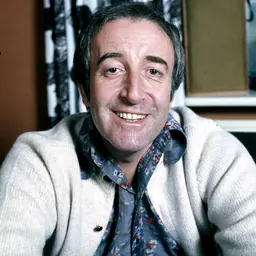
Lovelace was eager to learn why some masks would freeze up, sometimes causing fatalities, and sought White's help. White discovered that ice formed in the oxygen inlet ports of the masks and specified modifications to alter them. After the war, Lovelace established a medical research foundation at the Lovelace Clinic in Albuquerque, New Mexico, and recruited White to head it. White fought to include female flight attendants – then called "hostesses" – in the Lovelace annual physical program and convinced TWA Airlines to fund it. Before that, hostesses did not have access to the same medical care every other member of the flight crew received. As he also noted, the teams that went to Japan to aid the bombing victims spent "more time … picking window glass out of victims than in treating any other injury" including radiation sickness. White documented "whole body displacement," and a wide array of injuries caused by the blast. One of his major discoveries in blast injury was that air emboli in the lung's blood vessels were a significant cause of death. It is also displayed at the Bradbury Science Museum in Los Alamos, New Mexico. The computer appears in Stanley Kubrick's 1964 film, Dr. Strangelove or: How I Learned to Stop Worrying and Love the Bomb, when Peter Sellers, playing the president's demented scientific adviser, pulls the circular device from his jacket pocket to calculate how long people might need to remain in underground bunkers after a nuclear attack.
White's work in blast and shock biology led to advances in devising civil defense plans and treating victims of all kinds of blasts, from bombs to chemical explosions to high-impact accidents. He co-authored three major reports on the environmental consequences of nuclear explosions, charting the progression of an explosion with graphs depicting the relationship between the size of the blast and the distance materials traveled from Ground Zero. Throughout his career, he testified before Congress on nuclear weapons' biological effects, environmental impact, policy, and safety.
White's other areas of study included aging, memory loss, hypothermia, cosmic rays, drought, pollution of the upper atmosphere, sun damage, health risks of smoking, and the impact of stress on the autonomic nervous system.
In 1974, White left Lovelace to become President of the Oklahoma Medical Research Foundation, a non-profit that conducts biomedical research in treating and curing human disease. In 1979, saying he missed the New Mexico mountains, he returned to Albuquerque to serve as President of the Lovelace Center for the Health Sciences.
In addition to authoring more than 125 scientific and technical articles, some of which remain classified, he wrote two books: Physics and Medicine of the Upper Atmosphere (1952) and Blast Biology (1960).
Personal life and death White was married for sixty-three years to Margaret "Peggy" Reeve, whom he met at the University of Colorado. They had three children: daughters Sharon and Meredith, and son Tracy, who grew up in a household where even making popcorn turned into a lesson on the thermodynamics inside a saucepan.
For many years, White served as a Rhodes Scholarship Secretary, which included vetting candidates for annual Rhodes consideration. As exacting in this work as in the laboratory, he often declined to forward a candidate, saying that his interviewees "failed to meet the Rhodes standard."
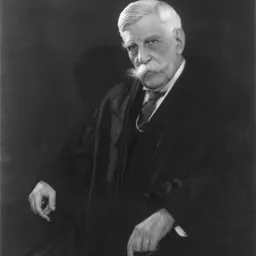
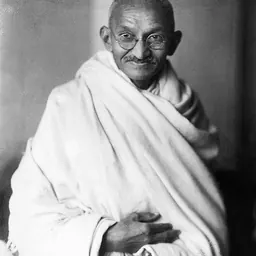
White and his brother maintained a deep bond throughout their lives. During Justice White's tenure on the Supreme Court, schoolchildren wrote the justices, asking each to name the person they most admired. Their answers centered on iconic figures: Abraham Lincoln, Mahatma Gandhi, and Oliver Wendell Holmes. Justice White offered a three-word answer: "My brother Sam."
In 1977, on the centennial celebration of the founding of the University of Colorado, Byron, and Sam White received Alumnus of the Century awards in law and medicine, respectively. Among other awards, Sam White received a U.S. Air Force Exceptional Service Award in 1960 and the National Disaster Preparedness Award in 1962.
White died on April 26, 2004, at the Lovelace Medical Center in Albuquerque, New Mexico.
Honors State of New Mexico Distinguished Public Service award in 1973 U.S. Air Force Exceptional Service Award in recognition of distinguished patriotic service from 1955 to 1960 University of Colorado's Alumnus of the Century Award Dubious Achievement in Thermodynamics of Popping Corn, the Oklahoma Medical Research Foundation Employee Council.
Don’t just read it —
keep it.
Full-length biographies made to live with: read them, listen on the way to work, watch them tonight.
- E-book
- Audio
- Video
Instant download · yours to keep · every purchase keeps this site free
Important facts
People in Clayton Sam White's life
Named in this biography and alive at the same time




Related people
Same field, nearest in time

Contemporaries
People whose lives overlapped Clayton Sam White's






Frequently asked questions
Who was Clayton Sam White?
American physician, nuclear physicist, and medical researcher
When was Clayton Sam White born?
Clayton Sam White was born on 11 October 1912 in Fort Collins.
When did Clayton Sam White die?
Clayton Sam White died on 26 April 2004 in Albuquerque.
What was Clayton Sam White's occupation?
Clayton Sam White was a scientist and physician.
What was Clayton Sam White known for?
Clayton Sam White was known for Air embolism and Blast injury.
What nationality was Clayton Sam White?
Clayton Sam White was American.
Sources & further reading
· Wikipedia: Clayton Sam White
Cite this page
APA: Biography.guide. (2026). Clayton Sam White. https://biography.guide/clayton-sam-white/
MLA: "Clayton Sam White." Biography.guide, https://biography.guide/clayton-sam-white/.
Chicago: "Clayton Sam White." Biography.guide. https://biography.guide/clayton-sam-white/.
Data last updated: 2026-09-20 · Spot an error? Report a correction.
Page generated 2026-09-27 05:34 UTC