
About Claude Raguet Hirst
Lived 1855 – 1942 (aged 86–87). Claude Raguet Hirst was an American painter, wood carver and artist.
Claude Raguet Hirst (born Claudine, 1855–1942) was an American painter of still lifes. She was the only woman of her era to gain acclaim using the trompe-l'œil ("fool the eye") technique.
Early life and education Claudine Hirst was born in Cincinnati, Ohio in November 1855, the eldest of two daughters of Juliet and Percy Hirst. She counted Pennsylvania Congressman Henry Wynkoop among her ancestors. When she was seven, the family moved to Clifton, a wealthy suburb with a burgeoning artist community. In a 1940 interview with the Villager, Hirst recalled starting painting lessons at the age of ten and attending dance school alongside a young William Howard Taft. By the time she was 14, she was enrolled at the Mount Auburn Young Ladies Institute. The 1872 Cincinnati Industrial Exposition included three of her early works.
In 1874, Hirst enrolled in the McMicken School of Drawing and Design where she took classes in three-dimensional drawing and wood carving. Her works were exhibited in the Women's Pavilion of the 1876 Centennial Exposition in Philadelphia. She left the School of Design in 1878 and taught wood carving. She was one of the artists who carved the elaborate Cincinnati Organ Screen for the Music Hall's organ. Beginning in the 1870s, she truncated her name to "Claude", possibly to avoid the sexism that stymied many women artists of the era.
Move to New York Hirst moved to New York City by 1880, where the promise of training, employment, and fame lured many of her contemporaries. Hirst rented a studio in Greenwich Village where she befriended landscape painter William Crothers Fitler. The pair married in 1901.
Whilst in New York, Hirst taught art and took private lessons from Agnes Dean Abbatt, Charles Courtney Curran, and George Henry Smillie. She joined both the Woman's Art Club of New York and the American Watercolor Society. The subjects of her early still lifes in New York included fruit and flowers, most often pansies and roses, and she often identified the rose varietals in her titles. During the 1880s, Hirst's brushwork tightened, and would eventually become nearly indiscernible.
Hirst began using the hyper-realistic trompe-l'œil technique and masculine iconography. Her bachelor still lifes incorporated elements such as books, candles, newspapers, and meerschaum pipes arranged on a wooden table. She created a number of pipe and tobacco still lifes, one of which was purchased by sugar baron H.O. Havemeyer.
According to Christine Crafts Neal, Hirst's 1890s work, A Gentleman's Table "recalls the 17th-century Dutch tradition of the moralizing (vanitas) still-life composition."
Don’t just read it —
keep it.
Full-length biographies made to live with: read them, listen on the way to work, watch them tonight.
- E-book
- Audio
- Video
Instant download · yours to keep · every purchase keeps this site free
Important facts
People in Claude Raguet Hirst's life
Named in this biography and alive at the same time

Related people
Same field, nearest in time

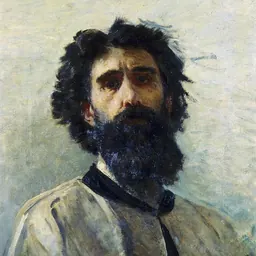
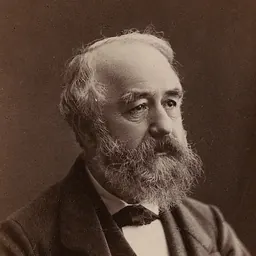
Contemporaries
People whose lives overlapped Claude Raguet Hirst's




Frequently asked questions
Who was Claude Raguet Hirst?
artist (1855-1942)
When was Claude Raguet Hirst born?
Claude Raguet Hirst was born in 1855 in Cincinnati.
When did Claude Raguet Hirst die?
Claude Raguet Hirst died in 1942 in New York City.
What was Claude Raguet Hirst's occupation?
Claude Raguet Hirst was a painter, wood carver and artist.
What nationality was Claude Raguet Hirst?
Claude Raguet Hirst was American.
Sources & further reading
· Wikipedia: Claude Raguet Hirst
· DBpedia: Claude Raguet Hirst
Cite this page
APA: Biography.guide. (2026). Claude Raguet Hirst. https://biography.guide/claude-raguet-hirst/
MLA: "Claude Raguet Hirst." Biography.guide, https://biography.guide/claude-raguet-hirst/.
Chicago: "Claude Raguet Hirst." Biography.guide. https://biography.guide/claude-raguet-hirst/.
Data last updated: 2026-09-20 · Spot an error? Report a correction.
Page generated 2026-09-27 05:15 UTC