
Claude Montal
French piano tuner and piano maker
About Claude Montal
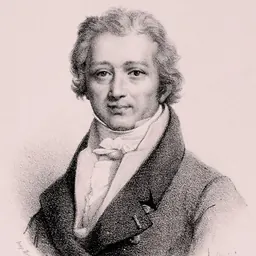
Lived 1800 – 1865 (aged 64). Claude Montal was a French piano tuner, piano maker and musical instrument maker.
Claude Montal (; 28 July 1800 – 7 March 1865) was a French piano technician and author who wrote the first comprehensive text on piano tuning and repair, "l'Art d'accorder soi-même son piano..." (The Art of Tuning Your Own Piano Yourself...), published in 1836. He subsequently became a major manufacturer of pianos, with several patented inventions to his credit. He lost his sight at a young age and helped to establish the career of piano technician as a profession well suited for blind people.
Early life and education Born in La Palisse, in central France, Claude Montal lost his sight at the age of five because of typhoid fever, but he continued to play actively with his friends and attend school. Montal's father was a saddlemaker, and he learned from his father the tools of the trade, which allowed him to manufacture items for sale. thumb Institut National des Jeunes Aveugles, ParisHis parents tried for some years to have him admitted to the Institute for Blind Youth of Paris, a progressive institution that pioneered education for the blind, which gave them skills and knowledge to become independent members of society. His parents were unsuccessful until they were able to obtain the intervention of the Duchesse of Angoulême, a patron of the institute. He was 16 years old at the time, past the age limit for admission, so they claimed that he was 14. In 1844, he was making 90 pianos a year.
In the ensuing years, Montal gained a reputation for the quality of workmanship of his pianos, and was reviewed favorably by the musical press, who placed him in the ranks of the very best French piano manufacturers, just below the two best known firms of Pleyel and Érard. He concentrated his attention on various styles of upright piano, which was replacing the square piano as the predominant design. Montal developed his own features, beginning with double-escapement actions for uprights (an adaptation of Sébastien Érard's invention for grands), and later developed a system for transposition of the keyboard, and the use of adjustable iron bars to stabilize the instrument when subjected to climate change. He also produced very decorative instruments, seeking inroads into the luxury market.
Exhibitions and awards
Beginning in 1839, Montal exhibited his own pianos at the Industrial Expositions of Paris, showing off his own, patented inventions in piano and action design. and two additional medals at the 1862 International Exposition in London. Montal received several additional awards, fourteen in all, including that of the Legion of Honor, in 1851.
Montal received recognition as official supplier of pianos to the Institute for Blind Youth of Paris, as the result of a competition in which the names of the makers were concealed. He later gained the title of official supplier of pianos to the Emperor and Empress of France and to the Emperor of Brazil.
Inventions and innovations Montal's "Counter-tension" systemMontal's patented inventions included double escapement (repetition) action designs for both grands and upright; a grand piano with inverted soundboard (the soundboard above the strings); a transposition system whereby the piano keyboard could be shifted sharp or flat by several semitones; a system of adjustable iron bars (contre-tirage/counter-tension) to allow for adjustment of the case to match environmental condition; a soft pedal (pédale d'expression) that moved the hammers closer to the string and reduced key dip proportionally; and others. 1855, and 1862. was twenty pages long, solely on the topic of piano tuning. It was intended to help individuals to learn to tune their own pianos, or at least to fill in when a professional tuner was not available. Its full title is very descriptive: "l'Art d'accorder soi-même son piano, d'après une méthode sure, simple et facile, déduite des principes exacts de l'acoustique et de l'harmonie" (The Art of Tuning Your Own Piano Yourself, by a Sure, Simple and Easy Method, Deduced from Precise Principles of Acoustics and Harmony). thumb Art of Tuning title page, 1865 This book was translated into German the following year, 1835, and the German version remained in print for many years. It was subsequently translated into Czech (1836) and Dutch (1847).
In 1836, Montal expanded his original book to over 250 pages, and included detailed chapters on a variety of subjects: how to replace a string; the various repairs needed to keep a piano functioning; descriptions of various models and styles of pianos and how to tune and work on them; general advice about the care of the piano (keeping it covered, avoiding moisture and sun); how to pack a piano for moving; and many similar subjects. He also included a detailed chapter on acoustics, in which he laid out the mathematics behind equal temperament, demonstrating how his own system for tuning was in keeping with science. In addition, he appended a "History of the Piano", in which he traced its origins, and wrote in detail of the changes and developments during the early 19th century. The title of this expanded book remained the same, except that additional descriptive words were added to cover the full contents.
In 1865, Montal published a revised version, which brought his initial book up to date, covering the changes that had taken place in the intervening 30 years. He added a new chapter on the training of blind people in the profession of piano tuner/technician, and he also included a new appendix, in which he documented his own life, quoting from reviews of his book, and from reports concerning his pianos (leading to medals and awards).
He died in 1865 in Paris.
Training for blind people
One of Montal's lasting legacy was the establishment of the profession of piano technician as a skill well suited for blind people. He worked closely with the Institute for the Young Blind in establishing a training program that has continued up to the present day and has been imitated around the world. In the 1860s, it was an intensive three-year program of study with some 250 students. Montal was tireless in promoting the employment of the program's graduates by his fellow manufacturers, noting that they were the only tuners who had actually been trained to understand the theory behind the practice. He was adamant in his opinion that blind students should learn to use tools of all sorts, so as to be able to make the many necessary repairs and adjustments as well as tune.
Don’t just read it —
keep it.
Full-length biographies made to live with: read them, listen on the way to work, watch them tonight.
- E-book
- Audio
- Video
Instant download · yours to keep · every purchase keeps this site free
Important facts
People in Claude Montal's life
Named in this biography and alive at the same time
Related people
Same field, nearest in time

Contemporaries
People whose lives overlapped Claude Montal's






Frequently asked questions
Who was Claude Montal?
French piano tuner and piano maker (1800–1865)
When was Claude Montal born?
Claude Montal was born on 28 July 1800 in Lapalisse.
When did Claude Montal die?
Claude Montal died on 7 March 1865 in Paris.
What was Claude Montal's occupation?
Claude Montal was a piano tuner, piano maker and musical instrument maker.
What nationality was Claude Montal?
Claude Montal was French.
Sources & further reading
Cite this page
APA: Biography.guide. (2026). Claude Montal. https://biography.guide/claude-montal/
MLA: "Claude Montal." Biography.guide, https://biography.guide/claude-montal/.
Chicago: "Claude Montal." Biography.guide. https://biography.guide/claude-montal/.
Data last updated: 2026-09-25 · Spot an error? Report a correction.
Page generated 2026-09-27 05:11 UTC