
About Claude Maxwell MacDonald
Lived 1852 – 1915 (aged 62–63). Claude Maxwell MacDonald was a British diplomat and politician.
Colonel Sir Claude Maxwell MacDonald, (12 June 1852 – 10 September 1915) was a British soldier and diplomat, best known for his service in China, Korea, and Japan.
Early life MacDonald was born the son of Mary Ellen MacDonald (nee Dougan) and Major-General James (Hamish) Dawson MacDonald. He was educated at Uppingham School and Sandhurst. He was commissioned into the 74th Foot in 1872. He thought of himself as a "soldier-outsider", as regards his subsequent career in the Foreign Office.
Africa MacDonald’s early career was in Africa. He served in the 1882 Anglo-Egyptian War, and served as military attaché to Sir Evelyn Baring from 1884 to 1887. From 1887 to 1889, he was Acting-Agent and Consul-general at Zanzibar, and then served some years as Commissioner and Consul-General at Brass in the West African Oil Rivers Protectorate, where in 1895 he was an observer of the rebellion of King Koko of Nembe. He retired from the British Army in 1896.
In China, MacDonald obtained a lease at Weihaiwei, and obtained railway contracts for British syndicates. He was instrumental in securing the Second Peking Convention, by which China leased to Britain the New Territories of Hong Kong. This and the contrasting lease-in-perpetuity of Kowloon created some problems in the negotiations for the 1984 Sino-British Joint Declaration.
In 1899 MacDonald was the author of a diplomatic note which he proposed, on behalf of British India, a boundary line between Jammu and Kashmir and the Chinese Turkestan, ceding roughly half of the Aksai Chin plateau, in return for China relinquishing its shadowy suzerainty over Hunza. The proposed boundary came to be known as the Macartney–MacDonald Line. The Qing China never made any response to the proposal. But the proposed boundary is still seen by scholars and commentators to have some relevance to the present day boundary disputes between China and India.
In the same year he also participated in the Sanmen Bay Affair on the side of the Kingdom of Italy on the United Kingdom's behalf.
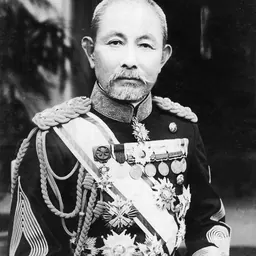
As a military man, MacDonald led the defence of the foreign legations in 1900 which were under siege during the Boxer Rebellion, and he worked well with the Anglophile Japanese colonel Shiba Gorō.
Japan MacDonald was appointed Consul-General to the Empire of Japan in October 1900. He headed the British Legation in Tokyo during a period of harmonious relations between Britain and Japan (1900 to 1912), swapping appointments with Sir Ernest Satow who replaced him as Minister in Peking. On 30 January 1902, the first Anglo-Japanese Alliance was signed in London between the Foreign Secretary Lord Lansdowne and Hayashi Tadasu, the Japanese Minister.
MacDonald was still in Tokyo when the alliance was renewed in 1905 and 1911. He became Britain's first ambassador to Japan when the status of the legation was raised to that of embassy in 1905. Before 1905 the senior British diplomat in Japan had simultaneously held the joint positions of (a) Consul-General and (b) Envoy Extraordinary and Minister Plenipotentiary; the latter being a rank just below that of ambassador. MacDonald was made a Privy Councillor in 1906.
He died of heart failure at his residence in London on 10 September 1915. He is buried with his wife in Brookwood Cemetery.
Ethel, Lady MacDonald, DBE
MacDonald married in 1892 Ethel Armstrong (1857–1941), daughter of Major W. Cairns Armstrong and widow of P. Craigie Robertson; they remained married until his death in 1915. They had two daughters.
Lady MacDonald was awarded the Royal Red Cross (RRC) on 24 February 1903 ′in recognition of her services in tending the sick and wounded soldiers during the defence of the Legations at Pekin in 1900′, during the Boxer Rebellion. She was a Member of the Executive Committee of the Overseas Nursing Association, and was named Dame Commander of the Order of the British Empire (DBE) in her own right in 1935.
Selected works MacDonald's writings include:
1898 — Despatch from Her Majesty's minister at Peking forwarding copies of the notes exchanged with the Chinese government respecting the non-alienation of the Yang-tsze region 1900 — The Japanese detachment during the defence of the Peking legations, 1900 1900 — Reports from Her Majesty's minister in China [Sir C. M. Macdonald] respecting events at Peking. Presented to parliament, Dec. 1900
Honours 40px Knight Grand Cross of the Order of St Michael and St George (GCMG). 40px Knight Grand Cross of the Royal Victorian Order (GCVO). 40px Knight Commander of the Order of the Bath (KCB; Civil division). 40px Knight Commander of the Order of the Bath (KCB; Military division) – awarded on 29 November 1900 "in recognition of services during the recent Operations in China". 40px Egypt Medal (1882–1889) with clasps "Suakin 1884", "El-Teb" and "Tamaai".
Don’t just read it —
keep it.
Full-length biographies made to live with: read them, listen on the way to work, watch them tonight.
- E-book
- Audio
- Video
Instant download · yours to keep · every purchase keeps this site free
Important facts
People in Claude Maxwell MacDonald's life
Named in this biography and alive at the same time

Related people
Same field, nearest in time

Contemporaries
People whose lives overlapped Claude Maxwell MacDonald's


Frequently asked questions
Who was Claude Maxwell MacDonald?
British diplomat (1852-1915)
When was Claude Maxwell MacDonald born?
Claude Maxwell MacDonald was born in 1852 in Gwalior.
When did Claude Maxwell MacDonald die?
Claude Maxwell MacDonald died in 1915 in London.
What was Claude Maxwell MacDonald's occupation?
Claude Maxwell MacDonald was a diplomat and politician.
What nationality was Claude Maxwell MacDonald?
Claude Maxwell MacDonald was British.
Sources & further reading
· Wikipedia: Claude Maxwell MacDonald
Cite this page
APA: Biography.guide. (2026). Claude Maxwell MacDonald. https://biography.guide/claude-maxwell-macdonald/
MLA: "Claude Maxwell MacDonald." Biography.guide, https://biography.guide/claude-maxwell-macdonald/.
Chicago: "Claude Maxwell MacDonald." Biography.guide. https://biography.guide/claude-maxwell-macdonald/.
Data last updated: 2026-09-26 · Spot an error? Report a correction.
Page generated 2026-09-27 05:15 UTC