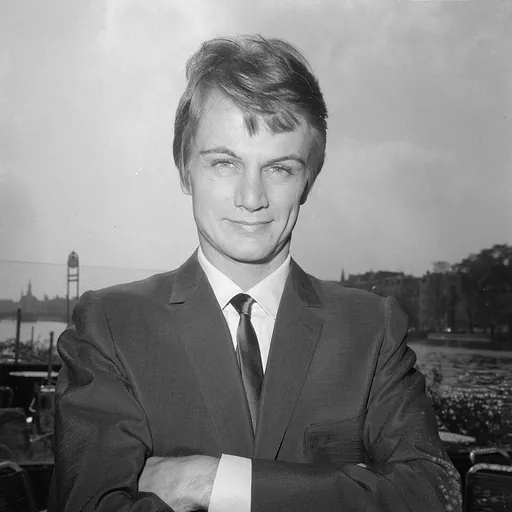
Claude François
French pop singer, songwriter and dancer
About Claude François
Lived 1939 – 1978 (aged 39). Claude François was a French singer, music executive, photographer, actor, singer-songwriter and dancer.
Claude Antoine Marie François (; 1 February 1939 – 11 March 1978), also known by the nickname Cloclo, was a French pop singer, composer, songwriter, record producer, drummer and dancer. François co-wrote the lyrics of "Comme d'habitude" (composed by Jacques Revaux), the original version of "My Way", and composed the music of "Parce que je t'aime mon enfant", the original version of "My Boy". Among his other famous songs are "Le Téléphone Pleure", "Le lundi au soleil", "Magnolias for Ever" and "Alexandrie Alexandra". He also enjoyed considerable success with French-language versions of English-language songs, including "Belles! Belles! Belles!" (The Everly Brothers' "Made to Love"), "Cette année là" ("December, 1963 (Oh, What a Night)") and "Je vais à Rio" ("I Go to Rio").
Claude François sold more than 20 million records during his career, and 6 million since his death. He was about to embark for the United States when he was accidentally electrocuted in March 1978 at age 39. Former French President Valéry Giscard d'Estaing is quoted as saying Claude François was, to him, "the French equivalent of The Beatles, meaning the great talent of a generation".
Early life
The son of a French father and an Italian mother, Claude Antoine Marie François was born in Egypt, in the city of Ismaïlia, where his father, Aimé François (1908–1961), was working as a senior manager in the Anglo-French Suez canal company on the Suez Canal. In 1951, the job took the family to the city of Port Tewfik (now Suez Port). François had an older sister, Josette (born 1934), who wrote her memoirs in 2008.
François' mother, Lucia Mazzeï (1910–1992) was very musical and had her son take piano and violin lessons. On his own, the boy learned to play the drums. As a result of the 1956 Suez Crisis, the family returned to live in Monaco. The family's expulsion from Egypt was traumatic. They struggled financially after François' father fell ill and could not work. François found a job as a bank clerk and at night earned extra money playing drums with an orchestra at the luxury hotels along the French Riviera. With a good singing voice, he was offered a chance to sing at a hotel in the fashionable Mediterranean resort town of Juan-les-Pins. His show was well received, and he began to perform at the nightclubs along the Côte d'Azur, including the Monte-Carlo Sporting, where in 1959, he met Janet Woollacott; they wed in 1960.
Professional career
François moved to Paris, where there were many more opportunities to pursue his career. At the time, American rock and roll was taking hold in France and he took a job as part of a singing group to make a living. With the goal of eventually making it as a solo act, he paid the cost to record a 45rpm. Trying to capitalise on the American dance craze "The Twist", he recorded a song titled "Nabout Twist" that proved a resounding failure. Undaunted, in 1962 he recorded a cover version in French of an Everly Brothers song, "Made to Love", also known as "Girls, Girls, Girls", under the name "Belles! Belles! Belles!".
François' career continued to blossom under a new manager. In 1963 he followed the first success with another French adaptation of an American song, this time recording "If I Had a Hammer" and "Walk Right In" in French as "Si j'avais un marteau" and "Marche Tout Droit" respectively. François met Michel Bourdais who was working for the French magazine Salut les Copains ("Hi Buddies") and he asked him to draw his portrait.
At the mill of Dannemois, the portrait of Claude François, drawn in 1963 by Michel Bourdais at Claude's request.
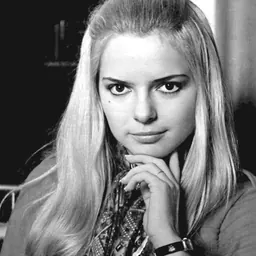
On 5 April 1963, he headlined at the Paris Olympia, a sign that he had arrived. In 1964, he dated 17-year-old Eurovision-winning singer, France Gall. At the end of that year, François created original new dance steps, and Bourdais drew them. For the first time, they brought up the idea of setting up a show with female dancers.
International career
He performed an international career mostly in Belgium and Switzerland, but also in Italy, Spain, England and Canada. In 1976, his song "Le Telephone Pleure" ("Tears on the Telephone") reached No. 35 in the UK Singles Chart. On 16 January 1978, he performed, for the first time for a French singer, a gala at the Royal Albert Hall in London to an audience of 6000.
Death After recording a television special at Leysin for the BBC on 10 March 1978, François returned to his Paris apartment at 46 Boulevard Exelmans. He was due to appear on Les Rendez-vous du Dimanche with Michel Drucker. While preparing for a bath, François attempted to straighten a lightbulb in his bathroom lamp, causing him to receive a severe electric shock, which triggered pulmonary edema. He died in his apartment.
His body was buried in the village of Dannemois, in the Essonne department (about south of Paris), near which Claude François owned a house where he spent his weekends.
Legacy On 11 March 2000, the 22nd anniversary of his death, Place Claude-François in Paris was named in his memory; it is located in front of the building where he died.
The 2003 jukebox musical Belles belles belles is based on François' songs.
A biographical film called Cloclo (My Way internationally) was released in March 2012 to coincide with the anniversary of his death. It runs two and a half hours long and stars Jérémie Renier.
Claude François's sons, Claude Jr and Marc, have assumed the management of their father's artistic heritage over the years.
Controversies A woman named Julie Bocquet maintains that François is her father. Fabienne, her mother, was 15 when she got pregnant. She lied about her age to him and said she was a lot older.
Discography
Don’t just read it —
keep it.
Full-length biographies made to live with: read them, listen on the way to work, watch them tonight.
- E-book
- Audio
- Video
Instant download · yours to keep · every purchase keeps this site free
Important facts
People in Claude François's life
Named in this biography and alive at the same time


Related people
Same field, nearest in time





Contemporaries
People whose lives overlapped Claude François's





Frequently asked questions
Who was Claude François?
French pop singer, songwriter and dancer (1939–1978)
When was Claude François born?
Claude François was born on 1 February 1939 in Ismailia.
When did Claude François die?
Claude François died on 11 March 1978 in 16th arrondissement of Paris.
What was Claude François's occupation?
Claude François was a singer, music executive, photographer, actor, singer-songwriter and dancer.
What nationality was Claude François?
Claude François was French.
Sources & further reading
Cite this page
APA: Biography.guide. (2026). Claude François. https://biography.guide/claude-francois-singer/
MLA: "Claude François." Biography.guide, https://biography.guide/claude-francois-singer/.
Chicago: "Claude François." Biography.guide. https://biography.guide/claude-francois-singer/.
Data last updated: 2026-09-20 · Spot an error? Report a correction.
Page generated 2026-09-27 05:09 UTC