
About Claude Calame
Born 1943. Claude Calame is a Swiss anthropologist, university teacher and historian.
Claude Calame (born 1943 in Lausanne) is a Swiss writer on Greek mythology and the structure of mythic narrative from the perspective of a Hellenist trained in semiotics and ethnology (ethnopoetics) as well as philology. He was a professor of Greek language and literature at the University of Lausanne and is now Director of Studies at the School for Advanced Studies in the Social Sciences, in Paris. He taught also at the Universities of Urbino and Siena in Italy, and at Yale University in the US.
Academic career Calame began his academic career teaching Greek language and literature at the Faculty of Arts of the University of Lausanne, where he also chaired the Interfaculty Department of History and Sciences of Religions. He has held teaching positions at the University of Urbino in Italy, Yale University in the United States, the Doctoral School in Human Sciences at the University of Siena, and the Collegio San Carlo of Modena. He is a member of the Accadmia delle scienze di Torino. In addition to his academic work in Europe and the United States, he conducted brief fieldwork in the Sepik region of Papua New Guinea, further shaping his comparative and anthropological methodologies.
Research Calame’s scholarship explores the poetic and symbolic dimensions of ancient Greek culture, particularly through the lens of ritual and performance.
His work emphasizes the pragmatic and enunciative aspects of poetic discourse in ancient Greece from Homeric epic to choral lyric and Attic tragedy arguing for a performative model of meaning rooted in cultural memory, social practice, and religious ritual. He describes this as a form of "anthropopoiesis", or the cultural shaping of human identity through ritualized song and myth.
His research integrates narratology, semiotics, and comparative anthropology, with a strong emphasis on the challenges of translating cultural and discursive practices across historical contexts.
Scholarly work Claude Calame’s scholarly work is marked by an interdisciplinary approach that blends classical philology, semiotics, historical anthropology, narratology, and discourse analysis.
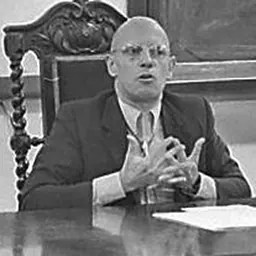
Calame has also engaged in a sustained dialogue with Michel Foucault’s History of Sexuality, critiquing its androcentric focus and its neglect of mythic narratives and forms of ritual poetry as far as Ancient Greece is concerned. Referring in particular to the poems of Sappho and to the various episodes and versions of the myth of Helen, Calame emphasizes how poetic narratives stage gender relations and moral values within pragmatic and ritual contexts.
Among his major publications, The Poetics of Eros in Ancient Greece (1999) presents a comprehensive study of the deity Eros, analyzing the discourse of desire in ancient poetry beyond the paradigm of dominance and submission. In Myth and History in Ancient Greece: The Symbolic Creation of a Colony (2003), he explores the use of myth in the legitimation of colonial foundations, showing how narrative structures and poetic performances contribute to historical identity.
His book Greek Mythology: Poetics, Pragmatics and Fiction (2009), originally published in French in 2000 and translated by Janet Lloyd, treats myth as poetic fiction with social and epistemological functions, bridging Aristotle’s poetics with contemporary semiotic theory.
Calame’s earlier work, The Craft of Poetic Speech in Ancient Greece (1995), investigates the linguistic and ritual dimensions of poetic performance in ancient civic and religious life.
His most recent major study, Choral Tragedy. Greek Poetics and Musical Ritual (2024), offers an anthropological and ethnopoetic reading of Athenian drama, highlighting its choral dimension and its function within musical and civic ritual.
Through this extensive body of work, Calame has significantly shaped modern understanding of ancient Greek poetry as a form of cultural practice situated, performative, and fundamentally embedded in the social and ritual life of the polis.
He thinks that the anthropological approach of the institutional and cultural realizations of Ancient Greece brings us to be critical towards the different social, political and cultural challenges we are facing in the present period, submitted to the neoliberal and authoritarian ideology of globalized capitalism.
And in 2024, he published Déni d’humanité (Denial of Humanity, Paris, Éditions du Croquant), a critical essay analyzing the European Union's refugee policy, which he characterizes as an ethical and political scandal. In this work, Calame argues that most migrants and refugees are victims of wars, socio-economic crises, and environmental disasters many of which have roots in neo-colonial interventions and global inequalities for which European powers bear significant responsibility.
Selected publications
Notes and references
Don’t just read it —
keep it.
Full-length biographies made to live with: read them, listen on the way to work, watch them tonight.
- E-book
- Audio
- Video
Instant download · yours to keep · every purchase keeps this site free
Important facts
People in Claude Calame's life
Named in this biography and alive at the same time


Related people
Same field, nearest in time




Contemporaries
People whose lives overlapped Claude Calame's

Frequently asked questions
Who is Claude Calame?
Swiss mythographer
When was Claude Calame born?
Claude Calame was born on 10 September 1943 in Lausanne.
What is Claude Calame's occupation?
Claude Calame is an anthropologist, university teacher and historian.
What nationality is Claude Calame?
Claude Calame is Swiss.
Sources & further reading
Cite this page
APA: Biography.guide. (2026). Claude Calame. https://biography.guide/claude-calame/
MLA: "Claude Calame." Biography.guide, https://biography.guide/claude-calame/.
Chicago: "Claude Calame." Biography.guide. https://biography.guide/claude-calame/.
Data last updated: 2026-09-20 · Spot an error? Report a correction.
Page generated 2026-09-27 05:22 UTC