
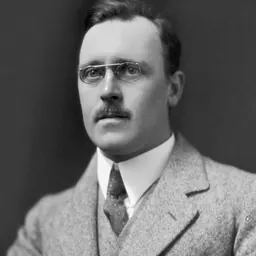
Clare Fischer
American keyboardist, composer, arranger, and bandleader
About Clare Fischer
Lived 1928 – 2012 (aged 83). Clare Fischer was an American composer, pianist, jazz musician, recording artist, music arranger and musician.
Douglas Clare Fischer (October 22, 1928 – January 26, 2012) After graduating from Michigan State University (from which, five decades later, he would receive an honorary doctorate), he became the pianist and arranger for the vocal group the Hi-Lo's in the late 1950s.
Fischer went on to work with Donald Byrd and Dizzy Gillespie, and became known for his Latin and bossa nova recordings in the 1960s. He composed the Latin jazz standard "Morning", and the jazz standard "Pensativa". Consistently cited by jazz pianist and composer Herbie Hancock as a major influence ("I wouldn't be me without Clare Fischer" ), he was nominated for eleven Grammy Awards during his lifetime, winning for his landmark album, 2+2 (1981), the first of Fischer's records to incorporate the vocal ensemble writing developed during his Hi-Lo's days into his already sizable Latin jazz discography; it was also the first recorded installment in Fischer's three-decade-long collaboration with his son Brent. Fischer was also a posthumous Grammy winner for ¡Ritmo! (2012) and for Music for Strings, Percussion and the Rest (2013).
Beginning in the early 1970s, Fischer embarked on a parallel (and far more lucrative) career, eventually becoming a much sought-after arranger,
Early life and education Fischer was the third of four children born to Cecil and Louella (Roussin) Fischer of Durand, Michigan, United States. His parents were of German, French, Irish-Scot, and English backgrounds. In grade school he started his general music study with violin and piano as his first instruments. At the age of seven, he began to pick out four-part harmony on the piano. After two years of piano lessons the family moved to Grand Rapids, Michigan, where Fischer began composing classical music and making instrumental arrangements for dance bands.
At South High School he took up cello, clarinet, and saxophone. His high school instructor, Glenn Litton, took an interest in the boy and, because the family could not afford it, gave him free lessons in music theory, harmony, and orchestration. Fischer returned the favor by orchestrating and copying music for him. Whenever the concert band needed an instrument, Fischer would be supplied with it and the fingering chart to play it in concert. This gave him a personal training in orchestration that was invaluable. In addition, he contributed several vocal arrangements, making his debut in that capacity; it was these arrangements that Herbie Hancock would later point to as a major influence: hat's when I really learned some much farther-out voicings - like the harmonies I used on Speak Like a Child - just being able to do that. I really got that from Clare Fischer's arrangements for the Hi-Lo's. Clare Fischer was a major influence on my harmonic concept... I heard some of his last records, and he was still doing amazing harmonic stuff. And, of course, he was a wonderful pianist, too. But it was those vocal harmonies that were the first thing I heard. I was in awe of him. who went on to employ Fischer in both capacities on several recordings over the next three years; the two would reunite in the mid-1970s, leading eventually to the formation of Fischer's own Latin jazz unit, Salsa Picante.
In 1961, Fischer became interested in Brazilian music through the recordings of Elizete Cardoso and Joao Gilberto. This discovery, coupled with his introduction to the music of Mexican composer Mario Ruiz Armengol, led to Fischer's subsequent collaboration with Cal Tjader, a 1962 LP devoted jointly to Armengol's music and that of assorted contemporary Brazilian composers. Over the following year, Fischer collaborated on two Bossa Nova-themed LPs with saxophonist Bud Shank, and arranged another for pianist George Shearing.
While with The Hi-Lo's, Fischer arranged a record by trumpeter Donald Byrd, which, by virtue of Fischer's use of strings and harps, imbued well-known standards with an unaccustomed, melancholic quality. Although it would be twenty-five years before the album was finally released, September Afternoon paid immediate dividends when Byrd played a copy for Dizzy Gillespie. In turn, Gillespie hired Fischer to write arrangements for a small ensemble featuring brass and woodwinds for his own album, A Portrait of Duke Ellington,
Classical concert artist Richard Stoltzman commissioned him in 1983 to write a symphonic work using Duke Ellington and Billy Strayhorn themes. The result, "The Duke, Swee'pea and Me", an eleven and a half minute orchestral work, was performed with a symphony orchestra and Stoltzman on clarinet all around the world.
Later years: jazz inspiration and pop arranger Starting in 1984, Fischer wrote orchestral arrangements for pop artist Prince. Fischer's arrangements appeared both on Prince's albums and in the Prince film soundtrack music for Under the Cherry Moon (Fischer's first screen credit), Graffiti Bridge, Batman and Girl 6. Prince's 2005 single "Te Amo Corazon", a mid-tempo Latin jazz track, is one example of his collaboration with Fischer.
As a jazz educator, Fischer performed solo piano concerts and conducted clinics and master classes in universities and music conservatories in Europe and throughout the United States. In 1995, Fischer released the solo jazz piano album, Just Me, on the Concord Jazz label. In 1997, his Latin-jazz group, which featured six singers, released the album Rockin' In Rhythm on the JVC Music label.
In 1993, the Dutch jazz pianists Cor Bakker and Bert van den Brink recorded an album of Fischer compositions together entitled DeClared. In 1998, the album The Latin Side, which also featured Fischer compositions, was released by The Netherlands Metropole Orchestra (led by Rob Pronk and Vince Mendoza). Another notable recent CD with Clare is a re-issue of Art Pepper's Tokyo Debut on Galaxy (1995).
In addition to his work with Prince, Fischer provided arrangements for Michael Jackson, Amy Grant, João Gilberto, Paula Abdul, Natalie Cole, Chaka Khan and Branford Marsalis. This work enabled Fischer to record his own music with a band of twenty brass instruments called "Clare Fischer's Jazz Corps". The recordings of this band contain an arrangement of Antonio Carlos Jobim's "Corcovado". Fischer said of Jobim that "he death of my friend Tom Jobim has affected me deeply. Like me, he was 68, and I am still alive. After he died I had a dream in which I was conducting his 'Corcovado'. Only it was not a normal version, there were these harmonic countermelodies in the bass. When I awoke I wrote down what I had dreamed. It became Jobim's In Memoriam, a piece I called 'Corcovado Fúnebre.'" Fischer's tributes to his twin jazz inspirations, Duke Ellington and Billy Strayhorn. Fischer could not attend the tribute; following a medical emergency on the flight home from a family reunion in Michigan the previous year, the family had decided that air travel was "just too stressful."
Death On January 8, 2012, Fischer suffered a cardiac arrest in Los Angeles, following a minor surgery a few days before. His wife of 18 years, Donna, was at his side and performed CPR. He remained in ICU on life support, and died on January 26, 2012. He was survived by his wife; three children, Lee, Brent and Tahlia; and two stepchildren, Lisa and Bill Bachman.
Awards and recognitions Grammy history Career Wins: 3 Career Nominations: 13 Year Category Title Genre Label Result 1976 Best Instrumental Arrangement Accompanying Vocalist(s) "Green Dolphin Street" from Feeling Free Jazz Pausa Nominee 1981 Best Instrumental Arrangement Accompanying Vocalist(s) "Du Du" from 2+2 Latin Discovery Nominee 1981 Best Vocal Arrangement for Two or More Voices "Du Du" from 2+2 Latin Discovery Nominee 1981 Best Latin Recording "Guajira Pa La Jeva" from 2+2 Latin Discovery Winner 1982 Best Vocal Arrangement for Two or More Voices "One Night in a Dream" from And Sometimes Voices Jazz Discovery Nominee 1982 Best Arrangement on an Instrumental Recording (with Earl Klugh and Ronnie Foster) "Balladina" from Crazy for You Pop EMI Nominee 1984 Best Jazz Instrumental Performance By a Group Whose Woods Are These? Jazz Discovery Nominee 1986 Best Instrumental Arrangement Accompanying Vocalist(s) "Free Fall" from Free Fall Jazz Discovery Nominee 1986 Best Jazz Fusion Performance – Vocal or Instrumental "Free Fall" from Free Fall Jazz Discovery Nominee 1996 Best Instrumental Arrangement Accompanying Vocalist(s) "In the Still of the Night" from Lost In the Stars Jazz Teldec Nominee 2011 Best Instrumental Arrangement "In the Beginning" from Continuum Jazz Clare Fischer Productions Nominee 2012 Best Latin Jazz Album Ritmo Latin jazz Clare Fischer Productions Winner (jointly with Brent Fischer) 2013 Best Instrumental Composition "Pensiamento for Solo Alto Saxophone and Chamber Orchestra" from Music for Strings, Percussion and the Rest Classical Clare Fischer Productions Winner
Discography
First Time Out (Pacific Jazz, 1962) Bossa Nova Jazz Samba (Pacific Jazz, 1962) with Bud Shank Brasamba! (Pacific Jazz, 1963) with Bud Shank and Joe Pass Surging Ahead (Pacific Jazz, 1963) Extension (Pacific Jazz, 1963) So Danço Samba (Pacific Jazz, 1964) Manteca! (Pacific Jazz, 1965) Easy Livin' (Revelation, 1966)
Songs for Rainy Day Lovers (Columbia, 1967) One to Get Ready, Four to Go (Revelation, 1968) Thesaurus (Atlantic, 1969) Great White Hope (& his Japanese Friend) (Revelation, 1970) Report of the 1st Annual Symposium on Relaxed Improvisation (Revelation, 1973) The State of His Art (1976) Clare Declares (1977) Salsa Picante (1980)
Alone Together (1980) 2+2 (1981) Machaca (1981) Remembrances (Lembranças) (1990) Introspectivo (2005)
Don’t just read it —
keep it.
Full-length biographies made to live with: read them, listen on the way to work, watch them tonight.
- E-book
- Audio
- Video
Instant download · yours to keep · every purchase keeps this site free
Important facts
People in Clare Fischer's life
Named in this biography and alive at the same time


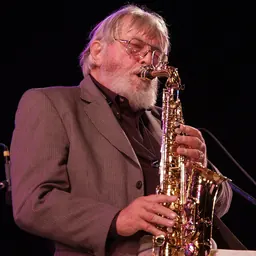

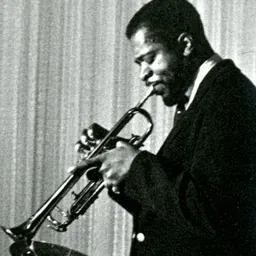

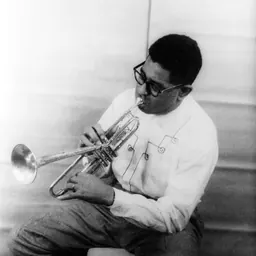

Related people
Same field, nearest in time


Contemporaries
People whose lives overlapped Clare Fischer's

Frequently asked questions
Who was Clare Fischer?
American keyboardist, composer, arranger, and bandleader (1928–2012)
When was Clare Fischer born?
Clare Fischer was born on 22 October 1928 in Shiawassee County.
When did Clare Fischer die?
Clare Fischer died on 26 January 2012 in Burbank.
What was Clare Fischer's occupation?
Clare Fischer was a composer, pianist, jazz musician, recording artist, music arranger and musician.
What nationality was Clare Fischer?
Clare Fischer was American.
Sources & further reading
Cite this page
APA: Biography.guide. (2026). Clare Fischer. https://biography.guide/clare-fischer/
MLA: "Clare Fischer." Biography.guide, https://biography.guide/clare-fischer/.
Chicago: "Clare Fischer." Biography.guide. https://biography.guide/clare-fischer/.
Data last updated: 2026-09-20 · Spot an error? Report a correction.
Page generated 2026-09-27 05:16 UTC