
About Clara Beranger
Lived 1886 – 1956 (aged 70). Clara Beranger was an American screenwriter and writer.
Clara Beranger ( Strouse; January 14, 1886 – September 10, 1956) was an American screenwriter of the silent film era and a member of the original faculty of the USC School of Cinematic Arts.
Biography
Beranger was born Clara Strouse in Baltimore, Maryland, to Benjamin and Fannie (Kahn) Strouse. Her family was of German Jewish descent. Benjamin and his brothers had emigrated and opened a dry-goods store in Indiana.
After graduating from The Baltimore Women's College, now known as Goucher College, with a Bachelor of Arts degree in 1907, Clara moved to New York City and went into journalism, writing for various popular magazines and devoting time to study the stage. On October 23, 1907, she married Albert Berwanger, with whom she had a daughter, Frances Berwanger in 1909. When she began to write, Clara would change her name to Beranger.
Freelance Using the pseudonym of Charles S. Beranger, her first screen employment was as a freelancer, writing for the Edison, Vitagraph and Kalem companies, to whom she furnished many originals as well as continuities. Her success attracted some attention and she was appointed as a staff writer for the Fox Corporation. She wrote several scripts for the popular child star Baby Marie Osborne as well as a much-praised adaptation of A Tale of Two Cities. Beranger also wrote The Interloper for Kitty Gordon, The Bluffer for June Elvidge and The Mirror for Marjorie Rambeau, though many of these films are considered lost. With Forrest Halsey, Beranger wrote the stage play His Chinese Wife, which received good reviews and became one of the successes of the 1919–1920 season.
William DeMille
In 1921 Beranger met her future husband William DeMille and work on the adaptation of Miss Lulu Bett, the Pulitzer Prize-winning play about a young woman who discovers that she's married to a man who is already married. Not as famous today as Cecil, and though most of his silents have been lost, William is still considered one of the silents' most respected directors. Miss Lulu Bett shows a delicate touch in the telling of an impoverished spinster's misfortunes in a small town.
William had other affairs including Lorna Moon who had borne him a son out of wedlock, and with another screenwriter, Olga Printzlau; but he genuinely fell in love with Clara who had tolerated it all. In June 1926, William to the surprise of his wife, announced that he wanted a divorce. Anna refused him and took their daughters, Agnes and Margaret, to Europe for a long trip. When the family returned, William announced that he had given up Beranger and would try again with his wife, but this arrangement only lasted about a year. William DeMille (50) and Clara Beranger (42) would be married in Albuquerque, New Mexico on August 14, 1928 in the drawing room aboard "The Chief", a transcontinental special train. William de Mille states that Beranger wrote all of his screen plays from 1921 - 1928. He writes in his book, Hollywood Saga; "In April, 1928, I had just finished 'Tenth Avenue,' my forty - fifth production and was working on 'Craig's Wife' with Clara Beranger, who had written the screen plays of all my pictures for seven years and continued to do so even after our marriage." .
After marrying into the DeMille dynasty, Beranger would continue to write, including Craig's Wife (1928) for Irene Rich and This Mad World (1930) for Kay Johnson. William would lose everything in the Depression and unhappily rely on Beranger to support him, until Beranger asked Cecil DeMille to employ him to write scenarios.
USC School of Cinematic Arts Baranger would retire from writing pictures in 1934, though she remained a frequent contributor to magazines such as Liberty and Good Housekeeping, and writer of inspirational books. Beranger's largest impact would be as one of the original faculty of USC School of Cinematic Arts which had begun in 1929 as a collaboration between the University of Southern California and Academy of Motion Picture Arts and Sciences. Also among the original faculty were actors Douglas Fairbanks and Mary Pickford, directors D.W. Griffith and Ernst Lubitsch, and producers Irving Thalberg and Darryl Zanuck. Cecil would endow the Drama Department, to which William would be appointed as Director, at last allowing him to exploit his education and skills as a teacher and director.
Beranger was a large proponent of the idea that Hollywood had a responsibility to teach the next generation of artists, and would write a much-used text Writing for the Screen in 1950 and continue to lecture on screenwriting for the rest of her life. She suffered a heart attack and died in 1956.
Filmography
Memories of His Youth (1913, scenario) The Master Mind (1914, scenario) Cameo Kirby (1914, uncredited) The Galley Slave (1915, scenario) Princess Romanoff (1915, scenario) From the Valley of the Missing (1915, scenario) Anna Karenina (1915, writer) Her Mother's Secret (1915/I, scenario, uncredited) Mary Moreland (1917) The Mirror (1917) The Slave Market (1917, scenario) The Greater Woman (1917, unconfirmed) The Dormant Power (1917, writer) The Debt (1917, writer) Motherhood (1917/I, writer) The Golden Wall (1918) The Interloper (1918) Appearance of Evil (1918, scenario) Winning Grandma (1918, scenario) The Way Out (1918, scenario) Milady o' the Beanstalk (1918, scenario) The Voice of Destiny (1918, screenplay) The Love Net (1918, writer) By Hook or Crook (1918, writer) The Beloved Blackmailer (1918, writer) Dolly Does Her Bit (1918, writer) The Grouch (1918, scenario) The Little Intruder (1919) The Hand Invisible (1919) Heart of Gold (1919) The Praise Agent (1919, scenario) Phil for Short (1919, scenario) Hit or Miss (1919, scenario) The Unveiling Hand (1919, scenario) The Bluffer (1919, screenplay) Dust of Desire (1919, story, writer) Wanted: A Husband (1919, writer) Sadie Love (1919, writer) Bringing Up Betty (1919, writer) The Firing Line (1919, writer) Girls (1919, writer) Come Out of the Kitchen (1919, writer)
Half an Hour (1920) White Youth (1920, story) Flames of the Flesh (1920, story) Blackbirds (1920, writer) Civilian Clothes (1920, writer) The Cost (1920, writer) Judy of Rogue's Harbor (1920, writer) The Fear Market (1920, writer) Dr. Jekyll and Mr. Hyde (1920) Miss Lulu Bett (1921, adaptation) Exit the Vamp (1921, screenplay, story) The Gilded Lily (1921, story) The Wonderful Thing (1921, writer) A Heart to Let (1921, writer) Sheltered Daughters (1921, writer) Her Husband's Trademark (1922, story) Clarence (1922, writer) Nice People (1922, writer) Bought and Paid For (1922, writer) Grumpy (1923, adaptation, screenplay) The World's Applause (1923, screenplay, story) Don't Call It Love (1923, writer) The Marriage Maker (1923, writer) Only 38 (1923, writer) The Bedroom Window (1924, screenplay, story) The Fast Set (1924, writer) Icebound (1924, writer) Locked Doors (1925, screenplay, story) New Brooms (1925, writer) Lost: A Wife (1925, writer) Men and Women (1925, writer) Don Juan's Three Nights (1926, writer) Nobody's Widow (1927, adaptation) The Forbidden Woman (1927, adaptation, screenplay) The Little Adventuress (1927, adaptation, screenplay) Almost Human (1927, screenplay, titles) Craig's Wife (1928, adaptation) The Idle Rich (1929, writer) This Mad World (1930, adaptation, screenplay) His Double Life (1933, adaptation) Social Register (1934, writer)
Don’t just read it —
keep it.
Full-length biographies made to live with: read them, listen on the way to work, watch them tonight.
- E-book
- Audio
- Video
Instant download · yours to keep · every purchase keeps this site free
Important facts
Family & relationships
People in Clara Beranger's life
Named in this biography and alive at the same time



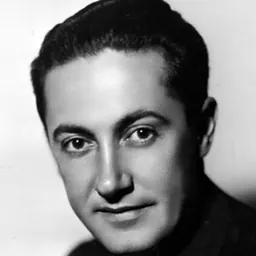

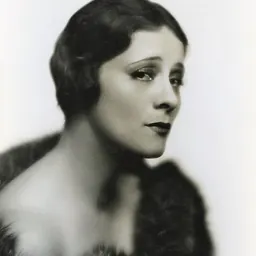

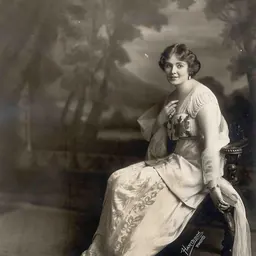
Related people
Same field, nearest in time
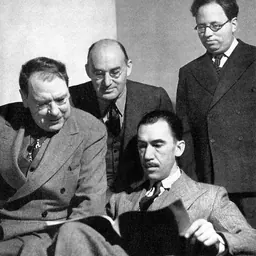

Contemporaries
People whose lives overlapped Clara Beranger's


Frequently asked questions
Who was Clara Beranger?
American screenwriter of the silent film era (1886–1956)
When was Clara Beranger born?
Clara Beranger was born on 14 January 1886 in Baltimore.
When did Clara Beranger die?
Clara Beranger died on 10 September 1956 in Hollywood.
What was Clara Beranger's occupation?
Clara Beranger was a screenwriter and writer.
What nationality was Clara Beranger?
Clara Beranger was American.
Sources & further reading
Cite this page
APA: Biography.guide. (2026). Clara Beranger. https://biography.guide/clara-beranger/
MLA: "Clara Beranger." Biography.guide, https://biography.guide/clara-beranger/.
Chicago: "Clara Beranger." Biography.guide. https://biography.guide/clara-beranger/.
Data last updated: 2026-09-25 · Spot an error? Report a correction.
Page generated 2026-09-27 05:11 UTC