
Claire Shipman
American journalist, Acting President of Columbia University
About Claire Shipman
Born 1962. Claire Shipman is an American journalist and good Morning America.
Claire Shipman (born October 4, 1962) is an American television journalist and the former senior national correspondent for ABC's Good Morning America. Shipman was the acting president of Columbia University from March 2025 through June 2026, leading the university through a 15-month period marked by protests against the Gaza war, the university's $221 million settlement with the Trump administration, and the first review of the University Senate. Before becoming acting president of Columbia, she was a co-chair of the university's Board of Trustees. She was raised in Columbus, Ohio.
In 1980, Shipman graduated from Worthington High School in Worthington, Ohio. She is a 1986 graduate of Columbia College of Columbia University with a degree in Russian Studies. In 1994, she earned a Master of International Affairs from Columbia's School of International and Public Affairs. where she covered the White House and international events. In 1990, she received an Alfred I. duPont–Columbia University Award and an Emmy for her reporting on the Tiananmen Square protests.
She spent five years at CNN's Moscow bureau covering the August 1991 Soviet coup attempt and the subsequent dissolution of the Soviet Union. Shipman received a Peabody Award in 1991 as part of the CNN team that covered the failed coup and in 1993, she earned the medal "Defender of a Free Russia" from Russian president Boris Yeltsin for her reporting of the event.
She worked at NBC from 1997 to 2001 and covered the White House during the Clinton administration. Shipman joined ABC News in 2001, reporting on politics, international affairs and social issues.
Along with co-author Katty Kay, a BBC journalist, Shipman has written three New York Times bestselling books: Womenomics (2009), The Confidence Code: The Science and Art of Self-Assurance—What Women Should Know (2014), and The Confidence Code for Girls (2018).
In 2018, she attended the American Israel Public Affairs Committee (AIPAC) conference and conducted interviews on stage with US politicians Marco Rubio, Chris Coons, Tom Cotton, and Grace Meng.
Columbia University
Trustee
Shipman joined the board of trustees of Columbia University in 2013 and became a co-chair in 2023. Her tenure as co-chair of the board of trustees included the protests at Columbia during the Gaza war and genocide. The Columbia Daily Spectator reported that "leaked text messages reveal that Shipman and board of trustees co-chair David Greenwald, Law ’83, were the driving forces behind the creation of the Task Force on Antisemitism." These leaked text messages also included the message "We need to get somebody from the middle east or who is Arab on our board. Quickly I think. Somehow" in a January 2024 text to Mark Gallogly, vice-chair of the board of trustees.
On March 8, 2025, Mahmoud Khalil, a Palestinian SIPA graduate and negotiator on behalf of the Gaza Solidarity Encampment, was taken by US Immigration and Customs Enforcement (ICE) from his Columbia University residence, and, on April 14, Mohsen Mahdawi, a Palestinian General Studies student, was taken by ICE agents from his naturalization appointment. On April 28, 2025, Shipman first publicly acknowledged Khalil and Mahdawi by name in a university-wide email focusing on expansions to the International Students and Scholars Office.
Acting president On March 28, 2025, Shipman, then serving as co-chair of Columbia's board of trustees, was made acting president of the university amid turmoil from protests in solidarity with Palestine and crackdowns from the Trump administration. She took over for interim president Katrina Armstrong, MD who stepped down suddenly after a call with faculty in which she ostensibly downplayed Columbia's commitment to its concessions to the Trump administration.
Review of the University Senate
Two weeks after delivering her first address as acting president in her first meeting with the University Senate on April 4, 2025, acting president Shipman announced that the University Senate—a policymaking body composed of faculty members and students established for shared governance after the 1968 Columbia University protests —would be subject to review. While Shipman cited concerns regarding community-wide representation within the Senate, the review came under media criticism for her vague language, with The New York Times describing the move as an "effort to potentially diminish the university senate’s authority". The report was released in April 2026 and called "on the senate to reform its structure and communication with the University administration and the board of trustees." It also set up three task forces to carry out the reforms.
Butler Library protests and public reaction After pro-Palestinian protesters occupied the main reading room at Butler Library on May 7, 2025, naming it the "Basel Al-Araj Popular University" for Bassel al-Araj, Shipman authorized the presence of the NYPD, and police in riot gear arrested 78 student protesters. It was the fourth mass arrest at Columbia University in 18 months and the largest since April 2024 when the NYPD arrested 109 in its sweep of "Hind's Hall" and the second Gaza Solidarity Encampment. The policing and suppression of the protest has been described as forceful and aggressive, with two individuals brought out in a stretcher, one of them wearing a kuffiyeh draped over their face. The university Emergency Medical Service was denied entry by Public Safety to treat injured protestors. After heavy media criticism of police activity on campus, Shipman praised the NYPD and Public Safety for what she called their "professionalism".
On May 20, 2025, during her speech at the Columbia College class day ceremony, Shipman was greeted with jeers and boos, as well as chants of "free Mahmoud" in reference to Mahmoud Khalil, a graduate held in detention since U.S. Immigration and Customs Enforcement (ICE) agents took him from his Columbia residence on March 8. At the university's main commencement ceremony the following day, there were also chants of "free Palestine" from the crowd of graduates during her speech.
In July 2025, Shipman apologized after messages in which she called for the removal of a Jewish trustee were released by the House Committee on Education and the Workforce.
Columbia's settlement with the Trump administration
On July 23, 2025, the board of trustees of Columbia University formalized a settlement with the Trump administration in which Columbia would pay the federal government US$221 million and accept various demands from the Trump administration, including adopting the IHRA definition of antisemitism; punishing student demonstrators with expulsions, degree revocations, and multi-year suspensions; and reviewing the university's Middle East studies programs. Following the Gaza Solidarity Encampment and broader protests amid the Gaza genocide, the university became a focus of Donald Trump, whose administration, citing what it called widespread antisemitism at Columbia, cut $400 million in funding to the university, detained and attempted to deport Palestinian student-activists Mahmoud Khalil and Mohsen Mahdawi, and investigated Columbia for Title VI violations. Critics of the settlement called the government's actions "extortion" and Columbia's actions "capitulation" and held that it prejudiced the university's institutional independence and restricted academic freedom within it.
Shipman described the $220 million settlement to restore federal funding as "in line with our values." Addressing public response to the settlement in the hours after it was announced, she said "I think it’s easy to cast things in really binary terms, and capitulation versus fighting," and added: "I think that we have so many important things at stake in this institution right now, and what we’ve been trying to do, the group of us who’s been looking at all of it and talking to the government, talking with people across the University and academic leadership, is slow down and really work as deliberately as we possibly could." Shipman did not attend any of the class day ceremonies. She was then married to former White House Press Secretary Jay Carney, with whom she has a son and daughter. As of 2025, they were recently divorced.
In September 2025, Shipman was engaged to former pro soccer player Kati Jo Spisak.
Don’t just read it —
keep it.
Full-length biographies made to live with: read them, listen on the way to work, watch them tonight.
- E-book
- Audio
- Video
Instant download · yours to keep · every purchase keeps this site free
Important facts
Family & relationships
People in Claire Shipman's life
Named in this biography and alive at the same time
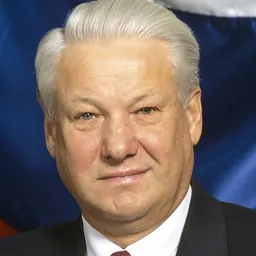

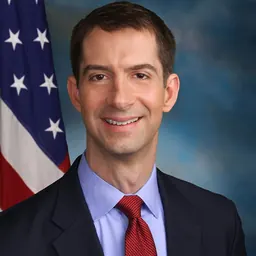
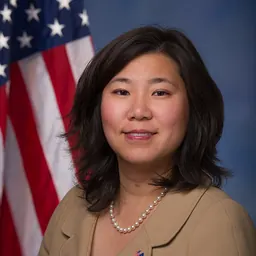
Related people
Same field, nearest in time



Contemporaries
People whose lives overlapped Claire Shipman's




Frequently asked questions
Who is Claire Shipman?
American journalist, Acting President of Columbia University
When was Claire Shipman born?
Claire Shipman was born on 4 October 1962 in Washington, D.C..
What is Claire Shipman's occupation?
Claire Shipman is a journalist and good Morning America.
What nationality is Claire Shipman?
Claire Shipman is American.
Sources & further reading
Cite this page
APA: Biography.guide. (2026). Claire Shipman. https://biography.guide/claire-shipman/
MLA: "Claire Shipman." Biography.guide, https://biography.guide/claire-shipman/.
Chicago: "Claire Shipman." Biography.guide. https://biography.guide/claire-shipman/.
Data last updated: 2026-09-22 · Spot an error? Report a correction.
Page generated 2026-09-27 05:25 UTC