
About Claes Grill
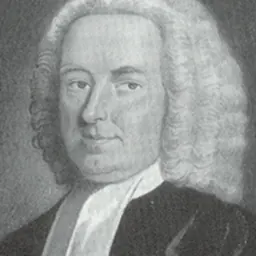
Lived 1705 – 1767 (aged 62). Claes Grill was a Swedish businessperson, ship-owner, patron of the arts and factory owner.
Claes Grill (sometimes spelt Claës Grill; 19 April 1705 – 6 November 1767) was a Swedish merchant, factory owner and ship-owner. He was director of the Grill Trading House, one of the leading companies in the East India trade through the Swedish East India Company (SOIC). The trading house also ran a banking business and owned several ironworks in Sweden. Grill also owned several estates, was interested in natural science and had a brief and unsuccessful political career.
Family One of the notable Grill family, Claes Grill was born in Stockholm, the son of Abraham Grill and Helena Wittmack and twin brother to Anthoni Grill. a woman famed for her beauty. They had two children, Adolf Ulric, collector and natural scientist, and a daughter named Anna Johanna 1745–1801), who donated The Conspiracy of Claudius Civilis to the Royal Swedish Academy of Fine Arts.
Early years Grill started to work for his father and at the age of 17 when he was employed at Abraham's office in the Grill Trading House. After the death of his father, Grill became director of the Trading House, and ran the company together with his uncle Carlos. The name of the company was changed to Carlos & Claes Grill, at that time one of the largest trading company in Sweden. After the death of Carlos (1681–1736), he was sole head of the firm until 1747, when his half-brother joined him as partner. Since the family had connections to the Netherlands, Grill went there in 1731 or 1732, to further his education and gain more experience with the trading business.
The Grill Trading House
During the mid 18th century, the Grill Trading House flourished both in Sweden and abroad. They were connected to hundreds of trading houses in Europe. Foremost was the export of goods to Hamburg, Amsterdam and England. The Dutch Grill company, Antoni Grill & Sons based in Amsterdam acted as a centre for payments to the Grill trading house in Stockholm. The Anglo-Swedish company run by Andrew & Charles Lindegren in London handled all the exports, shipping documents, vessel clearances, and insurance for the Grill Trading House. They also supplied Swedish ships with transit cargoes from England to the countries around the Mediterranean Sea. Grill ran his companies in an old-fashioned, patriarchal way writing letters every week to his managers at the estates concerning everything from the running of the factories to making enquiries about individual employees. Overall, the Grills industrial companies employed more than 4,000 persons at that time.
Benefactor Grill was interested in natural science and contributed to different projects, such as helping Carl Linnaeus financially and with the collection of plants and animal specimens from foreign lands. In 1740, he became a member of the Royal Swedish Academy of Sciences. He gave financial support to young scientists and naturalists, lent money (without interest) to the Royal Swedish Academy of Sciences for the construction of an observatory, contributed a substantial sum of money to the Danviken Hospital and saved the Sveriges Riksbank (the central bank of Sweden) from bankruptcy in 1747 by buying banknotes at their nominal value. In 1748, he became preses or president of the Royal Academy of Sciences and was elected to the board of directors at the central bank of Sweden, a position he held until 1756. Grill was also awarded the honorary title of kommerseråd ("trade counselor") by King Adolf Frederick. In 1755, he was one of the initiating founders of the Factory Academy, a social network for factory owners in central Sweden.
Political life and fall Between 1748 and 1750, Grill was a member of the Bourgeoisie in the Riksdag of the Estates and politically involved with the Hats. He was also one of the partners in the infamous Växelkontoret (Exchange office), a private financial institution handling mainly promissory notes without the involvement of the central bank. When the Caps became the ruling party in 1765, Grill, along with his half-brother Johan Abraham and all the other members of the Växelkontoret, were accused of corruption and mishandling its affairs. In 1765, Grill and Johan Abraham, were fined by the Justice deputation of the Riksdag, and in 1766, they were sentenced to pay back "five barrels of gold" to the Växelkontoret. When the Hats regained their political power in the Riksdag the following year, the sentence was revoked, but by then Grill had died.
Don’t just read it —
keep it.
Full-length biographies made to live with: read them, listen on the way to work, watch them tonight.
- E-book
- Audio
- Video
Instant download · yours to keep · every purchase keeps this site free
Important facts
Family & relationships
People in Claes Grill's life
Named in this biography and alive at the same time

Related people
Same field, nearest in time


Contemporaries
People whose lives overlapped Claes Grill's





Frequently asked questions
Who was Claes Grill?
(1705-1767)
When was Claes Grill born?
Claes Grill was born on 19 April 1705 in Parish of St Gertrud of Germany.
When did Claes Grill die?
Claes Grill died on 6 November 1767 in Parish of St Gertrud of Germany.
What was Claes Grill's occupation?
Claes Grill was a businessperson, ship-owner, patron of the arts and factory owner.
What nationality was Claes Grill?
Claes Grill was Swedish.
Sources & further reading
Cite this page
APA: Biography.guide. (2026). Claes Grill. https://biography.guide/claes-grill/
MLA: "Claes Grill." Biography.guide, https://biography.guide/claes-grill/.
Chicago: "Claes Grill." Biography.guide. https://biography.guide/claes-grill/.
Data last updated: 2026-09-25 · Spot an error? Report a correction.
Page generated 2026-09-27 05:11 UTC