
Cino da Pistoia
Italian Renaissance jurist and poet
About Cino da Pistoia
Lived 1270 – 1336 (aged 65–66). Cino da Pistoia was a poet lawyer, jurist-consultant, university teacher and poet.
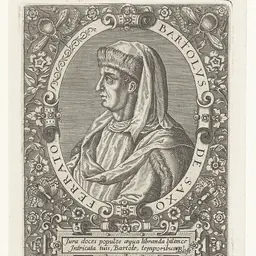
Cino da Pistoia (1270 – 1336) was an Italian jurist and poet. He was the university teacher of Bartolus de Saxoferrato and a friend and intellectual influence on Dante Alighieri.
Life Cino was born in Pistoia, Tuscany. His full name was Guittoncino dei Sinibaldi or, Latinised, Cinus de Sighibuldis. His father was a nobleman from the House of Sinibaldi.
Exiled from Pistoia in 1302, he was able (unlike Dante) to return to his native city after a few years and hold public office. He supported the Emperor Henry VII, and composed a canzone on his death in 1313.
Cino received his doctorate in law from the University of Bologna, where he studied under Dinus de Rossonis. From 1321 he was a professor of law, teaching in Siena, Florence and Perugia and also in Naples when the young Boccaccio was there. Two of his students were Bartolus (in Perugia) and Francesco Petrarca (in Bologna).
In 1334, he was elected Gonfaloniere of Pistoia, but did not take up the office. Cino is buried in the Cathedral of Saint Zeno in Pistoia.
Works Cino's works as Latin jurist include a Lectura in Codicem and an unfinished Lectura in Digestum vetus. The Lectura in Codicem (1312–1314), his most important legal work, was a commentary on the Justinian Code which blended pure Roman law with contemporary statutes and customary and canon law, thereby initiating Italian common law.
In Italian, Cino is the most prolific writer of lyric poetry between Guittone d'Arezzo and Petrarch, with a secure surviving corpus of twenty canzoni, eleven ballate and 134 sonnets, notable for purity of language and harmony of rhythms. Most of these are love-poems celebrating Selvaggia dei Vergiolesi (d.1310). In the De vulgari eloquentia (2.2) Dante assigns him prime place amongst love poets in Italian.
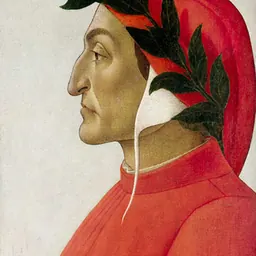
His friendship with Dante appears to have been a long-standing one, although it may be that Terino da Castelfiorentino, not Cino (as has been thought), was the author of one of the replies to Dante’s early ‘A ciascun alma presa e gentil core’ (Vita Nova 3). Cino composed a canzone on the death of Beatrice in 1290, and there are another six sonnets to Dante from Cino and five by Dante to Cino, with Dante initiating the exchange in two cases. They seem to have been particularly close during the first years of Dante’s exile. In the De vulgari eloquentia Dante links the two of them in his poetic rolls of honour as ‘Cynus et amicus eius’. He also addresses the third of his letters (1306?) ‘to the Pistoian exile’. On the death of Dante in 1321 Cino wrote the celebratory ‘Su per la costa, Amor, de l’alto monte’. There are, however, two sonnets (one of which is not definitely by Cino) which are critical of the Divine Comedy.
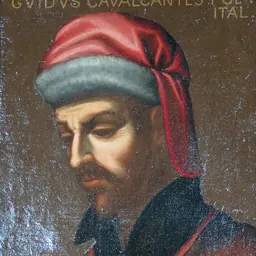
Cino is the link between the Dolce Stil Novo and the greater lyric poetry of Petrarch, whose musicality his own practice anticipates. His poetic correspondents include Guido Cavalcanti and Onesto da Bologna, who jibed at the dreaminess of the Dolce Stil Novo. Cino was also close to his fellow student Giovanni d'Andrea. The opening of the canzone, ‘La dolce vista e’l bel guardo soave’, is cited respectfully by Petrarch (Canz. 70) and the whole poem is re-written in ottava rima in Boccaccio’s Filocolo (5.62–5). Petrarch also wrote a sonnet on his death (Canz. 92).
Portrayals Cino is the narrator of Ezra Pound's dramatic monologue "Cino."
Works
Don’t just read it —
keep it.
Full-length biographies made to live with: read them, listen on the way to work, watch them tonight.
- E-book
- Audio
- Video
Instant download · yours to keep · every purchase keeps this site free
Important facts
People in Cino da Pistoia's life
Named in this biography and alive at the same time

Related people
Same field, nearest in time



Contemporaries
People whose lives overlapped Cino da Pistoia's


Frequently asked questions
Who was Cino da Pistoia?
Italian Renaissance jurist and poet (1270–1336)
When was Cino da Pistoia born?
Cino da Pistoia was born in 1270 in Pistoia.
When did Cino da Pistoia die?
Cino da Pistoia died in 1336 in Pistoia.
What was Cino da Pistoia's occupation?
Cino da Pistoia was a poet lawyer, jurist-consultant, university teacher and poet.
Sources & further reading
Cite this page
APA: Biography.guide. (2026). Cino da Pistoia. https://biography.guide/cino-da-pistoia/
MLA: "Cino da Pistoia." Biography.guide, https://biography.guide/cino-da-pistoia/.
Chicago: "Cino da Pistoia." Biography.guide. https://biography.guide/cino-da-pistoia/.
Data last updated: 2026-09-20 · Spot an error? Report a correction.
Page generated 2026-09-27 05:29 UTC