
Ciccio Cappuccio
Head of the "Bella Società Riformata"
About Ciccio Cappuccio
Lived 1845 – 1892 (aged 46–47).
Francesco "Ciccio" Cappuccio ( – 5 December 1892), also known as for his elegant manners, was a legendary guappo and the capintesta (head-in-chief) of the Camorra, a Mafia-type organisation in Naples in Italy, in the last half of the 19th century. He is credited with modernizing the Bella Società Riformata (Beautiful Reformed Society) as the Camorra was known then. The mythicization of his person mixes fact, fiction and legend, not least because of the journalism at the time.
Camorra background Ciccio Cappuccio was raised in a known criminal family in the infamous Imbrecciata street in the Vicaria neighbourhood in Naples, a zone full of violence, prostitution and camorristi. The family ruled the area since 1756 when Leopoldo Cappuccio, known as 'O Mastriano, imposed his authority. In 1781, a Royal decree ordered all brothels in Naples to be moved to the Imbrecciata, which became the only zone where prostitution was tolerated.
The only authority that ruled the area was the Camorra, which maintained order by force as a kind of unappointed justice of the peace while demanding kickbacks. In 1853, Ciccio Cappuccio took over the reins of his father Antonio Totonno Cappuccio, who ran a tavern in the area.
In 1855, the municipality surrounded the Imbrecciata prostitution area with a high wall to close off the neighbourhood. When the forces of Giuseppe Garibaldi advanced towards Naples in June 1860 in an effort to unify Italy, political unrest increased in the city. Cappuccio formed a demonstration with hundreds of prostitutes and camorristi in redshirts – the symbol of Garibaldi – and tore down the wall. The next day, authorities ordered the rebuilding of the wall. On the night of 27–28 August 1860, when Garibaldi was closing in on Naples, Cappuccio led another assault on the wall and destroyed it again. Ecco la Camorra (This is the Camorra). Drawing by Christian Wilhelm Allers, in "La bella Napoli" (1893) Naples was divided into 12 districts at the time, and the criminal activities in each district were headed by a caposocietà (or capintrito). These ringleaders elected a capintesta (head-in-chief), the general head of the Neapolitan Camorra, which for a long period corresponded to the caposocietà of the Vicaria district to the east of the city, between the prisons and the courts. There the command of the organisation remained in the hands of the Cappuccio family for quite some time. Both Cappuccio and De Crescenzo were arrested on 6 October 1869, with some 80 other camorristi. He was released after a month, and rumour has it that the arrest was merely a plot so that Cappuccio could thank the Camorra inmates for his election and hear their demands.
After his release from prison, Cappuccio left the Imbrecciata and moved to the elegant Via Nardones. Close to his house he opened a vrennaiuolo shop selling bran and carob at the piazza San Ferdinando. The criminal control of the horse 'supply chain' was a fundamental segment of camorristic activity, in which most ringleaders, including Cappuccio, operated first and foremost. Criminal control began at auctions of the army's horse scraps, which were hoarded at low prices, thanks to the elimination of competition. The second step was the trade in bran and locust beans for animal feed, and this was the official activity carried out by many of the ringleaders. The sale of those commodities allowed them to control the ranks of the crews of coachmen and stable boys, on which they imposed the purchase of fodder for their horses. They also facilitated money lending at usury rates.
Cappuccio's stature as a powerful crime boss rose not only within the Camorra, but also in powerful circles of the Neapolitan society. He was approached by the police chief of Naples, Ermanno Sangiorgi, the same one who in 1898 in Sicily would write one of the first reports on the Sicilian Mafia. Sangiorgi asked Cappuccio to recover a gold watch studded with gems stolen from Baroness Nicotera-Ricco, wife of the then Minister of the Interior, Giovanni Nicotera. A few years later, Cappuccio's intercession proved necessary to also recover the gold snuff box stolen from Michele Pironti, Attorney General and future Minister of Justice.
Reforming the Camorra Cappuccio modernized the Bella Società Riformata (Beautiful Reformed Society) as the Camorra was known at the time. He established the rule that a Camorrista had to have a regular job as a cover. Much criticized at the time, given that members were almost all vagrants, this innovation later proved useful when special laws against the associations of criminals were issued and the criminals could prove to have honest and stable work. Together with his two lieutenants, Ettore Longo and Gaetano Buongiorno, the new capintesta also compiled a new code for the Beautiful Reformed Society. The most interesting article, the one that revolutionized the ancient customs of the association, was marked with the number 151, and aimed to reduce the number of dichiaramenti (duels) that continuously took place in the streets of Naples between Camoristi, killing each other and endangering the lives of passers-by. Cappuccio died on 5 December 1892 from a heart attack while he was having dinner. that depicted Cappuccio as "a righter of wrongs" and as "a proletarian justice of the peace". Three days after his death, Ferdinando Russo, a popular poet of the period, published a poem "Canzone 'e Ciccio Cappuccio" in Il Mattino, immortalising the legendary Camorra chief. Days after his death, 'relics' began to circulate: small bottles filled with his blood, pieces of bone, strips of skin, probably taken by funeral workers, to do business on one of the Camorra bosses most celebrated by followers. Other sources mention that after the death of Cappuccio, Giuseppe Chirico, 'o Granatiere (The Grenadier), from the Porta San Gennaro neighbourhood was elected. He was defeated in a zumpata – a kind of ritual initiation knife duel – by Totonno 'o pappagallo (The Parrot) – so-named for his beak parrot nose – who took over the reign before being defeated by Alfano.
Over the years, more legends grew around his personality distorting the facts by fiction. Acts of other camorristi were attributed to him, including that of having quelled the August 1893 popular revolt in Naples incited by a strike of horse-cab drivers notoriously linked to the Camorra, against the extension of tramways, which, in fact, happened eight months after the death of Cappuccio.
The most retold legend is the one when he entered the prison of San Francisco for the first time. He had a stutter and could not stand the orders of the master of the wool mill where he worked. One day, with unexpected violence, he took his knife and slashed it across the face of his employer. Ciccio was arrested and sentenced to seven years in jail. When he entered the prison cell, he was approached with the usual request for lamp oil; the customary kickback new inmates had to pay. Cappuccio refused and was attacked by twenty inmates. Only one emerged unscathed from the battle: Ciccio Cappuccio. Twelve ended up with battered heads and seven with broken arms.
Don’t just read it —
keep it.
Full-length biographies made to live with: read them, listen on the way to work, watch them tonight.
- E-book
- Audio
- Video
Instant download · yours to keep · every purchase keeps this site free
Important facts
People in Ciccio Cappuccio's life
Named in this biography and alive at the same time
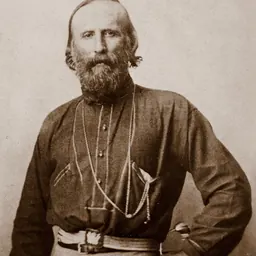


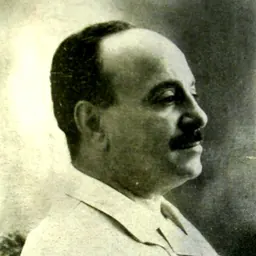
Contemporaries
People whose lives overlapped Ciccio Cappuccio's
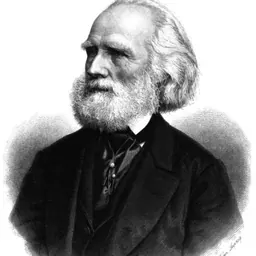



Frequently asked questions
Who was Ciccio Cappuccio?
Head of the "Bella Società Riformata"
When was Ciccio Cappuccio born?
Ciccio Cappuccio was born in 1845 in Naples.
When did Ciccio Cappuccio die?
Ciccio Cappuccio died on 5 December 1892 in Naples.
Sources & further reading
Cite this page
APA: Biography.guide. (2026). Ciccio Cappuccio. https://biography.guide/ciccio-cappuccio/
MLA: "Ciccio Cappuccio." Biography.guide, https://biography.guide/ciccio-cappuccio/.
Chicago: "Ciccio Cappuccio." Biography.guide. https://biography.guide/ciccio-cappuccio/.
Data last updated: 2026-09-20 · Spot an error? Report a correction.
Page generated 2026-09-27 05:31 UTC