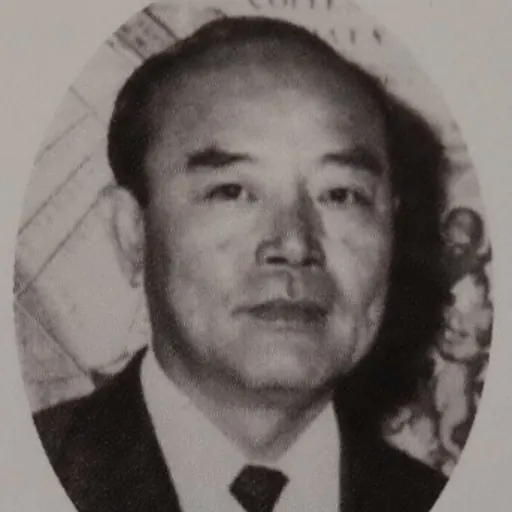
About Chuan Ratanarak
Lived 1920 – 1993 (aged 72–73). Chuan Ratanarak was a Thai businessperson.
Chuan Ratanarak (; ; 1920–1993) was a self-made Thai businessman who built one of the largest and most powerful business empires in Thailand. Starting with nothing, Chuan was one of the legendary generation of Chinese merchants in Thailand to achieve success in one generation. By the time of his death in August 1993, age 73, Chuan was at the head of one of the three dominant business families in Thailand - the others being the Sophonpanich family and the Lamsam family - and the business group Chuan had created, the Ratanarak Group, included Thailand's most successful terrestrial broadcaster, a major retail banking and insurance group and the country's second largest cement producer. Comparing Thai and US entrepreneurs, Professor Krishnamra, Director of the Sasin Business School at Thailand's Chulalongkorn University, has said “given the size of the market and the stage of development, Chuan as an entrepreneur was comparable to the Vanderbilts or Rockefellers”. Chuan is the father of Krit Ratanarak and the grandfather of Chachchon Ratanarak.
Personal life and legacy Chuan married Sasithorn in the 1940s and they had 6 children; one son, Krit, and 5 daughters. He also took Krit's son, Chachchon, under his wing.
In the early years, Chuan worked from a modest office in the Chinatown branch of Bank of Ayudhya on Yaowarat Road and although he would move to larger modern offices as the business grew, he would remain a very private and family-oriented individual who, unlike many other prominent overseas Chinese businessmen, would seldom be seen at social functions or events. Chuan was extremely hard working, often to be found at his desk at home working late into the night studying company documents or checking accounts on his abacus.
A gifted businessman, Chuan was a highly respected and admired figure in Thailand's business community with a reputation for diligence and assiduous attention to detail and was well known among Thailand's Teochew community. Chuan was also known for his generosity and philanthropy, particularly where he saw the long term benefits for Thailand. Among other projects, he set up an education foundation and financial support from Chuan was critical to the establishment of Sasin Business School and its later development.
Chuan is recognised as one of the last great self-made Thai business Titans. In the 1940s, as a young man, he worked as a labourer at the Ratchawong pier in Bangkok's docks. He saved his wages until he was able to buy his own ship and in a short period he established two of the most successful waterway transport companies of the time; Bangkok Transport and Bangkok Lighter.
Throughout the 1940s and 1950s Thailand's Chinese community played a key role in business and commerce. Because of discriminatory anti-Chinese legislation in place from 1939 to 1957 under the pre and post-war premierships of Field Marshal Plaek Phibunsongkhram, and the uncertain political and business environment in post-war Thailand, it became necessary for Chinese business families to develop close business relationships with each other and with dominant military groups and powerful Thai families. In the early 1950s, Chuan built particularly close relationships with among others the family of Field Marshal Praphas Charusathien
Building the Ratanarak Group
Shipping In 1954, Chuan founded the United River Transport Co Ltd with the support of Field Marshal Praphas Charusathien merging his existing shipping businesses - Bangkok Transport and Bangkok Lighter - into the new company. In 1958, Chuan was encouraged by the incoming government to invest in Bank of Ayudhya, known today as Krungsri Bank, which had seen its performance decline following the death of the bank's then leading shareholder and manager. Chuan served as the senior executive of the Bank from 1961 until 1993. Through their political connections and growing economic power, the largest banks also provided a degree of protection for Thai companies to whom they extended loans allowing emerging local businesses to grow rapidly in a difficult business environment, particularly during the period of the US guided reforms in the 1960s and 1970s and building the powerbase and wealth of their supporting banking groups in the process.
Siam City Bank In 1963, Chuan acquired a stake in Siam City Bank which increased to 25% during further rounds of capital raising, making Chuan the bank's major shareholder. Chuan divested his shares in Siam City Bank during the 1980s. During the 1980s, the company was the first to use local lignite in place of fuel oils and to deploy a heat-energy recycling system. Production grew steadily during the 1980s and 1990s and production capacity exceeded 12 million tons in 1996. Today, Siam City Cement is still Thailand's second largest cement producer with a market share of around 27% Bangkok Broadcasting & Television (BBTV) was set up to operate Channel 7, with financing provided by Chuan through the Ratanarak Group and in turn Chuan acquired a substantial majority of the shares.
Chuan was instrumental in the success of BBTV providing extensive funding to invest in the broadcasting infrastructure. In 1991, construction started on an office tower that would be the new headquarters for Bank of Ayudhya on riverfront land on the Rama III road in the Yannawa district. Around 30 families dominated this period and the banking groups towered above them all. Chuan's conservative approach to business and banking reflected his command of financial details across all the businesses and meant that the Ratanarak Group had a strong financial foundation when in 1997 Thailand was hit by the Asian financial crisis.
The robust financial position of the Ratanarak Group companies at the time Chuan passed in 1993 meant that the family group, now under the control of Chuan's son and heir Krit, was one of very few to prosper despite the crisis. The group emerged from the crisis with the Ratanaraks retaining their position in the top five business families in Thailand, The family shareholding in the bank was reduced in 2007 from 35% to 25% The family previously brought in GE Capital in 2007 to enhance banking operations and install best practice. In 2013, GE Capital held just under 25% of the bank's equity and were part-way through a process to sell their remaining holding following losses incurred in the 2008 banking crisis and a change in strategy by GE to reduce their exposure to financial services. In 2013, the Ratanarak family controlled 25% of the bank's equity and was the bank's largest shareholder. Contemporary newspaper reports wrongly suggested that the proceeds from the sale of equity to Holderbank was used by the family to recapitalise Bank of Ayudhya. However, as part of the terms of the sale, the full proceeds received by the family from Holderbank – as well as additional funds from the Ratanarak Group – were reinvested in Siam City Cement via a rights issue to recapitalise the business and the capital injected by the family into the bank came instead from contingency reserves. In 2013, the Ratanarak family controlled 47% of the equity in Siam City Cement which had a market value of US$3.2 billion and no significant debt with Holcim holding 27.5% of the shares. In 1998, prior to the deal with Holderbank, the family had controlled slightly more than 50% of the company.
Don’t just read it —
keep it.
Full-length biographies made to live with: read them, listen on the way to work, watch them tonight.
- E-book
- Audio
- Video
Instant download · yours to keep · every purchase keeps this site free
Important facts
People in Chuan Ratanarak's life
Named in this biography and alive at the same time




Related people
Same field, nearest in time


Contemporaries
People whose lives overlapped Chuan Ratanarak's





Frequently asked questions
Who was Chuan Ratanarak?
Thai businessman
When was Chuan Ratanarak born?
Chuan Ratanarak was born in 1920 in Shantou.
When did Chuan Ratanarak die?
Chuan Ratanarak died in 1993.
What was Chuan Ratanarak's occupation?
Chuan Ratanarak was a businessperson.
What nationality was Chuan Ratanarak?
Chuan Ratanarak was Thai.
Sources & further reading
Cite this page
APA: Biography.guide. (2026). Chuan Ratanarak. https://biography.guide/chuan-ratanarak/
MLA: "Chuan Ratanarak." Biography.guide, https://biography.guide/chuan-ratanarak/.
Chicago: "Chuan Ratanarak." Biography.guide. https://biography.guide/chuan-ratanarak/.
Data last updated: 2026-09-22 · Spot an error? Report a correction.
Portrait: Wikimedia Commons · author & licence
Page generated 2026-09-27 05:00 UTC