
About Chua Ek Kay
Lived 1947 – 2008 (aged 60). Chua Ek Kay was a Chinese and Singaporean painter and artist.
Chua Ek Kay (; 21 November 1947 – 8 February 2008) was a Singaporean artist. He painted, among other things, abstract works inspired by Australian aboriginal cave paintings.
Early years Chua Ek Kay was born in Guangdong, China, on 1947, the eldest of seven children. In the 1950s, his family migrated to Singapore, and settled in Liang Seah Street. Chinese cultural influences were very much a part of his daily life and art, and as a child Chua picked up Chinese literature and poetry, and practised writing Chinese characters with his father. Even in school, he often took part in calligraphy and classical poetry activities as a student at the Catholic High School. He excelled in both areas, writing his own poems and becoming known in school for his excellent poetic calligraphy. This reputation soon spread to local calligraphy and poetic circles.
In 1975, the 28-year-old Chua became a student of Chinese brush painting and seal-carving of Singaporean master ink painter, Fan Chang Tien.
Artistic career Though he was deeply passionate about art, Chua continued to make his living by taking on a variety of jobs. Finally, in 1985, he resigned his post as a manager of a garment factory to become a full-time artist. At the age of 38 he embarked on his artistic journey, supplementing his income as a lecturer with the Extramural Studies Department of the National University of Singapore.
Bicycles Rest at the Backlane (2000)60 x 76 cm. Ink on paper.Collection of the NUS Museums.
He began exploring his ideas about art, breaking away from traditionalist Shanghai School-styled subjects. Remembering his childhood days in Liang Seah Street and its community, Chua found new inspirations in his paintings from mountains and lakes, to shophouses and even abstract works inspired by Australian aboriginal cave paintings.
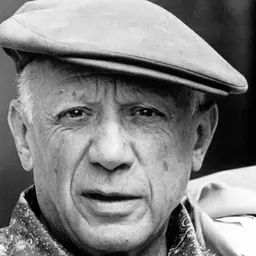
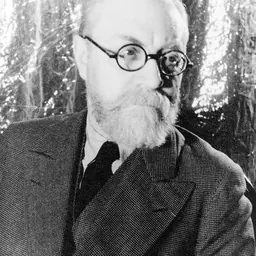
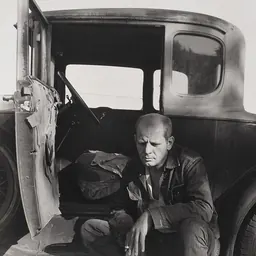
As he explored new expressions in art, he found similarities between the Shanghai School style and the works of Western artists like Henri Matisse, Pablo Picasso and Jackson Pollock in terms of artistic spontaneity. This new-found interest in Western art led him to study the subject at the Lasalle-SIA College of the Arts (now the LASALLE College of the Arts) in 1990. He was also to spend several more years engaged in a comparative study of eastern and western concepts in painting in Australia, receiving a Bachelor of Fine Arts (BFA) from the University of Tasmania and a Master of Arts (MA (Hons)) from the University of Western Sydney. Nevertheless, the Chinese brush style which he had picked up earlier never left him, and its influence continued to flow in his paintings.
On 21 August 2006, Chua launched his "Street Scenes Collection" series of paintings at the Singapore Management University (SMU). Valued at S$302,000, these 30 works depict scenes of old shop houses, narrow alleyways, historic sites and other memories portraying Singapore's heritage, in his signature brush styles – a legacy of 20 years of artistic practice. He officially donated this Collection to the University on 18 October 2006, in support of the University's "Visual Arts Initiative" launched earlier in the year. SMU subsequently published a book entitled Chua Ek Kay: Singapore Street Scenes, Evoking Memories (2007).
Lee Boon Yang, the Minister for Information, Communications and the Arts, said of the artist: "Ek Kay has developed a unique style of his own. When one looks at his paintings, one is reminded how a simple approach to life can translate into something powerful. I find his paintings particularly interesting in the way he injects so much passion and emotion into a minimalist landscape."
Aesthetics and philosophy in his art
When Chua was under the tutelage of Fan Chang Tien, he not only learnt the four elements of the "Shanghai School" – calligraphy, classical poetry, painting and seal-carving from his master. Fan drilled him in the principles of 花鸟 (, or "flower–bird"), and enforced Chua's foundations in his art. This also intensified his interest in art, studying the aesthetics of post-Ming Dynasty masters particularly of Shih-Tao.
Fan Chang Tien also reminded Chua to be expressive in whatever subject matter he painted, for there was rhythm with each stroke. This "life" in his paintings also had to come with an understanding of "black within black", expressing art through different gradations of ink tones to capture a "simplistic complexity" in the depiction of the subject matter.
As he explored Western ideas in his art, he found that the difference between western and eastern art lay solely in their spirits: western art was forceful, and eastern art more introspective. He also found that the emergence of "east-west art fusion" in art adopted by pioneer Singapore artists in the 1950s and 1960s was partly due to the Cultural Revolution. That Revolution not only closed China's door from the rest of the world, it also locked away its "conventional Chinese art themes of snowy peaks and gushing rivers" that were identified with by Chinese artists overseas. Singapore artists then realized they did not really relate to these conventional art themes and they should adopt familiar subjects that they could distill through their emotion and artistry. Many artists in that period were also English-educated, and thus adopted western ideas as alternative sources of art. While Chua's creations are infused with Western artistic spontaneity, he felt that tradition continued to play an important role in breaking new ground and generating inspirations in art.
"With Chua's passing," said Edmund Cheng, the Chairman of the National Arts Council, "Singapore has lost a great artist and a towering talent... To his friends and fellow artists, Ek Kay was a man of few words, and was always respected for his quiet confidence and humility despite his outstanding international success. Ek Kay was an exemplary artist who had left us at his peak."
Major exhibitions
Singapore
Some information in the above table was obtained from .
Don’t just read it —
keep it.
Full-length biographies made to live with: read them, listen on the way to work, watch them tonight.
- E-book
- Audio
- Video
Instant download · yours to keep · every purchase keeps this site free
Important facts
People in Chua Ek Kay's life
Named in this biography and alive at the same time

Related people
Same field, nearest in time


Contemporaries
People whose lives overlapped Chua Ek Kay's



Frequently asked questions
Who was Chua Ek Kay?
Singaporean Chinese painting artist (1947-2008)
When was Chua Ek Kay born?
Chua Ek Kay was born on 21 November 1947 in Guangdong.
When did Chua Ek Kay die?
Chua Ek Kay died on 8 February 2008 in Singapore.
What was Chua Ek Kay's occupation?
Chua Ek Kay was a painter and artist.
What nationality was Chua Ek Kay?
Chua Ek Kay was Chinese and Singaporean.
Sources & further reading
Cite this page
APA: Biography.guide. (2026). Chua Ek Kay. https://biography.guide/chua-ek-kay/
MLA: "Chua Ek Kay." Biography.guide, https://biography.guide/chua-ek-kay/.
Chicago: "Chua Ek Kay." Biography.guide. https://biography.guide/chua-ek-kay/.
Data last updated: 2026-09-20 · Spot an error? Report a correction.
Page generated 2026-09-27 05:33 UTC