
Chrysanthus Notaras
Greek Polymath and Patriarch of Jerusalem
About Chrysanthus Notaras
Lived 1655 – 1731 (aged 75–76). Chrysanthus Notaras was a christian minister, astronomer, mathematician, geographer, writer and patriarch.
Chrysanthus Notaras (; 1655/1660 – February 7, 1731), also known as Chrysanthus of Jerusalem, was Patriarch of Jerusalem (February 19, 1707 – February 7, 1731) and a scholar in Eastern Orthodoxy. He was a mathematician, astronomer, geographer, and author. He is known for creating modern maps in the Greek language. He was one of Giovanni Domenico Cassini's students. He also built astronomical equipment.
Early life He was born in Arachova, Achaea, in 1655. He was a member of the same family as his predecessor, Dositheos II Notaras and Macarius of Corinth, Metropolitan of Corinth.
Clerical career Chysanthos Notaras was Patriarch of Jerusalem from 1707 until 1731.
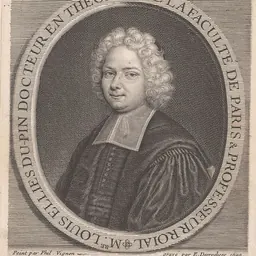
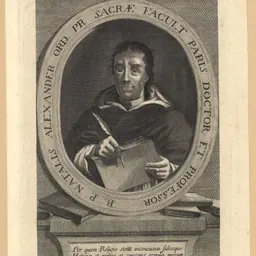
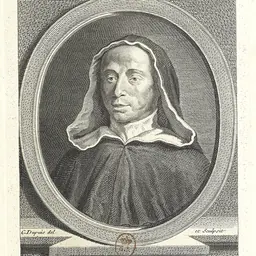
Scientific and educational career Binakas Geographikos, Crysanthus Notaras, Padova, 1700. The first post-Byzantine map in Greek He is known for spreading Astronomy in the early eighteenth century. He was one of the most educated Greeks of his time. He was educated in the traditional Orthodox dogma. He learned natural philosophy, mathematics, and theology at the University of Padua. He continued his education in Paris. While in Paris he met liberal theologians, such as Louis Ellies Dupin, Noël Alexandre, and Michel Le Quien. He also met astronomer Giovanni Domenico Cassini. He became his student. He studied Astronomy, Geodesy, and Geography (1700). Cassini was the Director of Paris Observatory. Chrysanthus served as an observer. He also built astronomical instruments, under Cassini's supervision.
Notaras's interests in the mathematical sciences continued throughout his life. His main interests were astronomy and geodesy. He helped create new schools. He believed scientific teaching was important. He promoted formal scientific education. He printed a book called Introduction to Geometry and Spherics. The book did not feature the heliocentric system. He introduced new methods of accuracy in measurement. He was aware of the heliocentric system, although he himself wrote about the geocentric Ptolemaic system following Korydalism. In its opposition to the Copernican system, it does not use theological objections and arguments, but the most substantial objection adopted by scientists during the 16th century. It exposes objectively and over time other views of ancient and modern astronomers as to which system is most suitable for explaining the motions of the planets. He mentions that the Pythagoreans suggested the movement of the Earth and makes special mention of Aristarchus the Samian. Chrysanthos Notaras included an astronomy curriculum at the schools of the Holy Sepulchre.
Both Greek and Italian education was very strict at the time. Korydalism was the only approved education. Heliocentrism was illegal. Galileo's books were on the forbidden list by the Index Librorum Prohibitorum. The Galileo affair and the Greek equivalent, the Methodios Affair were both indications that the church was not ready to accept new ideas. Notaras took many risks but due to his hi-level in the church, he was able to explore scientific advancement much further than Methodios Anthrakites. He did not formally publish a book about the heliocentric system. His book featured diagrams following the heliocentric model. Although the 1758 edition of the Index removed the general prohibition of works advocating heliocentrism, the system did not become accepted in academia until the 19th century.
Chrysanthos was particularly interested in astronomy and astronomical instruments. He procured several astronomical instruments and telescopes from European cities and even built some of them himself.
In 1892, the professor of Mathematics G.A. Arvanitakis, in the olive mill of the monastery where the Theological School of the Cross in Jerusalem was housed discovered a double astrolabe that bore the inscription:
Death He died on February 7, 1731, in Jerusalem.
Works
Don’t just read it —
keep it.
Full-length biographies made to live with: read them, listen on the way to work, watch them tonight.
- E-book
- Audio
- Video
Instant download · yours to keep · every purchase keeps this site free
Important facts
People in Chrysanthus Notaras's life
Named in this biography and alive at the same time


Related people
Same field, nearest in time

Contemporaries
People whose lives overlapped Chrysanthus Notaras's




Frequently asked questions
Who was Chrysanthus Notaras?
Greek Polymath and Patriarch of Jerusalem
When was Chrysanthus Notaras born?
Chrysanthus Notaras was born in 1655 in Arachova, Arkadia.
When did Chrysanthus Notaras die?
Chrysanthus Notaras died on 7 February 1731 in Jerusalem.
What was Chrysanthus Notaras's occupation?
Chrysanthus Notaras was a christian minister, astronomer, mathematician, geographer, writer and patriarch.
Sources & further reading
· Wikipedia: Chrysanthus Notaras
· DBpedia: Chrysanthus of Jerusalem
Cite this page
APA: Biography.guide. (2026). Chrysanthus Notaras. https://biography.guide/chrysanthus-notaras/
MLA: "Chrysanthus Notaras." Biography.guide, https://biography.guide/chrysanthus-notaras/.
Chicago: "Chrysanthus Notaras." Biography.guide. https://biography.guide/chrysanthus-notaras/.
Data last updated: 2026-09-20 · Spot an error? Report a correction.
Page generated 2026-09-27 05:20 UTC