
About Christos Palaskas
Lived 1788 – 1822 (aged 33–34). Christos Palaskas was a Turkish military personnel.
Christos Palaskas (; c. 1788–25 May 1822) was a Greek chieftain during the Greek War of Independence. He was killed by Odysseas Androutsos’s men, during an internal conflict.
Life
Origins and prerevolutionary career
Palaskas was born in about 1788, in Gotista, a village near Ioannina. When he was young he joined the Souliotes in their fight against Ali Pasha. Later, he fled to the Ionian Islands, where, amongst other Greeks, he served in the French, Russian and British armies as an officer of artillery during 1808–1817. He returned to Epirus after the disbandment of the Greek Light Infantry Regiment in 1818 (where he attained the rank of captain), and he served as an ordnance officer in the court of Ali Pasha of Ioannina, undertaking the organization of the artillery and training of his army, helping especially in regards to strategy and tactics. When the Greek Revolution broke out, Palaskas initially remained on the Ottomans’ side and followed Omer Vryoni in his campaign against southern Greece. According to Greek historian Dionysios Kokkinos, Palaskas acted this way either because of his initial depreciation of the extent and the importance of the revolution or because of his fear for the safety of his family that remained in Epirus. During June, Palaskas managed to avert the debacle of Greek rebels in the battle of Sourpi by using a trick. More specifically, he persuaded Vrioni and Köse Mehmet not to launch a surprise attack against the rebels, claiming that such tactics were beneath the Ottoman armies when facing an inferior enemy.
Meanwhile, a few days later he prevented the surrender of the fortress of Livadeia fearing it could lead to a possible massacre by the Ottomans. After the final capture of the city by the Ottomans, Palaskas, according to writers such as Spiliadis and Koutsonikas, was appointed co-governor of the city.
Joining the Greek Revolution
In late July 1821, Palaskas held consultations After the events of Livadeia, Palaskas and forty of his men, on August 2, joined officially the Greek rebels and went to Galaxidi. There, he talked to Alexandros Mavrokordatos and Alexandros Kantakouzinos saying that first of all he intended to move towards Epirus to release his captive family. That explains the fact that a few days earlier he had turned down Androutsos's generous offer of joining him in Eastern Roumeli. In the end, however, they convinced him to remain in the rebellious territories.
The final decision of Palaskas of joining the Greek revolution was considered to be a significant loss for Omer Vrioni and Köse Mehmet, as Palaskas was a person with great influence on various chieftains and notables of Central Greece and therefore could be used by the Ottomans as a mediator in possible negotiations that could lead to the subjugation of the rebellious regions.
Later, Palaskas's family was released and then reunited. Moreover, during the mission, Palaskas met with Androutsos at his camp in the area of Drakospilia on Mount Parnassus.
During May the two men were sent again to Continental Greece with a small force of thirty armed men. or fifty Palaskas was sent as a replacement of Androutsos, because the latter, being in conflict with the Areopagus, had declared his resignation although he wasn't willing to hand over the command of his army. According to Oikomonou and Spiliadis, the orders allowed capturing or even killing Androutsos if he refused to obey. On the other hand, however, Spyridon Trikoupis believes these orders to be a false rumor, that when Androutsos heard was infuriated.
On May 14 they went to Distomo first, where they were officially welcomed. There, after they overthrown the local guard of Androutsos's men and installed their own, they moved towards Stylida where they talked to Ypsilantis. From Stylida, initially they seemed to move towards Patratziki, where was a strong force under Nikitaras,
According to one version, initially went at the headquarters of Ypsilantis with a force of sixty soldiers to find out information about the moves of the two men. There, they called Androutsos to a meeting, but he did not attend, because his men were afraid of a possible conflict with the opposite side's armed escort. Some authors report that, before they arrived and captured, Palaskas suspected Androutsos's threatening intentions but Noutsos didn't pay attention to his fears.
Palaskas was acknowledged as a fine soldier but he wasn't consider to be a suitable replacement of Androutsos, since during the first months of the revolution he was at the Ottoman's side, but also because it would mean that he would replace a chieftain who treated him very friendly until then.
Family
Christos Palaskas was the son of armatolos Leontaris Palaskas
Palaskas had two children, a son and a daughter. His son, Leonidas Palaskas, was a naval officer, writer and politician. His daughter, Anthousa Roujoux, a well-known figure of Athens in the 19th century, was the wife of a French diplomat, Count de Roujoux. His grandson was the French diplomat Jules de Roujoux . His nephew was Georgios Palaskas, also a fighter of the Greek Revolution.
Don’t just read it —
keep it.
Full-length biographies made to live with: read them, listen on the way to work, watch them tonight.
- E-book
- Audio
- Video
Instant download · yours to keep · every purchase keeps this site free
Important facts
People in Christos Palaskas's life
Named in this biography and alive at the same time

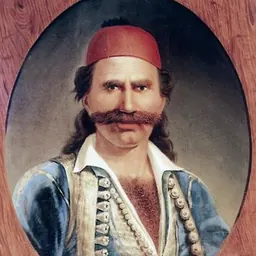

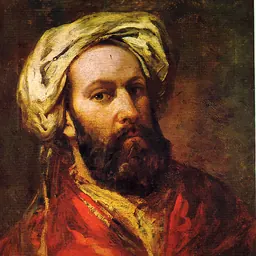
Related people
Same field, nearest in time

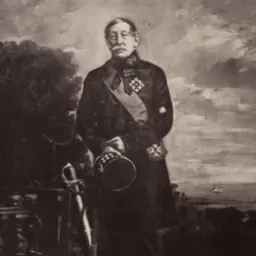
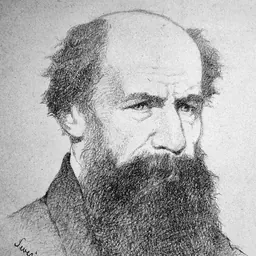

Contemporaries
People whose lives overlapped Christos Palaskas's



Frequently asked questions
Who was Christos Palaskas?
Greek revolutionary leader
When was Christos Palaskas born?
Christos Palaskas was born in 1788 in Megali Gotista (Ioannina).
When did Christos Palaskas die?
Christos Palaskas died on 25 May 1822 in Mount Parnassus.
What was Christos Palaskas's occupation?
Christos Palaskas was a military personnel.
What nationality was Christos Palaskas?
Christos Palaskas was Turkish.
Sources & further reading
· Wikipedia: Christos Palaskas
Cite this page
APA: Biography.guide. (2026). Christos Palaskas. https://biography.guide/christos-palaskas/
MLA: "Christos Palaskas." Biography.guide, https://biography.guide/christos-palaskas/.
Chicago: "Christos Palaskas." Biography.guide. https://biography.guide/christos-palaskas/.
Data last updated: 2026-09-20 · Spot an error? Report a correction.
Page generated 2026-09-27 05:19 UTC