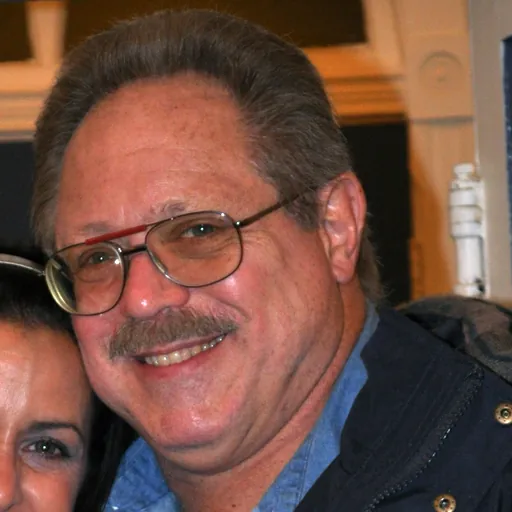
Christopher Langan
American horse rancher and author who scored high on IQ tests
About Christopher Langan
Born 1952. Christopher Langan is an American writer, rancher, bouncer and ranch.
Christopher Michael Langan (born March 25, 1952) is an American horse rancher and former bar bouncer, known for his purported high intelligence and for a high score on the Mega Test, a self-administered, untimed, non-standardized IQ test that he took under the pseudonym Eric Hart. Under that name, Langan was formerly listed in the Guinness Book of Records high IQ section alongside Marilyn vos Savant and Keith Raniere, who had taken the same test. The record was discontinued in 1990, as high IQs are considered too unreliable to document as world records. Langan was later a subject of Malcolm Gladwell's 2008 book Outliers: The Story of Success, in which Gladwell discussed why Langan's reputation for high intelligence had not led to greater conventional success. Langan has no degree, having twice dropped out of college. The book compared him with J. Robert Oppenheimer and focused on the influence of their respective environments on success.
Langan has formulated and promoted the Cognitive-Theoretic Model of the Universe (CTMU), which he describes as a theory in which reality is a self-simulation. He self-published a book about it in 2002. In interviews and self-published writings, he has expressed beliefs in a variety of fringe proposals and conspiracy theories, including arguing in favor of eugenics to prevent "genomic degradation", opposition to interracial relationships, and support for the 9/11 truth movement. His political opinions have gained him a following in far-right politics.
Biography Langan was born in 1952 in San Francisco, California. His mother, Mary Langan-Hansen (née Chappelle, 1932–2014), was the daughter of a wealthy shipping executive but was cut off from her family. Langan's biological father left before he was born, and is said to have died in Mexico. Langan's mother married three more times, and had a son by each husband. Her second husband was murdered, and her third killed himself. Langan grew up with the fourth husband Jack Langan, who has been described as a "failed journalist" who used a bullwhip as a disciplinary measure and went on drinking sprees, disappearing from the house, locking the kitchen cabinets so the four boys could not get to the food in them. The family was very poor; Langan recalls that they all had only one set of clothes each. The family moved around, living for a while in a teepee on an Indian reservation, then later in Virginia City, Nevada. When the children were in grade school, the family moved to Bozeman, Montana, where Langan spent most of his childhood.
Langan attended high school, but spent his last years engaged mostly in independent study. He did so after his teachers denied his request for more challenging material. According to Langan, he began teaching himself "advanced math, physics, philosophy, Latin, and Greek". He earned a perfect score on the SAT despite taking a nap during the test. Langan withdrew before final exams in his second semester and received all Fs.
Langan returned to Bozeman and worked as a forest service firefighter for 18 months before enrolling at Montana State University–Bozeman.
In comparing the lack of academic and life success of Langan to the successes of J. Robert Oppenheimer, journalist Malcolm Gladwell, in his 2008 book Outliers, points to the background and social skills of the two men. Oppenheimer was raised in a wealthy cosmopolitan environment, and Gladwell argues that such an environment gave help along the way and allowed Oppenheimer to gain a social savvy that Langan lacked, and prevented him from progressing academically. He had had little or no guidance from his parents or his teachers, and never developed the social skills needed to cope with and overcome his challenges.
In 1999, Langan and others formed a non-profit corporation named the Mega Foundation for those with IQs of 164 or above. He was required to cease use of the Mega Society East name but retained control of the Mega Foundation domain names. Under the auspices of the Mega Foundation, he sat on the Society of Fellows of the International Society for Complexity, Information, and Design (ISCID), an intelligent design advocacy organisation, until its dissolution.
In 2008, he appeared on the game show 1 vs. 100 and won $250,000. A score of 42 on the Mega Test was originally designed to yield a predicted IQ value of 173–174, although data analysed from test takers led to a renorming of this and a 163–174 range. Further renorming work has suggested the range may be 159–169.
IQ testing at the tail of the normal distribution has been criticised as being dubious as there are insufficient normative cases upon which to base a statistically justified rank-ordering. The Mega Test, among other IQ tests, has been criticised for blurring specific domain knowledge with generalised intelligence, although "most psychologists can agree that they measure something valuable."
The Mega Test's attempt to measure high IQ at the tail of the normal distribution has been academically evaluated. Although it is an innovative attempt to create a test that would evaluate very high IQ, the nature of the test—self administered without time limit, which was chosen for pragmatic reasons—would not necessarily measure general intelligence, but could measure resourcefulness or some other factor. The frequent renorming of the test by its author was non standard but also innovative. Nevertheless it contained well known statistical flaws, such as sample self selection. The analysis could not therefore validate the conclusions. Attempts to eke out discrimination at the hundredth or thousandth percentile were clearly overwhelmed by the test's standard error, given that there were only 48 questions. The questions, too, were criticised for being structured with insufficient sensitivity to the detection of knowledge, because of the question format used. The test was thus described not so much as number crunching, but as "nothing short of number pulverisation". Mensa, the high IQ society, never accepted Mega Test scores as proof of meeting the entry requirement for the society.
In 1990, the Guinness Book of Records dropped the listing of highest IQ, deeming high IQ scores to be too unreliable to document.
Cognitive-Theoretic Model of the Universe Langan has proposed a thesis he calls the Cognitive-Theoretic Model of the Universe (CTMU) which, he maintains, "explains the connection between mind and reality, therefore the presence of cognition and universe in the same phrase". He self-published an 85-page book on his ideas in 2002 and revised it in 2020. A version of this was published in 2002 in Progress in Complexity, Information, and Design, the online journal of the ISCID, an intelligent-design organisation. He refers to it as "a true 'theory of everything', a cross between John Archibald Wheeler's 'Participatory Universe' and Stephen Hawking's 'Imaginary Time' theory of cosmology", Langan has claimed that the George W. Bush administration staged the 9/11 attacks in order to distract the public from learning about his Cognitive-Theoretic Model of the Universe (CTMU).
Don’t just read it —
keep it.
Full-length biographies made to live with: read them, listen on the way to work, watch them tonight.
- E-book
- Audio
- Video
Instant download · yours to keep · every purchase keeps this site free
Important facts
Family & relationships
People in Christopher Langan's life
Named in this biography and alive at the same time

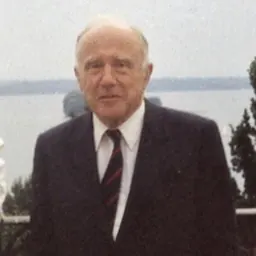



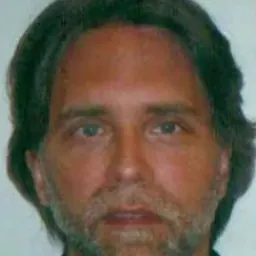

Related people
Same field, nearest in time



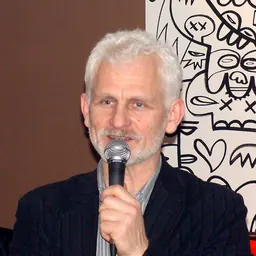
Contemporaries
People whose lives overlapped Christopher Langan's

Frequently asked questions
Who is Christopher Langan?
American horse rancher and author who scored high on IQ tests
When was Christopher Langan born?
Christopher Langan was born on 25 March 1952 in San Francisco.
What is Christopher Langan's occupation?
Christopher Langan is a writer, rancher, bouncer and ranch.
What nationality is Christopher Langan?
Christopher Langan is American.
Sources & further reading
· Wikipedia: Christopher Langan
Cite this page
APA: Biography.guide. (2026). Christopher Langan. https://biography.guide/christopher-langan/
MLA: "Christopher Langan." Biography.guide, https://biography.guide/christopher-langan/.
Chicago: "Christopher Langan." Biography.guide. https://biography.guide/christopher-langan/.
Data last updated: 2026-09-22 · Spot an error? Report a correction.
Portrait: Wikimedia Commons · author & licence
Page generated 2026-09-27 04:59 UTC