
Christian Streit White
American military officer, lawyer, court clerk, pisciculturist, and politician
About Christian Streit White
Lived 1839 – 1917 (aged 77). Christian Streit White was an American lawyer, court clerk, fish farming, officer (armed forces) and politician.
Christian Streit White (March 10, 1839 – January 28, 1917) was an American military officer, lawyer, court clerk, pisciculturist, and politician in the U.S. states of Virginia and West Virginia.
During the American Civil War, White served as a sergeant major and captain in the Confederate States Army and headed a bureau of the Confederate States Department of the Treasury. White served under the commands of Stonewall Jackson and Jubal Early and was responsible for the safekeeping of Hampshire County's land registration records from destruction by Union Army forces. From 1864 to 1865, White was in command of Company C of the 23rd Virginia Volunteer Cavalry Regiment.
White served as the Clerk of Court for Hampshire County, West Virginia, for 29 years (1873–1902), and also served as the Clerk of Circuit Court for Hampshire County (1873–1876). He was the chairman of the Hampshire County Democratic Executive Committee in the 1870s, and during this leadership, registered members of the West Virginia Democratic Party grew from 449 to 1,369 in 1876. White was appointed by West Virginia Governor John J. Jacob as one of the inaugural commissioners of the West Virginia Fish Commission. He established the Maguire Springs fish hatchery near Romney, and for a time, served as the commission's president.
White was a member of the White political family of Virginia and West Virginia and was the son of John Baker White (1794–1862), a grandson of prominent Virginia judge Robert White (1759–1831), and a great-nephew of United States House Representative Francis White (1761–1826). He was a younger brother of West Virginia Attorney General Robert White (1833–1915).
Family and background Christian Streit White was born on March 10, 1839, in Romney, Virginia (present-day West Virginia). He was the second-eldest son of Hampshire County Clerk of Court John Baker White (1794–1862) and his second wife Frances Ann Streit White (c. 1809–1879) and a grandson of prominent Virginia judge Robert White (1759–1831). His older brother Robert White (1833–1915) later served as Attorney General of West Virginia. White received his education at Potomac Seminary in Romney. While Company K was under the command of Captain John B. Sherrard, White was promoted to Third Sergeant. He was further promoted to Adjutant, but White did not receive a commission. In spring 1863, White had recovered enough from his disability to serve in the cavalry, although he was still unable to serve in the infantry. White's company initially consisted of 20 men from the Confederate States Department of the Treasury in Richmond, and after further recruitment, he raised a company numbering 300 men, although he was only permitted to retain 120 men. In 1863, when Winchester was no longer a safe location for the storage of Hampshire County's land records and they again risked destruction by Union Army forces, When Front Royal became endangered by advancing Union Army forces, White had the records moved to Luray Caverns where they remained for several months. During his tenure as Clerk of Court for Hampshire County, White also served one term as Clerk of the Circuit Court between 1873 and 1876, White served as Clerk of Court for Hampshire County for 29 years until 1902.
Hampshire County Democratic Executive Committee By 1876, White was serving as the chairman of the Hampshire County Democratic Executive Committee. While holding this post, White organized and carried out extensive campaigning for West Virginia Democratic Party membership and political candidates. Through his efforts, the number of registered Democrats in Hampshire County swelled from 449 in the preceding election year to 1,369. Prior to its passage at the convention, White's proposal received strong opposition. White was appointed by West Virginia Governor John J. Jacob as one of the inaugural commissioners on June 1, 1877, along with John W. Harris of Greenbrier County and Henry B. Miller of Wheeling. White was appointed for a term of four years. but their beginning efforts faced opposition from public officials who did not understand the importance of the fish commission. At the Maguire Springs, White "erected and equipped" a fish hatchery costing $700 at his own expense, To accomplish this feat, White designed and built charcoal raceways to culture the salmon.
Over a decade after his appointment to the commission, White and his colleagues continued to perform their duties of office without pay from the West Virginia Legislature. This discussion led to the first decoration of Confederate graves at Indian Mound Cemetery in Romney on June 1, 1866, and to the subsequent erection of the Confederate Memorial at Indian Mound Cemetery which was dedicated on September 26, 1867.
From its formation until June 1897, White served as the Commander of Camp Hampshire Number 446 of the United Confederate Veterans, the first camp organized in West Virginia. White and the committee was also responsible for the erection of a "great building or memorial hall" known as the "Battle Abbey of the South," which had been proposed by former Confederate States Army private Charles Broadway Rouss. where Colonel J. O. Murray served as White's proxy. White was named by the legislature as one of the commissioners of the South Branch Railway Company, charged with the responsibility of signing up investors to purchase capital stock in the company. As one of five corporators, White held one share, valued at $130, in the Hampshire Building and Loan Association No. 1, which raised money for the purpose of providing loans for the purchase of property, home improvement or construction, and the liquidation of liens on property. The Romney Manufacturing, Land and Improvement Company was incorporated by Walker's successor, William A. Ohley, on July 10, 1890. White also continued to operate a law practice with his son Robert in Romney.
Personal life A practicing member of the Presbyterian faith, White was a Mason in the Clinton Lodge of Romney, where he had served as a Master.
Marriage and issue White was married on July 25, 1867, in Hampshire County to Elizabeth "Bessie" Jane Schultze, the daughter of Dr. Robert Schultze and his wife Elizabeth "Bessie" Armstrong Schultze. Schultze was born on November 18, 1837, in Rotterdam, Netherlands
Following the death of his first wife, Bessie, on June 24, 1869, White again married on May 26, 1873, to Catharine Steele. Steele was born in Belfast or Dublin and was the daughter of Thomas G. Steele in Fairmont, West Virginia, at the time of her marriage to White.
White's second wife, Catharine, died in 1911 in Romney and was interred at Indian Mound Cemetery. Among these were items once possessed by Thomas Fairfax, 6th Lord Fairfax of Cameron including a pair of andirons with heavy brass heads and a fender, possibly used at Lord Fairfax's Greenway Court estate. White also owned a sugar bowl from Switzerland that had originated in China and had been in the possession of the Streit and White families for over two centuries.
Don’t just read it —
keep it.
Full-length biographies made to live with: read them, listen on the way to work, watch them tonight.
- E-book
- Audio
- Video
Instant download · yours to keep · every purchase keeps this site free
Important facts
Family & relationships
People in Christian Streit White's life
Named in this biography and alive at the same time





Related people
Same field, nearest in time


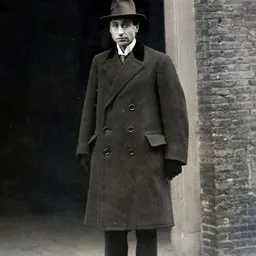
Contemporaries
People whose lives overlapped Christian Streit White's
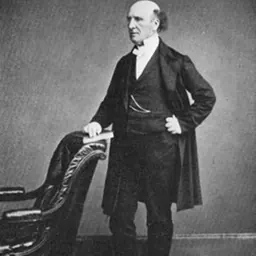
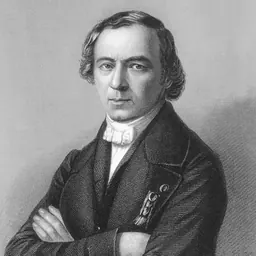
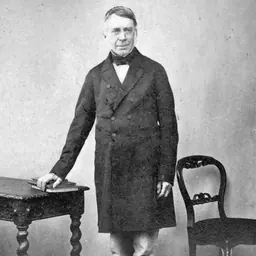
Frequently asked questions
Who was Christian Streit White?
American military officer, lawyer, court clerk, pisciculturist, and politician
When was Christian Streit White born?
Christian Streit White was born on 10 March 1839 in Romney.
When did Christian Streit White die?
Christian Streit White died on 28 January 1917 in Romney, West Virginia, United States, West Virginia.
What was Christian Streit White's occupation?
Christian Streit White was a lawyer, court clerk, fish farming, officer (armed forces) and politician.
What nationality was Christian Streit White?
Christian Streit White was American.
Sources & further reading
· Wikipedia: Christian Streit White
· DBpedia: Christian Streit White
Cite this page
APA: Biography.guide. (2026). Christian Streit White. https://biography.guide/christian-streit-white/
MLA: "Christian Streit White." Biography.guide, https://biography.guide/christian-streit-white/.
Chicago: "Christian Streit White." Biography.guide. https://biography.guide/christian-streit-white/.
Data last updated: 2026-09-24 · Spot an error? Report a correction.
Page generated 2026-09-27 05:00 UTC