
About Christian Keimann
Lived 1607 – 1662 (aged 54). Christian Keimann was a poet, writer, hymnwriter, theologian, pedagogue and protestant theologian, known for Johann Sebastian Bach.
Christian Keymann (also Christian Keimann; 27 February 1607 – 13 January 1662) was a German hymnwriter. He is known for writing the chorale "Meinen Jesum laß ich nicht" in 1658, which served as the base for Bach's chorale cantata Meinen Jesum laß ich nicht, BWV 124, and other compositions.
Career Keymann was born in Pankratz, Habsburg Bohemia, in 1607, the son of Zacharias Keimann, a Lutheran pastor. From 1627 to 1634, he studied at the University of Wittenberg. After graduation he worked at the gymnasium of Zittau, first as associate director, then as rector in 1638. He died of a stroke in 1662.
Hymns Two of his most popular hymns were translated into English; "O rejoice, ye Christians, loudly" ("Freuet euch, ihr Christen alle") found in Chorale Book, No. 33, and "Jesus will I never leave" ("Meinen Jesum laß ich nicht") found in United Brethren's Hymn Book, No. 464. Donald G. Bloesch in his book The struggle of prayer (1980) describes it as a "moving hymn". His hymns in general have been described as "being of genuine poetic ring, fresh, strong, full of faith under manifold and heavy trials, and deeply spiritual".
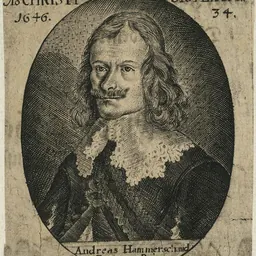
Music Keymann collaborated with composer Andreas Hammerschmidt who created tunes for Keymann's hymns. In 1646, a collection of hymns Mnemosyne sacra was published by Keymann in Leipzig, including five tunes by Hammerschmidt. In 1658, the collection Fest-, Buß- und Danklieder (Songs for feast, repentance and thanks) was printed in Zittau, containing the hymn "Meinen Jesum laß ich nicht" (I will not let go of my Jesus). but he also used single stanzas in other cantatas, from the same chorale in Wachet! betet! betet! wachet! BWV 70, Was Gott tut, das ist wohlgetan, BWV 98 and Mein liebster Jesus ist verloren, BWV 154. In the first (1727/1729) version of his St Matthew Passion, Part I was concluded with the final stanza of the chorale, "Jesum laß ich nicht von mir" (Jesus I'll not let leave me). He used a stanza from "Freuet euch, ihr Christen alle" (Be joyful, all ye Christians, 1646), also on a melody by Hammerschmidt, in Darzu ist erschienen der Sohn Gottes, BWV 40.
Max Reger based three compositions on "Meinen Jesum laß ich nicht", a chorale prelude (Op. 67 No.26, 1902), a composition for soprano, mixed choir, violin, viola and Organ (1905), and again a chorale prelude (Op. 135a No. 17, 1914). Sigfrid Karg-Elert wrote a chorale improvisation for organ (Fughetta), Op. 65 No 49.
Don’t just read it —
keep it.
Full-length biographies made to live with: read them, listen on the way to work, watch them tonight.
- E-book
- Audio
- Video
Instant download · yours to keep · every purchase keeps this site free
Important facts
People in Christian Keimann's life
Named in this biography and alive at the same time
Related people
Same field, nearest in time



Contemporaries
People whose lives overlapped Christian Keimann's






Frequently asked questions
Who was Christian Keimann?
German hymnwriter and rector (1607-1662)
When was Christian Keimann born?
Christian Keimann was born on 27 February 1607 in Jítrava.
When did Christian Keimann die?
Christian Keimann died on 13 January 1662 in Zittau.
What was Christian Keimann's occupation?
Christian Keimann was a poet, writer, hymnwriter, theologian, pedagogue and protestant theologian.
What was Christian Keimann known for?
Christian Keimann was known for Johann Sebastian Bach.
Sources & further reading
· Wikipedia: Christian Keimann
Cite this page
APA: Biography.guide. (2026). Christian Keimann. https://biography.guide/christian-keimann/
MLA: "Christian Keimann." Biography.guide, https://biography.guide/christian-keimann/.
Chicago: "Christian Keimann." Biography.guide. https://biography.guide/christian-keimann/.
Data last updated: 2026-09-20 · Spot an error? Report a correction.
Page generated 2026-09-27 05:19 UTC