
About Christian Führer
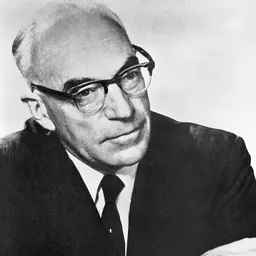
Lived 1943 – 2014 (aged 71). Christian Führer was a German pastor, theologian and parson, known for Monday demonstrations in East Germany.
Christian (5 March 1943 – 30 June 2014) was a Protestant pastor and one of the leading figures and organisers of the 1989 Monday demonstrations in East Germany which finally led to German reunification and the end of the GDR in 1990.
Life Führer grew up in Langenleuba-Oberhain, Saxony. He studied theology from 1961 until 1966 at the University of Leipzig. He worked as a pastor in Colditz until 1980 when he became the pastor of the Nikolaikirche in Leipzig. He retired on 4 July 2008.
Peace prayers ("Friedensgebete") In 1980 Führer helped to organize "peace prayers" as part of a joint protest action of Protestant youth organisations. Starting on 20 September 1982, the peace prayers were held every Monday in the Nikolai Church in Leipzig focusing against the Cold War.
In 1987 he organized a pilgrimage in the context of the Olof Palme Peace March. In 1988 he moderated prayers for the arrested protesters of the Liebknecht-Luxemburg-Demonstrations (regular demonstrations in memory of the murdered socialists Karl Liebknecht and Rosa Luxemburg).
On 19 February 1988 Führer held a speech Living and Staying in the GDR (Leben und Bleiben in der DDR) in the Nikolai Church. Many opposition members attended the speech which marks a special date of east German resistance against the Honecker Regime.
Peaceful East German revolution, 1989 During the first months of 1989 the East German authorities, especially the Stasi, imposed increasing pressure to stop the Peace Prayers in Leipzig. They controlled access roads and arrested random "suspects" inside and outside the church. However, they were unsuccessful: the Monday prayers continued with an increasing number of attendees.
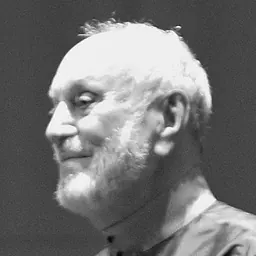
On 9 October troops of the army, police and Stasi officers arrived in front of the church. About 1,000 members of the SED were ordered into the church. Near the end of the Peace Prayers a manifesto was read out, written by Kurt Masur, Bernd-Lutz Lange, Peter Zimmermann, and three low-ranking leaders of the SED (later called The Leipzig Six: Die Leipziger Sechs), appealing to all attendees not to use force and to stay peaceful. The demonstration of about 70,000 people which followed the prayers was nonviolent.
The slogan "No Violence!" (Keine Gewalt!) was used by more than 300,000 people during the following demonstrations. The entire East German revolution remained peaceful.
After reunification After 1989 Führer became an advocate for unemployed people; he was a co-founder of the "Church Initiative for the Jobless, Leipzig" (Kirchliche Erwerbsloseninitiative Leipzig). In 2004 he again organized Monday demonstrations against the dismantling of the welfare state and the Hartz IV reforms. He also continued to hold regular Peace Prayers.
On 30 March 2008 he held his final service in the Nikolai Church and retired.
Death Führer died on 30 June 2014 from respiratory failure at the age of 71.
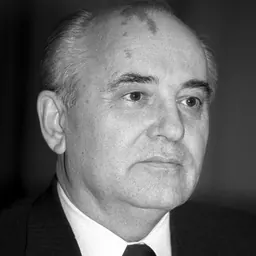
Prizes and awards 1991: Theodor-Heuss-Prize, together with Joachim Gauck, Ulrike Poppe and Jens Reich 2002: Johann-Philipp-Palm-Prize 2004: Goldene Henne, Held der Wende (Hero of the Change) 2005: Peaceprize of Augsburg (together with Mikhail Gorbachev)
Don’t just read it —
keep it.
Full-length biographies made to live with: read them, listen on the way to work, watch them tonight.
- E-book
- Audio
- Video
Instant download · yours to keep · every purchase keeps this site free
Important facts
People in Christian Führer's life
Named in this biography and alive at the same time




Related people
Same field, nearest in time



Contemporaries
People whose lives overlapped Christian Führer's


Frequently asked questions
Who was Christian Führer?
German pastor and activist (1943–2014)
When was Christian Führer born?
Christian Führer was born on 5 March 1943 in Leipzig.
When did Christian Führer die?
Christian Führer died on 30 June 2014 in Leipzig.
What was Christian Führer's occupation?
Christian Führer was a pastor, theologian and parson.
What was Christian Führer known for?
Christian Führer was known for Monday demonstrations in East Germany.
What nationality was Christian Führer?
Christian Führer was German.
Sources & further reading
Cite this page
APA: Biography.guide. (2026). Christian Führer. https://biography.guide/christian-fuhrer/
MLA: "Christian Führer." Biography.guide, https://biography.guide/christian-fuhrer/.
Chicago: "Christian Führer." Biography.guide. https://biography.guide/christian-fuhrer/.
Data last updated: 2026-09-22 · Spot an error? Report a correction.
Page generated 2026-09-27 05:24 UTC