
About Christian Friedrich Seybold
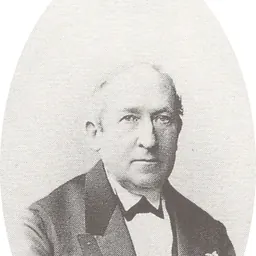
Lived 1859 – 1921 (aged 61–62). Christian Friedrich Seybold was a German orientalist, university teacher, translator, academic and writer.
Christian Friedrich Seybold (6 January 1859 – 27 January 1921) was a German scholar of Oriental languages and professor at the University of Tübingen. He is known for his work on Arabic manuscripts and for collaborating with Pedro II of Brazil on publications related to the Guarani language.
Life and work
Christian Friedrich Seybold was born on 6 January 1859 in Waiblingen in the Remstal valley of Württemberg, the son of master cooper Daniel Seybold and his wife Katharina, née Böhringer. After successfully passing the state examination, he attended the Protestant seminaries in Maulbronn and Blaubeuren and entered the Protestant seminary in Tübingen in 1878. There he studied theology and Oriental languages. Seybold studied theology at the Evangelical Stift in Tübingen from 1877 to 1883. His coursework included Arabic, Sanskrit, Vedic literature, the Avesta, biblical studies, church history, philosophy, political economy, and comparative religion under scholars including Albert Socin, Rudolf von Roth, Eberhard Nestle, Christoph von Sigwart, Emil Kautzsch, and .
In 1883, he received his doctorate and passed his first theological examination. He then spent several months in Spain studying Arabic manuscripts and subsequently worked as a tutor in Heilbronn and Maulbronn until 1886.
In Brazil
Through the mediation of the indologist Albrecht Weber, Seybold was informed of an opportunity for employment in Brazil with Brazilian Emperor Pedro II. Pedro sought a German tutor who could assist him in studying literature in various languages, including Arabic, Sanskrit, and Greek, among others. As private language tutor , Seybold would also accompany the emperor on extensive travels abroad, and remained with him until the emperor's death, even accompanying him in exile to France. In the last years of the emperor's life, Seybold was a frequent companion, being mentioned hundreds of times in his diaries.
At Tübingen After the emperor's death, Seybold accepted a lectureship at the University of Tübingen in 1892. He received his habilitation in 1893, became associate professor in 1897, and full professor in 1901. In this later work Seybold focused primarily on the editing and translation of Arabic manuscripts. He also published a catalogue of the Arabic manuscripts in the University of Tübingen library. He succeeded Eberhard Nestle as chair of Oriental Studies from 1901 to 1921.
Selected publications
Don’t just read it —
keep it.
Full-length biographies made to live with: read them, listen on the way to work, watch them tonight.
- E-book
- Audio
- Video
Instant download · yours to keep · every purchase keeps this site free
Important facts
People in Christian Friedrich Seybold's life
Named in this biography and alive at the same time
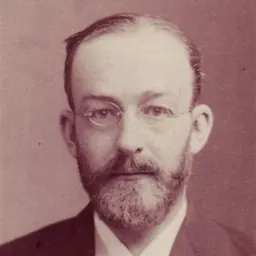
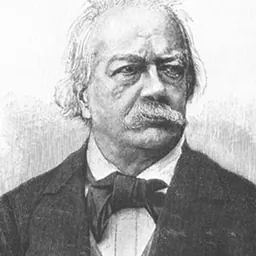



Related people
Same field, nearest in time
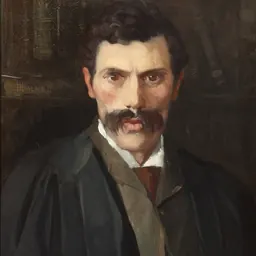

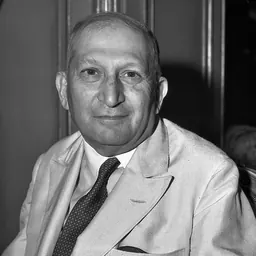

Contemporaries
People whose lives overlapped Christian Friedrich Seybold's


Frequently asked questions
Who was Christian Friedrich Seybold?
German orientalist (1859–1921)
When was Christian Friedrich Seybold born?
Christian Friedrich Seybold was born in 1859 in Waiblingen.
When did Christian Friedrich Seybold die?
Christian Friedrich Seybold died in 1921 in Tübingen.
What was Christian Friedrich Seybold's occupation?
Christian Friedrich Seybold was an orientalist, university teacher, translator, academic and writer.
What nationality was Christian Friedrich Seybold?
Christian Friedrich Seybold was German.
Sources & further reading
· Wikipedia: Christian Friedrich Seybold
· DBpedia: Christian Friedrich Seybold
Cite this page
APA: Biography.guide. (2026). Christian Friedrich Seybold. https://biography.guide/christian-friedrich-seybold/
MLA: "Christian Friedrich Seybold." Biography.guide, https://biography.guide/christian-friedrich-seybold/.
Chicago: "Christian Friedrich Seybold." Biography.guide. https://biography.guide/christian-friedrich-seybold/.
Data last updated: 2026-09-26 · Spot an error? Report a correction.
Page generated 2026-09-27 05:14 UTC