
About Chou Sien
Lived 1365 – 1438 (aged 72–73). Chou Sien was a Chinese diplomat and eunuch.
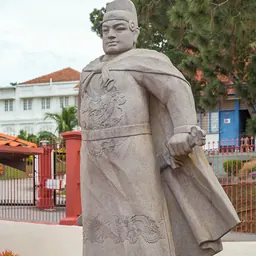
Hou Xian (; Wade–Giles: Hou Hsien; 1365–1438) was a Ming dynasty eunuch and imperial envoy active during the reigns of the Yongle Emperor and Xuande Emperor. He was sent on diplomatic missions to Tibet, Nepal, Bengal, and other South Asian polities. The History of Ming states that Hou made "five missions to distant regions" and describes his achievements as second only to those of Zheng He.
Career
Mission to Tibet During the early Yongle reign, Hou Xian served as a deputy director in the Office of Ceremonial Affairs, a eunuch agency of the Ming court. The Yongle Emperor, who had heard tales of a Tibetan Buddhist religious teacher named Shangshi Halima, ordered Hou Xian and the monk Zhi Guang to carry imperial letters and gifts to Tibet to invite Halima to the Ming court. Modern scholarship identifies Halima with Deshin Shekpa, the Fifth Karmapa.
Nepal and Bengal In 1413, Hou was sent to Nibalai, identified with Nepal, and Diyongta, probably Bhaktapur. According to the History of Ming, the ruler of Nibalai sent envoys back with Hou to the Ming court, presented tribute, and received royal investiture, patents, and a seal. This mission occurred during a period of frequent diplomatic contact between Ming China and Bengal, including Bengal's presentation of a giraffe to the Ming court in 1414. Ultimately, Jaunpur's attacks ceased, likely a result of these foreign diplomatic efforts. Hou's party was also ordered to confer silks on the rulers of both sultanates, as well as on the chief of the "Land of the Diamond Throne", possibly Bodh Gaya, through which the mission was expected to pass.
Second Tibetan mission In 1427, the Xuande Emperor dispatched Hou to Central Tibet and Nepal with gifts for local dignitaries, reviving Ming contact with the region after the short reign of the Hongxi Emperor. On the way, his party encountered raiders; Hou led his men in combat, and more than 460 people were later rewarded or promoted for their service. Hou Xian died in 1438. Hou's independent diplomatic career nevertheless formed part of the same Yongle-era policy of using trusted eunuchs as envoys to foreign courts.
The History of Ming groups Hou Xian with Zheng He among the notable eunuch envoys of the early Ming. It describes him as talented, eloquent, energetic, and willing to take responsibility, and states that his achievements were second only to Zheng He's.
Don’t just read it —
keep it.
Full-length biographies made to live with: read them, listen on the way to work, watch them tonight.
- E-book
- Audio
- Video
Instant download · yours to keep · every purchase keeps this site free
Important facts
People in Chou Sien's life
Named in this biography and alive at the same time
Related people
Same field, nearest in time



Contemporaries
People whose lives overlapped Chou Sien's



Frequently asked questions
Who was Chou Sien?
Ming dynasty person CBDB = 129273
When was Chou Sien born?
Chou Sien was born in 1365.
When did Chou Sien die?
Chou Sien died in 1438.
What was Chou Sien's occupation?
Chou Sien was a diplomat and eunuch.
What nationality was Chou Sien?
Chou Sien was Chinese.
Sources & further reading
Cite this page
APA: Biography.guide. (2026). Chou Sien. https://biography.guide/chou-sien/
MLA: "Chou Sien." Biography.guide, https://biography.guide/chou-sien/.
Chicago: "Chou Sien." Biography.guide. https://biography.guide/chou-sien/.
Data last updated: 2026-09-20 · Spot an error? Report a correction.
Page generated 2026-09-27 05:14 UTC