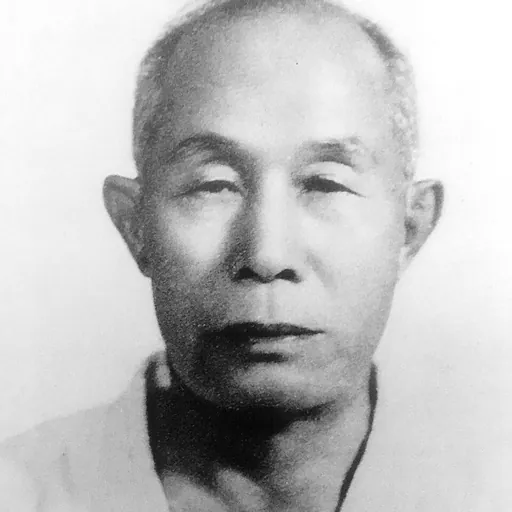
Choi Yong-sool
South Korean martial artist
About Choi Yong-sool
Lived 1904 – 1986 (aged 81). Choi Yong-sool was a Korean and South Korean martial artist.
Choi Yong-sool (; November 9, 1904 – June 15, 1986), alternative spelling Choi Yong-sul, was the founder of the martial art Hapkido . He was born in today's North Chungcheong Province, South Korea and was taken to Japan during the Japanese occupation of Korea when he was eight years old. Choi later stated that he became a student of Takeda Sōkaku, and studied a form of jujutsu known as Daitō-ryū Aiki-jūjutsu (大東流合気柔術) while in Japan. Choi returned to Korea after the end of World War II and in 1948 began teaching his art at a brewery owned by the father of his first student Seo Bok-seob (; Suh Bok-sub). He first called his art "Yu Sul " or "Yawara (; 柔術)" later changing it to "Yu Kwon Sool (; 柔拳術)" and "Hap Ki Yu Kwon Sool (; 合氣柔拳術)" and eventually Hapkido.
Choi Yong-sool was honored with the titles doju (; 道主), which can be translated as "Keeper of the way", and changsija (; 創始者), which simply means "founder". The arts of Hapkido, modern Hwa Rang Do, Kuk Sool Won, as well as lesser known arts such as Han Pul all show influence of the teachings of Master Choi.
Biography It is generally accepted that Choi was born in the year 1904, although some sources place his birth in 1899. Confusion about his age stem from a combination of being orphaned, delays in registering newborns with the government (common in impoverished Korea) and the way in which age is reckoned in Korea. His mother died when he was 2 years old, and his father died sometime after that, leaving Choi in the care of his aunt.
Choi spent 2 years at the temple and had a difficult life there, not only in school but with the other children due to his poor Japanese language skills and his Korean ethnicity, which made him stand out in Japan. When Watanabe asked Choi what direction that he wished for his life to take he expressed interest in the martial arts. some scholars believe it is likely that Choi received most of his training in Daito Ryu from Yoshida Kotaro. while still others assert that Choi had no connection to Takeda beyond attending some of Takeda's seminars. Kisshomaru Ueshiba, son of Morihei Ueshiba, stated that his father had told him that Choi had attended seminars held by Takeda with his father in Hokkaidō and that his father had been Choi's senior. Choi apparently contacted Kisshomaru upon hearing the news of Morihei's death.
Regardless of the circumstances of Choi's martial arts training, he returned to Korea after World War II and settled in Daegu, first selling sweets and later raising hogs. In 1948, after becoming involved in an altercation with several men in a dispute over grain at the Seo Brewing Company, the son of the chairman of the brewery, Seo Bok-seob, was so impressed by his self-defense skills that Seo invited Choi to teach the brewery's employees at a makeshift dojang that Seo had created on the premises for that purpose. In this way, Seo Bok-seob became Choi Yong-sool's first student. Later Choi became a bodyguard to Seo's father, who was an important congressman in Daegu.
Spreading the art In 1951, Choi and Seo opened up the Daehan Hapki Yu Kwon Sool Dojang , the first formal school to teach the art. In 1958, Choi Yong-sool opened up his own school using the shortened name Hapkido for the first time. Both schools were located in Daegu. Some of the more important students from this period of time were Kim Moo-hong and Moon Jong-won .
The founders of two arts, Lee Joo-bang of modern Hwa Rang Do and Seo In-hyuk (; Suh In-hyuk) of Kuk Sool Won, are thought by some to have trained with Choi Yong-sool, although this is controversial. Others assert that their training came from Kim Moo-hong's hapkido school in Seoul, with which they were known to have been associated. Another prominent top student who became crucial to the survival of Doju Choi's full system was Chinil Chang, the personally chosen second Doju (Grandmaster) and the only man awarded the 10th Dan and the title of Doju directly from Doju Choi.
Students of importance who were trained by Choi during the later periods of his teaching were Kim Jeong-yoon, Kim Yoon-sang who later went on to form his own offshoot Hapki yusul organization to fabricate and support his erroneous and misguided claims of being the surviving grandmaster of hapkido. and Park Jeong-hwan , who trained under Choi for only three years, is one of the later students that opened a Hapkido school in America, several of which still function today.
Doju Choi made a special trip to the United States in 1982, several years prior to his death, to visit his highest ranked instructor Chinil Chang in New York City and to preside over the creation of the US Hapkido Association. Master Mike Wollmershauser, who was the only American to have trained under Choi Yong-sool himself, documented part of this historic visit on videotape, which is in the hands of Doju Chinil Chang. Doju Choi's final wishes were to spread Hap Ki Do all over the world as well as to unite the art as one family, although Doju Choi had realized at that point that the system had splintered into too many political and warring factions for that to ever happen. He also wished to keep his original system intact and for the lineage to be passed in a complete manner to his successor, which he accomplished. Master Wollmershauser attempted to spread this word of unity throughout the world until his death in December 2002. Doju Chang maintains the integrity and purpose of his mission while continuing to teach his students as he has since arriving in the United States decades ago.
Controversy Choi's claims of being a student of Daito-ryu under Takeda Sokaku are contested and unsupported by the fee and attendance records of Takeda Sokaku that still exist today. However, according to Kisshomaru Ueshiba, son of Aikido founder Morihei Ueshiba, a young Korean was present at several of Takeda's seminars, suggesting that some Korean nationals had some formal training in Daitō-ryū Aiki-jūjutsu.
On April 5, 1985, Choi personally awarded Chang the only existing 10th Dan certificate in Hapkido history. Chang is the only Hapkido master ever awarded the 10th Dan and Doju title directly from Choi. Choi left the full documentation and recordings of the system to Chang, who continued to research and document the full history and development of Hapkido. These endless distortions were generally rebutted in various media each time they appeared.
In 2013, Doju Chang was teaching a small group in NYC dedicated to the preservation of Hapkido, after previously maintaining a commercial school for decades, as well as a stint teaching Hapkido at the United Nations. Black Belt Magazine, respecting Chinil Chang as the second lineage successor, asked him to write a brief obituary on Choi that appeared in the April 1987 issue.
Doju Chang died in his sleep on February 23, 2018, at the age of 77 as a result of Hypertensive Cardiovascular Disease.
Students Many people have claimed to be students of Choi Yong-sool, and it is often hard to verify whether or not these claims are valid. This is a list of people who were long time students of Choi. Moon Jong-Won (; Choi's student in 1955, Founder of Won Moo Kwan in Busan) Kim Jeong-yoon (; Secretary General of the Kido Association and founder of Han Pul) Seo In-sun(;) Yoo Byung-don (; Han Kuk Jeong Dong Hapkido, Orthodox Hapkido) Han Bong-soo; (author, notable movie consultant and actor) Michael Wollmershauser; founder of American Hapkido Association until Dec. 8, 2002 Jong-Yeon "Charles" Hwang (; He was promoted to 8th Dan by Choi Yong-sool. In 2005, he founded Kimoo Martial Arts, a tae-kwon-do school in Santa Clara, California.). He is also a master in Kickboxing (Kwon Kyuk Do Style); has a 7th Dan in Tae Kwon Do and a 6th degree black belt in Kendo. He was also granted a 7th Dan belt in Shaolin Kung Fu and Tai Chi, in addition to being a Hwarang Sword Master as well as certified Sports Massage Therapist.
Don’t just read it —
keep it.
Full-length biographies made to live with: read them, listen on the way to work, watch them tonight.
- E-book
- Audio
- Video
Instant download · yours to keep · every purchase keeps this site free
Important facts
People in Choi Yong-sool's life
Named in this biography and alive at the same time
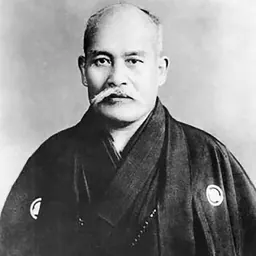




Related people
Same field, nearest in time

Contemporaries
People whose lives overlapped Choi Yong-sool's



Frequently asked questions
Who was Choi Yong-sool?
South Korean martial artist (1904–1986)
When was Choi Yong-sool born?
Choi Yong-sool was born on 9 November 1904 in North Chungcheong.
When did Choi Yong-sool die?
Choi Yong-sool died on 15 June 1986.
What was Choi Yong-sool's occupation?
Choi Yong-sool was a martial artist.
What nationality was Choi Yong-sool?
Choi Yong-sool was Korean and South Korean.
Sources & further reading
Cite this page
APA: Biography.guide. (2026). Choi Yong-sool. https://biography.guide/choi-yong-sool/
MLA: "Choi Yong-sool." Biography.guide, https://biography.guide/choi-yong-sool/.
Chicago: "Choi Yong-sool." Biography.guide. https://biography.guide/choi-yong-sool/.
Data last updated: 2026-09-23 · Spot an error? Report a correction.
Portrait: Wikimedia Commons · author & licence
Page generated 2026-09-27 05:05 UTC