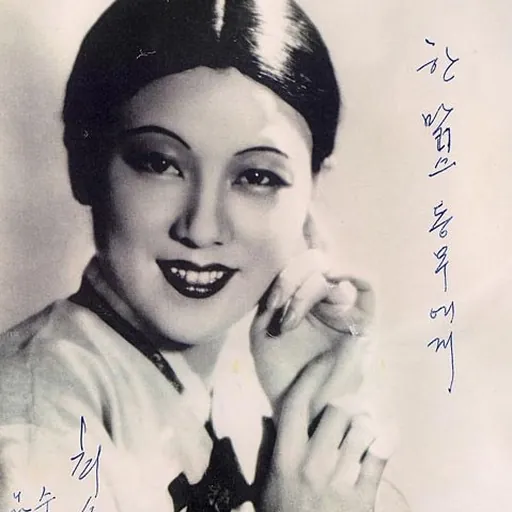
About Choi Seung-hee
Lived 1911 – 1969 (aged 57). Choi Seung-hee was a Korean and North Korean dancer, choreographer, actor, singer and politician.
Early life and education Choi was born into a yangban-class family in Seoul, Korea during the colonial period, and was also known by the Japanese pronunciation of her name, Sai Shōki. Despite the Japanese policy of Sōshi-kaimei, a policy of changing Korean names to Japanese names, she retained her Korean family name of Choi. Sai is the Japanese pronunciation of the Chinese character for Choi, and was not considered Japanese.The multiple pronunciation of her names shows the existing complex cultural relations within the Japanese Empire. Their only income came from her brother Choi Seung-il's manuscripts.
After graduating from Sookmyung High School at the age of fifteen, she tried to become a teacher to help her family financially. She passed seventh amongst 860 applicants, but was rejected due to her age. She was told to return a year later. Baku Ishii was a prominent Japanese modern dance and ballet dancer (and the father of Kan Ishii who became an actor and a classical composer during the 1940s-1960s). Choi Seung-il was part of the Korea Artist Proletariat Federation (KAPF), and had many connections in both Japan and Korea to journalists and intellectuals. This made it possible for him to connect Choi with Ishii as Ishii also did work for the KAPF. At first Ishii was hesitant to admit Choi as his student, as he believed that the Korean public did not appreciate dance and thought that their performance resembled that of a traveling circus instead of a respected troupe. However, in 1926, he decided to accept her because he thought her addition would encourage a better relationship between Korea and Japan. Ishii accepted Choi, and even offered to teach her for free and send her to music school. In early 1920s Korea, it was uncommon for a family with conservative Confucian beliefs and ideals to allow for their child to study dance.
Choi was Ishii's second Korean student. The first was Kang Hong-shik who left Ishii later and became a movie star under a Japanese name. (The maternal grandson of Kang Hong-shik is Choi Min-soo, who is known as one of the most acclaimed actors in South Korea now). He did not have the sufficient salary to give to his dancers. To pay his debts, Ishii lowered the quality of the performances in exchange for quantity.
Choi returned to Korea and founded her dancing art institute called the 최승희무용예술연구소. She had both Korean and Japanese students. Upon her return, she was placed in a spotlight because of the political implications and weight of her international work as a Korean dancer. Magazines and newspapers wrote about her Western dance, dancing abroad, and personal life in Korea. The Korean media had a large interest in her work as a dancer and as part of the "new woman" phenomenon. he was particularly subject to media gossip as an unmarried woman. Choi differentiated herself from traditionalism, but also from the new women who specifically identified breaking jeongjo (chastity) as a more modern practice. Choi was continuously a subject to the public's backlash, as there were several rumors about her committing acts of adultery. Despite Choi's desire to be recognized for developing new dances in Korea, the Korean society only regarded her as part of the "new woman" trend, setting her against the traditional ideal of women. She was seen as an entertainer in the eyes of many Koreans rather than as a modern artist. Choi did not initially intend to study Korean dance at first, as the Korean society did not hold dance to the esteem of fine art; instead, dance was seen as a lowly form of entertainment associated with the gisaeng (courtesan). a student of Waseda University. Just three months after their wedding, Ahn Mak was arrested for his connections with Communist sympathizers, and was released on October 15. Ahn Mak went to Tokyo for the winter semester exam. With Ahn's permission, Choi funded her institute from money earned from sending Ahn's manuscripts to the newspaper companies. Funding was also gained from the sponsorship of The Dong-A Ilbo newspaper company. Choi began to perform Korean folk dances during this time in Korea. Ahn returned temporarily after learning of Choi's pregnancy. Choi became drawn to the Japanese metropolis after a cultural bloom in the 1930s, she found work and artistic opportunities by appealing to Japanese audiences by using colonial traditions. There was also controversy about Choi's close relationship with the Japanese imperial government. For example, in 1929, the Sookmyung Girl's High School as they threatened to deem her a dishonorable alumni in response to her dancing in a Japanese dance troupe. Such a relationship with Japan made her interesting in the public sphere as only seven of her dances were traditionally Korean.
Her singing style often blended Western jazz and pop influences with traditional Korean sentiments, a reflection of the "Modern Girl" persona she embodied.
Choi returned to Japan with her daughter and with a student from her disbanded institute, Kim Min-ja. Kim Min-ja wanted to follow Choi to Japan, and she offered to work as Seung-ja's nanny. Ishii introduced Choi to Han Song-joon who taught Choi more of the Korean dances. (After the competition at the end of one of her later performances 풍랑을 헤가르고, she took off her mask of an old man's face on stage).
Theater organizations in Japan supported Choi and used her image as a colonial woman. They used femininity and Asian Tradition to create a sense of sensibility and superiority of the empire. The image of femininity was anticipated to play a role in bridging the divide between perceptions of colonized individuals and colonial encounters. As well as, alleviating the Western powers' hostility towards Japanese militarism in Asia. Choi's career trajectory and the various spaces in which she performed generated multiple and distinct identities influenced by the desires of the intended audience. The chronological shifts in Choi's career as well as the national tensions she navigated gave insight to contradictions within the Japanese colonial empire. The portrayal of Choi's image coincided with the rapid expansion of media and entertainment during wartime, effectively utilizing Choi's fame for political gain. Her work became a tremendously popular cultural phenomenon in Japan at the time, with Japanese imperialism playing a pivotal role in shaping colonial culture. Choi sought an energetic style.
Choi began to work as a model. She used the money that she earned from modelling to fund her performances. She also began to appear in musicals. Ahn used his money that was meant for tuition fees to fund Choi's performance.
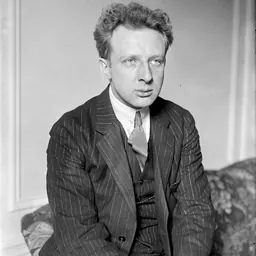
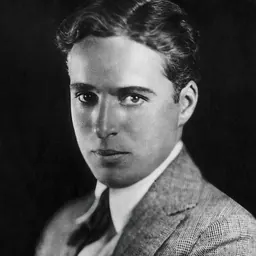
Ishii continued to have financial problems in 1936. In order to help him, Choi and Ishii's six students performed in Taiwan. Their performances in Japan and Taiwan were all successful. Not long after her return from Taiwan, Choi bought a two-story mansion in Tokyo. Such debate was generated as her work made a different socio-political space. She was unlike other dancers because of her identity as a Korean dancer in a Japanese troupe. By this time, Choi and Ahn researched many different traditional dances including the bosal dance . Choi's performances were held in San Francisco (January 22), in Los Angeles (February 2 - Ebell Theatre), and in New York City (February 19). The reactions of the audiences and the reviews were good. In New York City, she watched the performances of the famous Broadway musicians and dancers. In early November 1938, famous people such as Leopold Stokowski, John Steinbeck, Maurice Dekobra, and Charlie Chaplin went to the Guild Theatre (now the August Wilson Theatre) to watch her perform. Because of her use of the Japanese pronunciation of her name when she performed in the United States, she was criticized as a Japanese collaborator by Koreans in the Korean independence movement, but the Japanese government saw her as working for Korean independence, as pro-independence souvenirs were sold at her American shows.
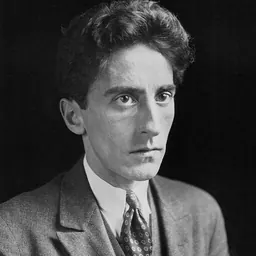
Choi and her group left the United States on December 17, 1938, and they arrived at Le Havre, France on December 24. The performances were held in Paris (January 31, 1939), Brussels (February 6), Cannes (February 26), and Marseille (March 1). They performed in Switzerland during mid-March, and in Italy during late March. Starting from April 1, they performed in the smaller cities of Southern Germany. All of Choi's performances in Europe received rave reviews. According to Choi's letter to her student, her traditional hat (the 초립동 모자) became a fashion trend in Paris. In 1939, in an international dance competition in Brussels, Belgium, Choi was appointed as one of the judges along with Rudolf von Laban, Mary Wigman, Serge Lifar, and Anton Dolin. After this competition, Choi was invited to perform at an international music and dance festival in The Hague, the Netherlands. Afterwards, she performed at the Théâtre national de Chaillot in Paris. The audiences included Pablo Picasso, Henri Matisse, Jean Cocteau, Romain Rolland, and Michel Simon. Picasso sketched a drawing of Choi and gave it to her after her performance. Everyone whom Choi met in France believed that there would not be another world war. She was expecting to perform in Italy, Northern Germany, and Scandinavia. This was before Italy joined with Germany and Japan in a Tripartite Pact and before Italy declared war. An employee of the Marseille consulate general warned Choi that Italy might declare war, and that a Japanese ship called the Hakone Maru carrying about 190 Japanese evacuees would arrive the next day from Italy. Starting on February 16, 1942, Choi performed for the Japanese armies in Korea, Manchuria, and North China. She performed dances inspired by Korea folk dance as well as Japanese, Chinese, Indian, and Siamese influenced dances. In 1943 she trained in Chinese Opera movement with Meilanfang in Shanghai and in started the Oriental Dance Research Institute in Beiping (now Beijing) in 1944. And she was pregnant. Although she was happy to see her daughter again, she was saddened that South Korean newspapers accused Choi of being a collaborator for Japan. She asked US Lieutenant General John R. Hodge for financial support in her arts, but did not get any further details from him. She went to Rhee Syngman before he was president. He did not have the power to help her. She found Kim to be very supportive. In those days, Pyongyang was a very small city that had very few artists. Kim Il Sung was fond of plays, and he thought about the political benefits that the public arts could give. He accepted many artists. Although Ahn Sung-hee was just a teenager at that time, she already grew tall like her mother, and she already had experience in performing with her. In December 1949, following the founding of the People's Republic of China she and her dancers including her daughter performed in Beijing for cultural leaders as part of socialist cultural exchange. An Associated Press reporter asked Choi why she did not perform abroad like she used to. Choi replied that she would probably have the chance in the future, but added, "I'm a bird trapped in a birdcage."
In May 1950, Choi, her daughter, and about one hundred artists were sent to Moscow to perform. While they were in Moscow on June 25, 1950, North Korea invaded South Korea. Sending the artists was Kim's scheme to hide his intention to invade. Earlier, Kim had received permission from Joseph Stalin to invade, and on March 30, 1950, Kim went to Moscow to gain the finalization of Stalin's support for Kim's war. After Moscow, they performed in Leningrad (now Saint Petersburg), Kiev, and Novosibirsk. The Korean War was raging on when they returned to Korea. In October 1950, Choi, her son, and her students evacuated to China where they performed. Their daughter rejoined them later after being separated away during the war.
Chinese Classical Dance Choi was influential in the development of Chinese Classical Dance and of Chinese-Korean Dance (N.E. China has a Korean minority), leading a project to pull the dance elements out of Chinese Opera. Upon returning to Beijing Choi worked with Chinese Opera performers Mei Lanfang, Han Shichang and Bai Yunsheng to analyze the movement in Chinese Opera as source elements for the development of Chinese classical dance. Chinese dance artist and director of the CAD Dance Ensemble, Chen Jinqing, identified Choi's work as a model for the field of Chinese dance as it took local folk material and elevated it using modern choreographic techniques. In January 1951 The Chinese Ministry of Culture invited Choi to move her dance institute to Beijing.
In July 1951, Choi brought her dance group to Moscow to perform. Starting on August 5, her students including her daughter performed in East Germany. Afterwards, Choi and her group performed in Poland, Czechoslovakia, and Bulgaria. She sent her daughter to study in The Bolshoi Ballet Academy in Moscow. Ten Japanese peace delegates visited North Korea in May of that year. The delegates included Ashihei Hino, a famous writer. The government and Ahn Mak feared that Choi would not return from Japan if she performed there. They did not allow Choi to leave for Japan.
There was a power struggle beneath Kim Il Sung between Kim Chang-man and Han Sul-ya in which Han's side lost. A purge followed. Ahn Mak was Han Sul-ya's right-hand man. Ahn was arrested in April 1959.
In 1967, she was purged by the party, and disappeared from public view. In October 1999, a defector named Kim Yong said that Choi was imprisoned in the same concentration camp (18호 관리소) that he was in. On February 9, 2003, an official announcement was made that she had died in 1969, and a monument was constructed proclaiming her a "People's Actress".
Filmography Film Year Title Role Director Notes 1936 Dancer of the Peninsula Princess Shirayuki Kim Gang-yun Japanese-produced; her debut feature role. 1938 The Song of the Great Diamond Mountain Lead Dancer Mizugae Ryuichi Filmed on location at Mount Kumgang. 1941 Spring on the Korean Peninsula Lead A landmark film of the late colonial era, often cited for its high production value and artistic direction. 1956 The Story of Sado Castle Lead / Choreographer Ahn Jong-hwan The first color feature film produced in North Korea. 1957 Brothers The Mother Ivan Lukinsky Soviet–North Korean co-production. 1958 Through the Storm Choreographer / Performer One of her work in the socialist realist style. 1958 Confessions of a College Student Landlady Shin Sang-ok Late-career appearance also one of her final film appearances before her political decline.
Documentary and performance records Year Title Role Notes 1939 Choi Seung-hee: Bodhisattva Dance Herself Rare color performance footage filmed during her United States tour. 1951 Documentary of the North Korean Art Troupe Dancer Documentation of her teaching and performing in China and the USSR. 2004 The Legend of Choi Seung-hee Herself Historical documentary featuring restored archival footage.
Modern Cultural Impact Choi's music has seen a major resurgence in 21st-century South Korean media.
Films 1998 - Choi Seunghee: The Korean Dancer. Produced and directed by Han, Sung-Joon. VHS video. West Long Branch, New Jersey, United States: Kultur.
Don’t just read it —
keep it.
Full-length biographies made to live with: read them, listen on the way to work, watch them tonight.
- E-book
- Audio
- Video
Instant download · yours to keep · every purchase keeps this site free
Important facts
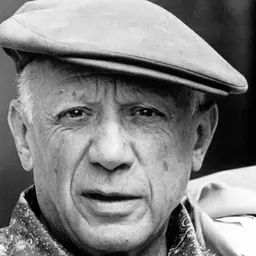
People in Choi Seung-hee's life
Named in this biography and alive at the same time




Related people
Same field, nearest in time


Contemporaries
People whose lives overlapped Choi Seung-hee's





Frequently asked questions
Who was Choi Seung-hee?
Korean dancer and actress (1911-1969)
When was Choi Seung-hee born?
Choi Seung-hee was born on 24 November 1911 in Seoul.
When did Choi Seung-hee die?
Choi Seung-hee died on 8 August 1969 in North Korea.
What was Choi Seung-hee's occupation?
Choi Seung-hee was a dancer, choreographer, actor, singer and politician.
What nationality was Choi Seung-hee?
Choi Seung-hee was Korean and North Korean.
Sources & further reading
Cite this page
APA: Biography.guide. (2026). Choi Seung-hee. https://biography.guide/choi-seung-hee/
MLA: "Choi Seung-hee." Biography.guide, https://biography.guide/choi-seung-hee/.
Chicago: "Choi Seung-hee." Biography.guide. https://biography.guide/choi-seung-hee/.
Data last updated: 2026-09-23 · Spot an error? Report a correction.
Portrait: Wikimedia Commons · author & licence
Page generated 2026-09-27 05:07 UTC