
About Cho Ki-chon
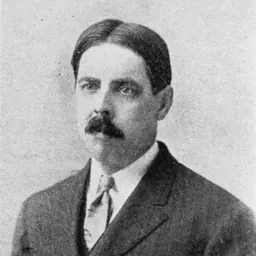
Lived 1913 – 1951 (aged 38). Cho Ki-chon was a Russian and North Korean poet.
Life and career Cho Ki-chon was born to poor Korean peasants in the village of Ael'tugeu not far from Ussuriysk in the Vladivostok District of the Russian Far East on 6 November 1913. (According to biographer Tatiana Gabroussenko, Cho's place of birth in Russia is verified by both Soviet records as well as his friends and relatives.) Both North Korean and some South Korean sources incorrectly state that he was born in Wonsan-ri, Hoeryong County, North Hamgyong Province in Korea. He particularly drew literary inspiration from , a fellow Korean writer living in the Soviet Union who – in believing in national emancipation by upholding socialist principles – had already written about anti-Japanese guerrillas.
Before emigrating from the Soviet Union It is possible that Cho translated Kim Il Sung's victory speech of 1945 into Korean. Cho moved to North Korea that year. Cho studied at the Korean Teachers College in Voroshilov-Ussuriysk between 1928 and 1931. During that time, he was also a member of the communist youth league of the Soviet Union, Komsomol.
Cho was initially supposed to enroll at the Moscow University, but he was robbed at a train station in Omsk. With no money, Cho was stranded and had to work at a kolkhoz in Omsk for the summer to get some. The rector of the Omsk University, Aleksandr Sergeevitch Slivko was touched by his fate and decided to admit him in the university. Thus, from 1933 until his graduation in 1937, into Korean. The original speech was written by Soviet officers. Cho entered North Korea with the Red Army that year.
Creating model literature in North Korea Immediately after the liberation of Korea, Soviet authorities sent Cho, who was fluent in both Korean and Russian, Cho's early works Mt. Paektu (MR: , 1947) and Land (MR: , 1946) would point out the direction that North Korean literature was about to take. In addition to poetry and poetic criticism, Cho was interested in drama. by Tae Jang-chun and other Koreans living in the Soviet Union. Mt. Paektu retains elements from this work, too. It also features a theme often found in Stalinist fiction: "class enemies" that seek to hamper progress. Other poems include: Land, "Aircraft Hunters", "On the Burning Street" (, 1950), "Korean Mother" (, 1950), "My Heights" (, 1951), "We are Korean Youth" (, 1951) as well as lyric poems "Swing"
While all of the poems are thoroughly ideological, some South Korean scholars such as Yi Chang-ju of the North Research Institution have sought to emphasize Cho's lyrical side in order to "domesticate" him to serve rapprochement between the two countries' cultural orientations. Some of Cho's poems have been adapted into popular music lyrics that enjoy popularity in the South as well as the North. Whistle, "Willow" and "Swing" are love songs that were inspired by a more relaxed cultural atmosphere following the translation of Russian-language poetry into Korean. These influences include Mikhail Isakovsky's "Katyusha", to which "Whistle" in particular bears likeness. "Whistle", adapted as a popular song in 1990, is often seen in the South as a non-political song. However, according to Gabroussenko, South Korean observers often fail to notice the political and cultural elements borrowed from Isakovsky and Soviet lyrical poetry. In "Whistle", for instance, the couple embodies exemplary socialist traits:
Mt. Paektu Cho's epic Mt. Paektu promotes Kim Il Sung as a heroic guerrilla well-suited to lead the country. Cho's long epic poem Mt. Paektu
The work was adapted on stage by Han T'ae-ch'ŏn. It has been translated into English, Arabic, French, German, Hungarian, Russian, Spanish, Czech, Polish, Chinese, Japanese, and Mongolian. Of these, the Mongolian one was deemed "distorted" by North Koreans and sparked a diplomatic crisis in 1976, resulting in expulsion of the Mongolian ambassador to the country.
Death and legacy Cho died on 31 July 1951 in his office in Pyongyang during an American bombing raid in the war.
Mt. Paektu received the National Prize , first class, in 1948. Cho's works were awarded the Festival Prize , the country's highest literary honor, modeled after the Stalin Prize. He also was awarded the Order of the National Flag, second class, for his work during the war in 1951, as well as a posthumous National Prize, first class, in 1952 for his cycle of poems Korea is Fighting Today, Cho is regarded as the founding father of North Korean socialist realist poetry, or indeed poetry in general, or even North Korean literature as a whole. In the mid-1950s many Soviet Koreans, including Cho's close friends, were discredited in purges. According to Gabroussenko, Cho's untimely death in 1951 may have spared him his reputation from that loss of official recognition. With the exception of a period in the 1970s when Cho's name was barely mentioned in official publications, his legacy has benefited from continued popularity in North Korea.
Don’t just read it —
keep it.
Full-length biographies made to live with: read them, listen on the way to work, watch them tonight.
- E-book
- Audio
- Video
Instant download · yours to keep · every purchase keeps this site free
Important facts
People in Cho Ki-chon's life
Named in this biography and alive at the same time

Related people
Same field, nearest in time


Contemporaries
People whose lives overlapped Cho Ki-chon's



Frequently asked questions
Who was Cho Ki-chon?
North Korean poet
When was Cho Ki-chon born?
Cho Ki-chon was born on 6 January 1913 in Ussuriysk, Vladivostok.
When did Cho Ki-chon die?
Cho Ki-chon died on 31 July 1951 in Pyongyang.
What was Cho Ki-chon's occupation?
Cho Ki-chon was a poet.
What nationality was Cho Ki-chon?
Cho Ki-chon was Russian and North Korean.
Sources & further reading
Cite this page
APA: Biography.guide. (2026). Cho Ki-chon. https://biography.guide/cho-ki-chon/
MLA: "Cho Ki-chon." Biography.guide, https://biography.guide/cho-ki-chon/.
Chicago: "Cho Ki-chon." Biography.guide. https://biography.guide/cho-ki-chon/.
Data last updated: 2026-09-20 · Spot an error? Report a correction.
Page generated 2026-09-27 05:22 UTC