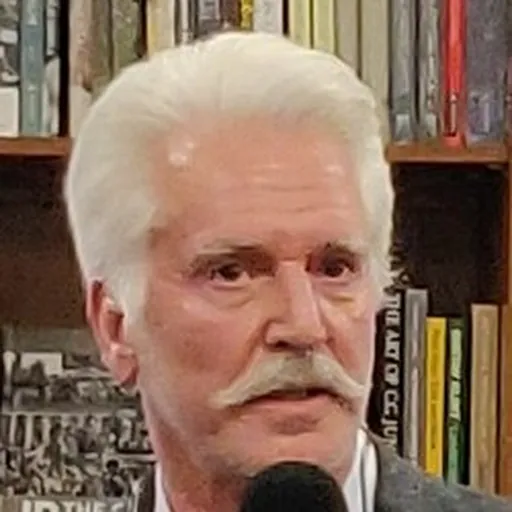
Chip Walter
American writer
About Chip Walter
Born 1951.
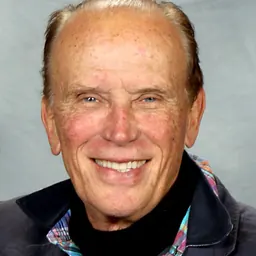
William J. (Chip) Walter Jr. (born May 23, 1951) is an author, journalist, National Geographic Fellow, educator, filmmaker and former CNN bureau chief. He has written five mainstream science books between 1991 and 2019. Walter was one of the original employees at CNN when it went on the air June 1, 1980 and later became its youngest bureau chief when he created CNN's first Southeast Bureau in 1981 before heading up the network's San Francisco Bureau in 1982. He has written and produced several PBS science documentaries, served as an adjunct professor at Carnegie Mellon University in three different departments, worked with UNICEF on the issue of childhood trauma, spoken at Harvard, Xerox PARC, Carnegie Mellon University and the Chautauqua Institution. One of his three original screenplays was produced and released under the title Sunset Grill in 1993 starring Peter Weller, Lori Singer and Stacy Keach. In 2015 his feature story for National Geographic Magazine explored the origins of human art and symbolic thinking.
Career After departing CNN Walter wrote and produced several award-winning documentaries for PBS including two programs for the Emmy Award-winning science series Planet Earth (1986) and another for Infinite Voyage (1986-1989 series), the first PBS series to air on both public and commercial television. He also wrote and produced a college-credit tele course which followed the Planet Earth series. His program "Fires of the Mind," was the first show publicly premiered for the Infinite Voyage series. It dealt with the evolution of human intelligence and creativity, themes Walter has returned to many times in his work. Variety called the documentary "Handsomely produced, beautifully written...a fascinating hour." The Village Voice wrote that it delivered " a sense of human accomplishment, which is the true ambition of science on the air."
Beginning in 1989, Walter developed a new series for WQED entitled Space Age to celebrate the International Space Year in 1992, the quincentenary of Christopher Columbus's voyage to the New World in 1492. The multimillion-dollar six part series, which was PBS's primetime series in the fall of 1992, was hosted by Patrick Stewart. Walter went on to write the series' companion book by the same title published by Random House in 1992 under the name William J. Walter Jr. The Houston Post called the book "lucid, well-written and well thought out."
Following forays into Hollywood screenwriting and digital media in the early and mid-1990s, Walter wrote his next book in collaboration with William Shatner, well known for his iconic role as Captain Kirk in the original Star Trek television series, and then later in a series of Star Trek movies. The book explored the many ways that the technologies predicted in the Star Trek series, like handheld communicators, virtual reality, wearable computers, humanlike robots and radical life extension were becoming a reality two hundred years before the 23rd century in which the series was set. The book combined reminiscences and history of the original series with explorations of advanced technologies being developed at MIT, Carnegie Mellon University, Xerox PARC, Kurzweil Technologies and as part of the Human Genome Project. Walter knew Carnegie Mellon University professor Randy Pausch and arranged to visit Pausch's lab as part of the book's research. His work was featured in the book's chapter on the Holodeck and virtual reality. Pausch later credited Walter with fulfilling one of his lifelong dreams—meeting Captain Kirk, when he gave his famous "Last Lecture" before dying in 2008 from pancreatic cancer.
He has also served on the faculty at Carnegie Mellon University at the Mellon Institute of Science, the School of Fine Arts and the Entertainment Technology Center at the School of Computer Science. In 1994 he pioneered early children's learning games with the launch of Digital Alchemy. The company later created the first GeoBee learning game for the National Geographic Society.
Walter has published four mainstream science books on a wide variety of subjects. His 2006 book, Thumbs, Toes and Tears–And Other Traits That Make Us Human was translated into five languages. "Last Ape Standing" has been published into three non-English languages, Chinese, Japanese and Spanish. He has written for a variety of national and international publications including National Geographic Magazine, The Economist, Slate, The Wall Street Journal, Scientific American, Scientific American Mind, Discover, and many others.
Don’t just read it —
keep it.
Full-length biographies made to live with: read them, listen on the way to work, watch them tonight.
- E-book
- Audio
- Video
Instant download · yours to keep · every purchase keeps this site free
Important facts
People in Chip Walter's life
Named in this biography and alive at the same time



Contemporaries
People whose lives overlapped Chip Walter's


Frequently asked questions
Who is Chip Walter?
American writer
When was Chip Walter born?
Chip Walter was born on 23 May 1951.
Sources & further reading
Cite this page
APA: Biography.guide. (2026). Chip Walter. https://biography.guide/chip-walter/
MLA: "Chip Walter." Biography.guide, https://biography.guide/chip-walter/.
Chicago: "Chip Walter." Biography.guide. https://biography.guide/chip-walter/.
Data last updated: 2026-09-24 · Spot an error? Report a correction.
Portrait: Wikimedia Commons · author & licence
Page generated 2026-09-27 05:09 UTC