Chiefess Kapiolani
High Chiefess of Ka'ū and South Kona on the Big Island of Hawaii
About Chiefess Kapiolani
Lived 1781 – 1841 (aged 59–60).
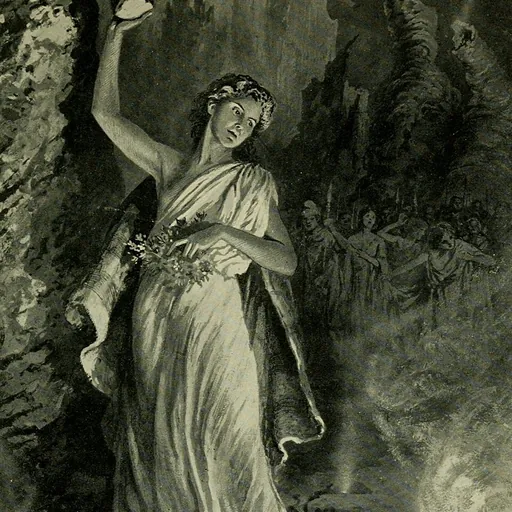
High Chiefess Kapiʻolani (c. 1781–1841) was an important member of the Hawaiian nobility at the time of the founding of the Kingdom of Hawaiʻi and the arrival of Christian missionaries. She was one of the first Hawaiians to read and write, as well as sponsor of a church. She made a dramatic display of her new faith, which was the subject of a poem by Alfred, Lord Tennyson.
Ancestry Every high chief in the Hawaiian Islands was related to her, including Kamehameha I, who was both her second cousin and her third cousin through different relations. Her ancestors included royalty of Kauaʻi, royalty of Maui and the royalty of Hawaiʻi island. The name probably comes from ka pi'o lani meaning "heavenly arch" in the Hawaiian language.
The father of Kapiʻolani was Keawemauhili, who was high chief (Aliʻi Nui) of the district of Hilo on the island of Hawaiʻi. She was probably born there about 1781. Keawemauhili was half-brother to Kalaniʻōpuʻu who was king of the island during the fatal visit of Captain James Cook in 1779. Her mother was his second wife Kekikipaʻa, daughter of Kameʻeiamoku, who had fled with from her first husband Kamehameha I to Hilo in order to marry Keawemauhili. She was instructed in the Hawaiian religion and its strict social rules known as kapu. For example, women were not allowed to eat bananas. Once she sent a servant boy to secretly get some for her to taste. When the local priest found out, she was spared but the boy was sacrificed.
She was still a young girl when the Vancouver Expedition arrived at Kealakekua Bay in 1793 and 1794. This time, through interpreters, Hawaiians could start to learn about other cultures. In 1805, an epidemic known as mai oku'u broke out. Much of the royalty, including Kamehameha I and Kapiʻolani got very sick. She might have briefly married High Chief Chief Kuakini, who later became the royal governor of the island. She became known as having liaisons with several members of the ruling class.
The death of Kamehameha in 1819 put the kingdom into turmoil. The period known as ʻAi Noa (literally, "free eating") after one king's death was traditionally followed by the new king imposing similar Kapu rules. However, this time, powerful women such as Queen Kaʻahumanu (then Regent), Keōpūolani (mother of the new King Kamehameha II), along with Kapiʻolani, were not satisfied with the old ways. Chief Keaoua Kekuaokalani attempted to gather followers of the old system at the temple near where she was living, but he was defeated at the battle of Kuamoʻo.
American Christian Missionaries led by Rev. Asa Thurston arrived only a few months later, in March 1820 at Kailua-Kona about to the north. They had already embarked on the ship Thaddeus before Kamehameha's death. They describe meeting Kapiʻolani for the first time as she was sunbathing while applying coconut oil, "basking in the noonday tropical sun, like a seal". They also describe finding her "with her two husbands, all nearly nude, and in a state of beastly intoxication". Because of this, he suggested the village of Kaʻawaloa at the north end of Kealakekua Bay as one of the first sites for a church.
Challenging Pele
In the fall of 1824 she decided to show her people a dramatic demonstration of her faith.
Although many other temples were destroyed by this time, the native Hawaiians continued to honor the goddess Pele at Kīlauea, which was still active. Following the example of the Ellis trip, she traveled to the volcano. Because of the sharp, barren lava rock on the way, it would have been much faster to use canoes. However, she set out on foot, gathering a large crowd as she walked about sixty miles. Rev. Goodrich from the Hilo mission met her at the volcano near the end of December. The guardians of Pele warned that if she did not make the customary offerings, she would certainly be killed. Many remembered when their relatives were wiped out by an explosive eruption in 1790. She said a Christian prayer instead of the traditional one to Pele, and descended about 500 feet down into the main vent of Halemaʻumaʻu. There was a molten lava lake at the time, but no eruption and she survived intact, with only bruises on her feet from the long journey. This event has become legendary at the volcano. Whilst on the volcano, she defied Pele by breaking a taboo of eating ʻŌhelo berries without offering any to Pele, as was custom. Instead she told her onlookers that if she returned without being destroyed by Pele in the volcano, they must abandon their worship of Pele and instead worship the Christian God.
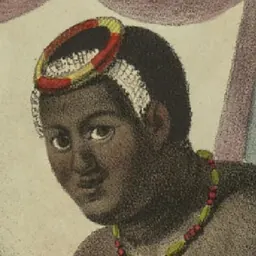
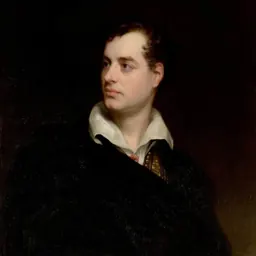
In July 1825, Admiral Lord Byron (cousin of the famous poet) brought back the bodies of Kamehameha II and Queen Kamāmalu who had died in England. Naihe traveled to Honolulu and helped negotiate the peaceful transition in which the 11-year-old Prince Kauikeaouli would be named Kamehameha III, but power would be held again by Queen Kaʻahumanu. Naihe led Byron back to Kealakekua Bay, where his crew looted many artifacts from the temples that remained in the area.
In October 1825 Kapiʻolani was baptized. Commanding the respect of the people, she kept order in her districts of south Kona and Kaʻū, and often traveled to help the less fortunate. This was very different than the strict isolation of the upper classes that was the tradition in ancient Hawaii. She is described as not being "hard and puritanical" but rather having a "nature-loving spirit". visited Kealakekua Bay in 1829 and she hosted the officers at her home. The ship chaplain, Rev. Charles Stewart, was a former missionary to Hawaii who had met Kapiʻolani in 1823.
Naihe died December 29, 1831, and Kapiʻolani moved uphill to live near the missionaries. She became friends with Persis Goodale Thurston Taylor (daughter of Asa and Lucy Goodale Thurston) who sketched a silhouette in 1839. She started a garden, experimenting with various plants, including guava, oranges, and coffee. This area is now known as the center for growing Kona coffee. In 1839 missionary Cochran Forbes started to build a massive stone church on more of her land. The site was kepulu, just uphill from the current village of Napoʻopoʻo, since the village of Kaʻawaloa was mostly abandoned.
In about 1840 she developed breast cancer. In March 1841 she traveled to Honolulu for surgery by Dr. Gerrit P. Judd (without anesthetic). She recovered, and was preparing to leave when she died on May 5, 1841. She was buried in a royal plot in Honolulu. The school is located at 966 Kilauea Avenue in Hilo, Hawaii.
The story of Kapiʻolani became very popular in the middle of the 19th century. The British author Alfred, Lord Tennyson (1809–1892) wrote a poem about her, published after his death by his son. Verse IV, for example reads:Long as the lava-light Glares from the lava-take, Dazing the starlight; Long as the silvery vapor in daylight, Over the mountain Floats, will the glory of Kapiolani be mingled with either on Hawa-i-ee.
Her nephew Kūhiō Kalanianaʻole named his daughter after her, who became known as Queen Kapiʻolani (1834–1899) when her husband became King Kalākaua. This namesake would in turn lend her name to several notable institutions in Hawaii.
Don’t just read it —
keep it.
Full-length biographies made to live with: read them, listen on the way to work, watch them tonight.
- E-book
- Audio
- Video
Instant download · yours to keep · every purchase keeps this site free
Important facts
Family & relationships
People in Chiefess Kapiolani's life
Named in this biography and alive at the same time




Contemporaries
People whose lives overlapped Chiefess Kapiolani's



Frequently asked questions
Who was Chiefess Kapiolani?
High Chiefess of Ka'ū and South Kona on the Big Island of Hawaii
When was Chiefess Kapiolani born?
Chiefess Kapiolani was born in 1781 in Hilo.
When did Chiefess Kapiolani die?
Chiefess Kapiolani died on 5 May 1841 in Honolulu.
What nationality was Chiefess Kapiolani?
Chiefess Kapiolani's recorded nationality: Kingdom of Hawaiʻi.
Sources & further reading
· Wikipedia: Chiefess Kapiolani
· DBpedia: Kapiʻolani (chiefess)
Cite this page
APA: Biography.guide. (2026). Chiefess Kapiolani. https://biography.guide/chiefess-kapiolani/
MLA: "Chiefess Kapiolani." Biography.guide, https://biography.guide/chiefess-kapiolani/.
Chicago: "Chiefess Kapiolani." Biography.guide. https://biography.guide/chiefess-kapiolani/.
Data last updated: 2026-09-22 · Spot an error? Report a correction.
Portrait: Wikimedia Commons · author & licence
Page generated 2026-09-27 05:01 UTC