
Chief White Eagle
Ponca chief and civil rights leader
About Chief White Eagle
Lived 1825 – 1914 (aged 88–89).
Chieftaincy (1870–1904)
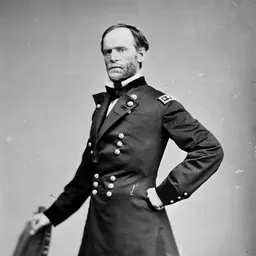
Ponca removal crisis and Ponca Trail of Tears (1870–1877) White Eagle's tenure as chief was defined by the unlawful forced removal of the Ponca from their treaty protected territory in the Dakota Territory to the Indian Territory in 1877, in direct violation of the Ponca Treaty of 1865 and American law. Known as the Ponca Trail of Tears, this removal was a six-hundred mile forced march spanning three modern-day states, resulting in numerous deaths en route. The forced march consisted of two parties of Ponca citizens. The first party was composed of approximately 170 Ponca citizens with mixed ancestry and began on April 16, 1877. The second party was to consist of the vast majority of the Ponca citizenry numbering about 500 people, including White Eagle and his vice chief Standing Bear. For nearly a month, White Eagle and Standing Bear resisted the unlawful efforts of Edward Cleveland Kemble, the federal agent sent by President Ulysses S. Grant, to force the Ponca removal by fraud. On April 24, 1877, General William Tecumseh Sherman ordered two companies of American soldiers to Ponca territory to force their compliance.
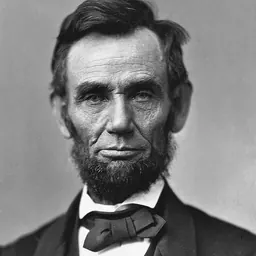
The removal lasted 54 miserable days, beginning on May 16, 1877, and ending on July 9, 1877, with many deaths occurring en route. As the Poncas continued their forced march across Kansas, four more people died: a young child named Little Cottonwood died outside Blue Rapids, Kansas, on June 18, two elderly women died south of Manhattan, Kansas, on June 25, and a young child died outside of Emporia, Kansas, on June 30. Two days later, an assassination attempt was made on White Eagle by a disaffected Ponca named Buffalo Chip who held White Eagle responsible for the mounting death toll. The federal removal agent described the chaotic scene of July 2nd his journal as follows: "Broke camp at six o'clock. Made a long march of fifteen miles for Noon Camp, for reason that no water could be got nearer. An Indian became hostile and made a desperate attempt to kill White Eagle, head chief of the tribe. For a time, every male in camp was on the warpath, and for about two hours the most intense excitement prevailed, heightened by continued loud crying by all the women and children." who preceded him as hereditary chief of the Ponca from 1846 until his abdication in 1870. Iron Whip signed the broken treaty with President Abraham Lincoln in 1865 shortly before Lincoln's assassination. The exact number of deaths is unknown; however, it is known that the death toll exceeded 200 of the 700 Poncas — 30% of the Ponca population — and included the outright extinction of 24 Ponca families.
Advocacy for Native American rights following the Ponca Trail of Tears (1877–1881) White Eagle (L) and Standing Bear (R) in 1890White Eagle led a delegation of Ponca leaders to Washington in the immediate aftermath of the removal in order to confront President Hayes and the American politicians in the Congress regarding the clear illegality of the removal. He and Standing Bear arrived on November 8, 1877.
White Eagle's leadership during the Ponca removal crisis played a central role in the series of events culminating in a landmark civil rights ruling in 1879 recognizing Native Americans as persons due civil rights under the Constitution of the United States for the first time in American history in Standing Bear v. Crook. Immediately following the Ponca removal, White Eagle aggressively sought restoration of the ancestral Ponca homeland from President Hayes and the United States Senate for the American government's violation of the Ponca Treaty of 1865 and its subsequent mismanagement of the Ponca removal. The efforts of both White Eagle and Standing Bear generated significant support from many notable Americans of the time including the poet Henry Wadsworth Longfellow, former abolitionist Wendell Phillips, and author Helen Hunt Jackson who advocated on behalf of the Ponca by writing the seminal book on Native American civil rights entitled A Century of Dishonor. Nebraska journalist Thomas Tibbles traveled the country on a speaking tour to raise the money necessary for the Ponca to appeal their removal to the United States Supreme Court. Tibbles "thought that, if the Christian people of this country only knew of these horrors, they would be glad to help White Eagle in getting out of the Indian Territory, and saving from death the little children."
White Eagle subsequently negotiated a settlement with the United States on behalf of the Ponca in January 1881 pursuant to which the Ponca agreed to remain in the Indian Territory for monetary reparation in the amount of $125,000 (2019: $3,609,847). His decision shocked political observers but his rationale was based on guaranteed national security in the Indian Territory from Sioux aggression in addition to unique economic opportunities in the Indian Territory such as leasing. On October 22, 1880, White Eagle symbolically declared his intention to remain in the Indian Territory by laying the cornerstone of a school on the Ponca Agency alongside Chief Joseph of the Nez Perce. White Eagle deposited the Sioux scalp taken by his grandfather Chief Little Bear in a box at the laying of the cornerstone, symbolically closing a chapter of Ponca history. White Eagle was later credited as being responsible for forcing this change in government policy.
"We have been robbed of all we owned, but if we had thousands we would spend it all in bearing the expenses of the lawsuit carried on for us. We have nothing but our thanks to give."
Opposition to the General Allotment Act of 1887 and the Oklahoma Land Run White Eagle in 1877After successfully obtaining reparations for the unlawful removal, White Eagle remained a prominent advocate for Native American civil rights and the advancement of his people. He was one of the few outspoken opponents of the disastrous Dawes Act of 1887 which sought to culturally assimilate Native Americans into American society by withholding civil rights to Native Americans unless they agreed to abolish their governments, thereby relinquishing control of communal lands. In exchange, the United States would grant citizenship to individual Native Americans who agreed to accept small allotments of land. White Eagle accurately predicted to Senator Henry L. Dawes, for whom the Dawes Act was named, that it would "pluck the Indian like a bird" within three months. Politically, the Dawes Act seriously eroded the role and authority of Native American governments; however, White Eagle fought to retain his power, telling American leaders that "a chieftainship is hard to break up." (Hagan, 222). He strenuously objected to the surplus provision. He explained his refusal to comply: "when animals come out, there is grass for them to eat, and we would like to have land for the children when they come."
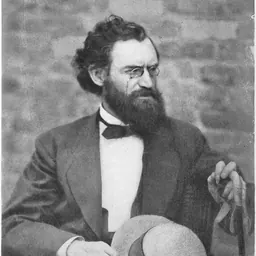
When White Eagle's prediction turned out to be true, Dawes later described White Eagle as "the clearest head of all" Native American leaders on the issue. President Hayes' Secretary of the Interior Carl Schurz regarded White Eagle as "one of the greatest men among the Indians."
White Eagle had used diplomacy and litigation to deflect the onrushing American immigrants, by 1889, these efforts had failed. This left the surviving Ponca facing reservation life and continuing pressures from the Harrison administration to acculturate. Federal officials demanded that the Ponca abandon their traditions and join the white American mainstream.
Following the Oklahoma Land Run of 1889, President Benjamin Harrison convened a commission with the objective of acquiring land occupied by thirteen separate Native American nations, including the Ponca, for the purpose of opening the land to American settlers. In 1891, White Eagle appeared before a panel convened by President Harrison who told him they needed more of his land due to the wave of new immigrants. He told them that "all the increase coming from over the big water [Atlantic Ocean] should stay on their own reservations."
By 1892, Harrison's commission had successfully annexed land from every nation except the Ponca. On March 17, 1892, led by White Eagle, the Ponca were the first tribe to refuse to engage in negotiations. Commissioners attempted to acquaint the Ponca with the size of 80 acres by staking out two such plots and marking them with flags. To their disappointment, the Poncas declined all invitations to ride a wagon around the plots with White Eagle declaring that he already knew the size of 80 acres. (Hagan, 174). Commissioners told White Eagle that while the United States could not force them to sell their land, they would have no peace until they did. (Hagan, 171). During negotiations, Jerome attempted to persuade White Eagle suggested the white homesteaders "stay on their own reservation". White Eagle felt there was no evidence that allotments, or lack thereof, made any difference in a tribe's standard of living. Over the course of 11 weeks, the commissioners schedule dozens of hearings and over the course of 11 weeks, the Ponca attendance declined, frustrating Jerome who threatened to get the Ponca to council, "if it takes the whole army" (Hagan, 175).
On April 12, 1892, the Commission articulated President Harrison's proposal. Each Ponca would receive an allotment of 80 acres and $20, coming from the federal payment of $69,000.00 for the surplus lands. The balance of the purchase price would be placed in the United States Treasury where it would earn 5% interest, which would be paid annually at the rate of $10 per month to each tribal member. In the event the Ponca desired to withdraw the principle amount, each Ponca family of 5 would receive $1,000.00. Commissioners stated that if the Ponca accepted this offer, "they could live as they please", and "could visit as much as they please", a remarkable statement considering the United States was attempting to discourage intra and inter-reservation visitation as prejudicial to the proper care of Native American property. (Hagan, 176).
White Eagle was highly critical of this offer. The depth of the Ponca resistance was immense and the Commission was unable to extract any concessions whatsoever.
A young Ponca testified that since the Ponca removed to the Indian Territory, the Ponca chiefs were "not the ones to say what we should do, the land belongs to all the men, women, and children and they have a right to say what shall be done with it." (Hagan, 179). The Commission set out to use individualism to promote factionalism and set the Ponca against one another. (Hagan, 179). White Eagle continually asserted his authority and utilized his tactic of delay, saying he was not prepared to give any direction to his people on the issue until the federal plan was fully articulated. (Hagan, 179).
Leasing Ponca land to the 101 Ranch Wild West Show and Marland Oil Though unsuccessful, White Eagle effectively utilized the Dawes Act by conveying Ponca land to a prominent oil tycoon when a large oilfield was discovered under the Ponca reserve in 1911. He forged a relationship with oil tycoon and future United States congressman E. W. Marland. He also leased significant acreage of the Ponca Reservation in the Indian Territory to the Miller Brothers 101 Ranch who used the land to establish what would become one of the most recognizable names in ranching and western entertainment, staging Wild West shows that provided employment for the Ponca people and entertained such personalities as King George V of the United Kingdom, President Theodore Roosevelt, and Will Rogers.
In September 1883, young Joe Miller, joined by Ponca Chief White Eagle, led a delegation of Poncas to the Alabama State Fair where he helped the Poncas establish an Indian village to hold traditional dances.
This included marching in parades on Mar. 18, 1899. In late 1902, White Eagle traveled to Birmingham, Alabama to perform in the 101 Ranch Wild West Show. In a sign of the times, White Eagle was forbidden to leave the Ponca Reservation without permission from the federal government:
Abdication and later life (1904–1914)
Abdication and inauguration of Horse Chief Eagle (1904)
White Eagle formally abdicated his position as hereditary chief on May 8, 1904, to his son and successor, Horse Chief Eagle, who would ultimately be recognized as the last hereditary chief in the United States The press described the ceremony as the last buffalo hunt in this history of the Great Plains. Dalí transformed White Eagle's eyes into a scene depicting 17th century Dutch colonists seemingly celebrating Peter Minuit's 1621 acquisition of Manhattan Island from the indigenous owners for the proverbial string of beads by toasting bottles of Coca-Cola.
Other honors
The White Eagle Oil & Refining Co. was formed in 1911 following the Supreme Court's breakup of Standard Oil into several geographically separate and eventually competing firms to break up a monopoly. By the time it was acquired by Mobil in 1930, White Eagle had gas stations in 11 states across the United States. The town of White Eagle, Oklahoma, is named in his honor and is the modern-day headquarters of the Ponca Nation of Oklahoma. White Eagle appears on the Ponca Code Talkers Medal issued by the United States Mint in 2013.
Gallery
Don’t just read it —
keep it.
Full-length biographies made to live with: read them, listen on the way to work, watch them tonight.
- E-book
- Audio
- Video
Instant download · yours to keep · every purchase keeps this site free
Important facts
People in Chief White Eagle's life
Named in this biography and alive at the same time

Contemporaries
People whose lives overlapped Chief White Eagle's





Frequently asked questions
Who was Chief White Eagle?
Ponca chief and civil rights leader
When was Chief White Eagle born?
Chief White Eagle was born in 1825 in Niobrara River.
When did Chief White Eagle die?
Chief White Eagle died on 4 February 1914 in White Eagle, Oklahoma.
What nationality was Chief White Eagle?
Chief White Eagle's recorded nationality: Ponca.
Sources & further reading
· Wikipedia: Chief White Eagle
Cite this page
APA: Biography.guide. (2026). Chief White Eagle. https://biography.guide/chief-white-eagle/
MLA: "Chief White Eagle." Biography.guide, https://biography.guide/chief-white-eagle/.
Chicago: "Chief White Eagle." Biography.guide. https://biography.guide/chief-white-eagle/.
Data last updated: 2026-09-26 · Spot an error? Report a correction.
Page generated 2026-09-27 05:16 UTC