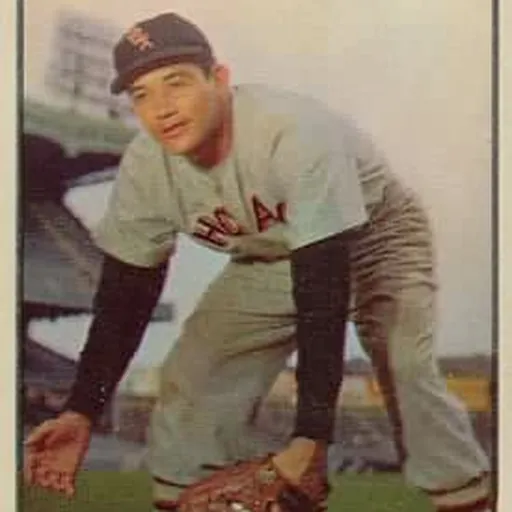
About Chico Carrasquel
Lived 1928 – 2005 (aged 77). Chico Carrasquel was a Venezuelan baseball player.
Alfonso Carrasquel Colón, better known as Chico Carrasquel (January 23, 1926 – May 26, 2005), was a Venezuelan professional baseball player, coach, scout and manager. He played in Major League Baseball (MLB) as a shortstop from 1950 to 1959, most prominently as a member of the Chicago White Sox where he became the first Latin American in MLB history to start in an All-Star Game in . A four-time All-Star known for his exceptional defensive skills, Carrasquel was the first in a long line of Major League shortstops from Venezuela including, Luis Aparicio, Dave Concepción, Ozzie Guillén and Omar Vizquel among others. He also played for the Cleveland Indians, Kansas City Athletics and the Baltimore Orioles.
After his playing career, Carrasquel worked as a manager in the Venezuelan Winter League and also worked as a major league scout. He later worked as a color commentator on the White Sox' Spanish language game broadcasts and, as the team's Community Relations Representative. In , he was selected in the inaugural class of the Venezuelan Baseball Hall of Fame and Museum.
Playing career Born in Caracas, Carrasquel was the nephew of Alex Carrasquel and the brother of Martin and Domingo Carrasquel, all of whom played professional baseball. He began his professional career in at the age of 17 with the Cervecería Caracas team, where he hit the first home run in Venezuelan Professional Baseball League history. He was signed in by the Brooklyn Dodgers, and was immediately promoted to the Double-A Fort Worth Cats. Carrasquel provided good fielding and hit .315 during the season and .364 in the playoffs to help spur the Cats to the 1949 Texas League championship. His inability to speak English fluently may have caused Dodgers General Manager Branch Rickey to sell him to the Chicago White Sox although, Rickey later admitted that the move was a mistake.
Carrasquel joined the White Sox in 1950, becoming the third Venezuelan to play in Major League Baseball after his uncle, Alex Carrasquel (Washington Senators, 1939) and Chucho Ramos (Cincinnati Reds, in 1944). As a rookie, Carrasquel hit for a career-high .282 batting average in 141 games and, amassed a 24-game hitting streak until Red Sox pitcher Ellis Kinder stopped the streak. In September, he suffered a torn cartilage in his right knee and had to sit out the remainder of the season. Carrasquel finished the season ranked third in voting for the American League Rookie of the Year Award, behind Walt Dropo and Whitey Ford, and finished 12th in the American League Most Valuable Player Award ballot.
In , Carrasquel beat out the reigning American League Most Valuable Player, Phil Rizzuto, in voting for the shortstop of the American League in the 1951 All-Star Game. He became the first Latin American player to be selected to start in an All-Star Game. The record would stand for 18 years until , when Don Kessinger of the Chicago Cubs set a new record by playing in 54 games without committing an error. He ended the year leading the league's shortstops in assists and in fielding percentage. In November 1951, it was reported that Boston Red Sox manager, Lou Boudreau, wanted to trade Ted Williams for Carrasquel but Lane refused the offer.
Carrasquel had an off year in 1952 as a broken finger and then weight problems saw his batting average drop to .248 in 100 games. After the 1952 season, trade rumors reportedly had the Cleveland Indians offering the American League's runs batted in champion, Al Rosen, in exchange for Carrasquel but, the trade never transpired. In 1953, Carrasquel was once again voted as the starting shortstop for the American League in the 1953 All-Star Game and ended the season first among the league's shortstops in fielding percentage. On August 3, 1953, the White Sox played the Washington Senators who fielded shortstop Pompeyo Davalillo, marking the first time in Major League history that two Venezuelan players faced each other on opposing teams.
During spring training in 1954, it was reported that White Sox manager Paul Richards was not pleased with Carrasquel's lack of effort on the field. It was a charge that would continue to pursue Carrasquel for the remainder of his tenure with the White Sox. Carrasquel responded with his most productive season in , when he was voted to make his third start as the American League shortstop in the 1954 All-Star Game and, posted career-highs in home runs (12), RBI (62), hits (158), runs (106), extra-base hits (43), walks (85). Defensively, he led the league's shortstops in double plays and in fielding percentage.
In July 1955, new White Sox manager, Marty Marion, replaced Carrasquel in favor of shortstop Jim Brideweser, citing Carrasquel's lackadaisical efforts and indifferent attitude towards playing. There was some speculation among major league managers that, playing in the Venezuelan Winter League during the off-season might be wearing him down. Between spring training, the regular major league season, and then a season of winter baseball in Venezuela, Carrasquel was playing in more than 200 games a year. He still showed flashes of his former self as in a game against the Baltimore Orioles on August 23 when, he scored from first base on a bunt. Nellie Fox hit a bunt down the third base line and, when Orioles third baseman, Gus Triandos, left his base to field the ball, Carrasquel rounded second base and continued to third, where he was called safe on a close play. When the Orioles argued with the umpire without calling a time out, Carrasquel dashed to home plate without drawing a throw. Although his dedication was being called into question by Marion and the sporting press, Carrasquel still finished among the league leaders in assists, putouts and in fielding percentage.
Carrasquel had been instrumental in helping the White Sox sign another young, Venezuelan shortstop named Luis Aparicio, who went on to become a perennial All-Star player and was eventually inducted into the Hall of Fame. By , Aparicio was deemed ready to play in the major leagues and, with Marion dissatisfied with Carrasquel's level of play, he was traded along with Jim Busby to the Cleveland Indians for Larry Doby in October of that year.
After two and a half seasons with the Indians, Carrasquel was traded to the Kansas City Athletics for Billy Hunter in June 1958. He played half a season for the Athletics before they traded him to the Baltimore Orioles for Dick Williams in October 1958. During a physical examination in September, it was discovered that Carrasquel only had fifty percent of his vision in his left eye, perhaps stemming from the May incident. He ended the year with a career-low .223 batting average and in December the Orioles released him. He became a free agent and signed a contract to play for the Chicago White Sox in January 1960 but was released at the beginning of the season. Carrasquel then signed with the Montreal Royals of the International League in April but was released after hitting for a .206 average in 35 games. He also had two other games in which he had 5 hits. Carrasquel had a career-high 7 runs batted in during a game against the Athletics on April 26, 1956.
Managing career and later life Carrasquel returned to his native Venezuela where continued to play in the Venezuelan Winter League until when, he retired as an active player at the age of 41. Carrasquel also spent time as a scout for the Kansas City Royals and the New York Mets. The Chico Carrasquel Foundation transports barrio youngsters to YMCA centers, museums, baseball games, and historical places throughout Venezuela.
On the occasion of Ozzie Guillén's first home game as White Sox manager in the season, Carrasquel joined Guillén and fellow Venezuelans Luis Aparicio and Dave Concepción in throwing out the first ball at the home opener. Carrasquel called it his proudest moment.
Legacy As the first Venezuelan to become a star player in Major League Baseball, Carrasquel became a national idol and was an influential figure in his native country.
Carrasquel's influence in Venezuela may have extended into the geopolitical arena as well. At a time during the Cold War when communists threatened to destabilize the country, Walter Donnelly, the United States Ambassador to Venezuela, arranged for Carrasquel's family to come to Yankee Stadium for an event honoring him in July . Donnelly told Collier's magazine that "he honestly believed the event was a setback for communist propagandists in Venezuela. Under no circumstances could a similar trip have been made to Russia or any of the satellite countries."
Carrasquel's uncle, Alex Carrasquel, and his nephew Cris Colón, also played in Major League Baseball. Carrasquel died of cardiac/respiratory arrest in Caracas, Venezuela on May 26, at the age of 77.
Don’t just read it —
keep it.
Full-length biographies made to live with: read them, listen on the way to work, watch them tonight.
- E-book
- Audio
- Video
Instant download · yours to keep · every purchase keeps this site free
Important facts
People in Chico Carrasquel's life
Named in this biography and alive at the same time




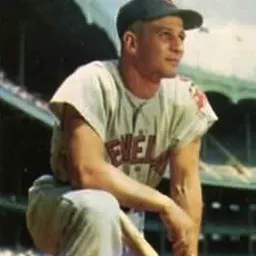
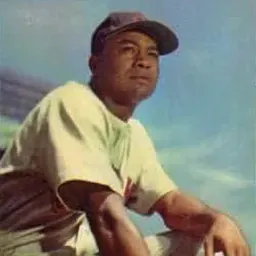
Related people
Same field, nearest in time

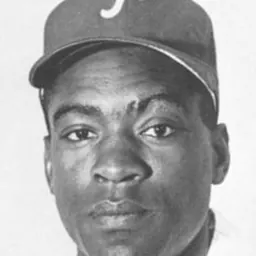
Contemporaries
People whose lives overlapped Chico Carrasquel's



Frequently asked questions
Who was Chico Carrasquel?
baseball player
When was Chico Carrasquel born?
Chico Carrasquel was born on 23 January 1928 in Caracas.
When did Chico Carrasquel die?
Chico Carrasquel died on 26 May 2005 in Caracas.
What was Chico Carrasquel's occupation?
Chico Carrasquel was a baseball player.
What nationality was Chico Carrasquel?
Chico Carrasquel was Venezuelan.
Sources & further reading
Cite this page
APA: Biography.guide. (2026). Chico Carrasquel. https://biography.guide/chico-carrasquel/
MLA: "Chico Carrasquel." Biography.guide, https://biography.guide/chico-carrasquel/.
Chicago: "Chico Carrasquel." Biography.guide. https://biography.guide/chico-carrasquel/.
Data last updated: 2026-09-21 · Spot an error? Report a correction.
Portrait: Wikimedia Commons · author & licence
Page generated 2026-09-27 05:00 UTC