
About Chiang Ching
Born 1946. Chiang Ching is a Taiwanese choreographer and actor.
Chiang Ching (; born ), occasionally spelled as Jiang Qing, birth name Jiang Duqing, is a Chinese-born American dancer and film actress based in New York, United States, and Sweden.
With an ancestral root in Puning, Guangdong, she was born in Beijing and attended primary school in Shanghai. She was selected to study ballet and folk dance at the Beijing Dance School. Shortly before graduation, during a visit to Hong Kong to see her parents, she was detained by her father and subsequently joined the Southern Experimental Theatre of Shaw Brothers Studio. She rose to fame in Taiwan as the lead actress in director Li Han-hsiang's film Seven Fairies (1963). She won the Best Leading Actress of the Golden Horse Awards in 1967 due to her performance in the film How Many Enchanting Nights (1966), adapted from Chiung Yao's novel.
In 1966, she married musician Liu Chia-chang but divorced in 1970 and moved to the United States. In 1973, she became a U.S. citizen and founded the Chiang Ching Dance Company, gaining renown for her contributions to modern dance and mentoring notable dancers such as Lin Hwai-min. Influenced by the 1989 Tiananmen Square Incident, she began writing and published several memoirs in Chinese since 1991.
Early life
Childhood in Shanghai In 1946, Jiang Duqing was born in Beiping (now Beijing) and later relocated to Shanghai. She attended the privately-run Guorun Primary School in Shanghai, established by her maternal grandfather, Wu Weirun. After 1949, Chiang’s grandfather and mother embraced the ideals of the Chinese Communist Party (CCP), personally participating in land reforms in rural areas, turning over their land to the state, and encouraging Chiang’s father, who remained in Hong Kong, to return and serve the nation.
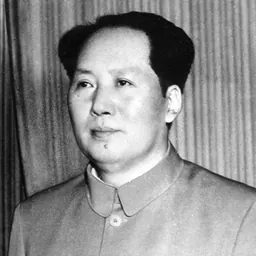
On 30 September 1954, Jiang Duqing, then just 8 years old, witnessed her grandfather being handcuffed and taken away by strangers. At the time, the name of Mao Zedong’s wife was not widely known.
Dance training in Beijing
In 1956, encouraged by her maternal uncle, Chiang applied to the Beijing Dance School. Out of more than a thousand applicants, she was unexpectedly admitted. Leaving Shanghai for Beijing, she escaped the discrimination associated with her family's "counter-revolutionary" status, while her mother was suspended from her office for investigation, an ordeal that nearly drove her to suicide. studying both ballet and traditional Chinese dance. She was classmates with future renowned dance artists such as Zhao Ruheng.
In Hong Kong, Chiang neither spoke Cantonese nor made an effort to learn English, and she found the environment deeply uncomfortable. At the theatre, Chiang became close friends with Cheng Pei-pei, Subsequently, Chiang appeared in The Story of Sue San (玉堂春), a Huangmei opera film directed by King Hu, where she played the role of a courtesan.
In 1963, Chiang followed Li to Taiwan, with the condition that she would not perform under the label of "anti-communism." With the support of Long Fang, director of the Taiwan Film Studio, Li Han-hsiang used a sound stage in the Taipei Botanical Garden to film Seven Fairies. Meanwhile, Shaw Brothers, under the direction of Ho Meng-hua and Chan Yat-sun, hurriedly produced their own version of Seven Fairies to compete with Grand Motion Pictures. Chiang’s performance as the lead actress in Seven Fairies catapulted her to stardom. In 1964, she starred in Xi Shi and later won the Best Actress at the Golden Horse Awards in 1967 for her role in the film How Many Enchanting Nights (幾度夕陽紅) adapted from Chiung Yao's novel. They formally married on 20 July 1966, Li Ao noted that Li Han-hsiang had firmly denied the affair, and Li Ao himself had to intervene to help Li Han-hsiang explain the situation to Liu. Amidst the fervour of the protests against Japanese occupation of Diaoyu Islands among Chinese in the United States, Chiang cautioned her friends with insights from her experience of Anti-Rightist Movement in China. During her time in Hong Kong and Taiwan, Chiang carried a stateless passport for years, only applying for a U.S. passport in 1973. She resigned from her role in Hong Kong in 1984, dissolved the Chiang Ching Dance Company, and relocated to Sweden with her husband and child, becoming an independent choreographer. Subsequently, she diversified her artistic pursuits across different fields. In 1987, she contacted Gao Xingjian, who she had been reading about in the 1980s, and began collaborations on transforming classic Chinese poems into modern dance.
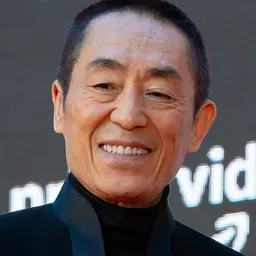
In 1999, Zhang Yimou invited Jiang to serve as choreographer for the opera Liu Sanjie. Despite changes in project investors, Chiang completed the second draft and attended a press conference but lost contact with the production team afterward. In 2004, she learned that Impression Liu Sanjie, a live-action performance, had premiered in Guilin, and news reports mentioned her as the dance director. Feeling deceived, Jiang demanded payment according to her contract. Producer Mei Shuaiyuan stated that the two productions were unrelated and that earlier reports were incorrect. He claimed to have privately compensated Jiang with 50,000 yuan. Zhang Yimou promised to assist in resolving the issue, but no further action was reported.
In 2008, Jiang choreographed, directed, and designed sets for the opera Tea at the National Centre for the Performing Arts in Beijing, with Tan Dun composing the music. However, Jiang was outraged that the poster displayed her name only in English ("Chiang") without the Chinese characters. She refused to appear on stage for the curtain call after the performance. but finally premiered at the Rome Opera House from 22 to 31 March 2022.
Family
She married Liu Chia-chang in 1966 and divorced in 1970. They had a son. She married Birger Blombäck, a Swedish biochemist, in 1978. Blombäck died in 2008.
Don’t just read it —
keep it.
Full-length biographies made to live with: read them, listen on the way to work, watch them tonight.
- E-book
- Audio
- Video
Instant download · yours to keep · every purchase keeps this site free
Important facts
People in Chiang Ching's life
Named in this biography and alive at the same time



Related people
Same field, nearest in time





Contemporaries
People whose lives overlapped Chiang Ching's


Frequently asked questions
Who is Chiang Ching?
Chinese dancer
When was Chiang Ching born?
Chiang Ching was born in 1946.
What is Chiang Ching's occupation?
Chiang Ching is a choreographer and actor.
What nationality is Chiang Ching?
Chiang Ching is Taiwanese.
Sources & further reading
· DBpedia: Chiang Ching (dancer)
Cite this page
APA: Biography.guide. (2026). Chiang Ching. https://biography.guide/chiang-ching/
MLA: "Chiang Ching." Biography.guide, https://biography.guide/chiang-ching/.
Chicago: "Chiang Ching." Biography.guide. https://biography.guide/chiang-ching/.
Data last updated: 2026-09-25 · Spot an error? Report a correction.
Page generated 2026-09-27 05:11 UTC