
Chevalier Paul
French admiral
About Chevalier Paul
Lived 1597 – 1667 (aged 70). Chevalier Paul was a French navigator.
Jean-Paul de Saumeur (159820 December 1667), often called Chevalier Paul, was a French admiral and naval officer who served in several Mediterranean campaigns. Despite his very modest origins, he was attracted to the Navy from a young age. After having been a simple seaman on behalf of the Order of Saint John of Jerusalem, from which he was excluded for having killed his corporal, he became a privateer in the Mediterranean Sea then joined the Royal Navy at the request of Cardinal Richelieu and fought during the entirety of the Franco-Spanish War (1635–1659). In 1649, he sunk an English ship which had 36 cannons with important cargo, that had refused to salute the French pavilion. From the enemy crew only three or four men were saved, and the other 140 crew members perished by drowning. His numerous victories earned him the appointment of lieutenant-general and vice-admiral of the Levant. He was named a knight of grace and a commander by the Grand Master Martin de Redin. He ended his career in 1666 by transporting the princess of Savoie-Nemours to Lisbon, who would later become the queen of Portugal. A skilled courtier, he did not forget his modest origins and knew how to be generous.
Origins and Youth According to unconfirmed rumors, he was the son of a laundress and of Paul de Fortia, Marquis of Piles, governor of the Chateau d'If. However, Captain Georges Bourgoin, Secretary of the Academy of Sciences, Letters and Fine Arts in Marseille, discovered that Chevalier Paul was not the natural child of the Marquis and a washerwoman. He highlighted Paul's legitimate parentage of an officer from a Catholic and bourgeois family in the Dauphiné, Captain Elzias Samuel and young lady Jeanne Riche, who were married in Marseille. The Council of the Grand Priory of Saint-Gilles, in view of the documents produced, concluded indeed, on November 14, 1633, he was "worthy to be received among the brothers-arms and go to the convent in Malta."
The transformation of his surname Samuel into Samuel or Saumeur would have been intended to avoid allusions to a distant Jewish origin, He always called himself "Capitaine Paul". He spent the first years of his life at Château d'If with Father Julien de Malaucène, but from a young age he felt the desire to travel. He travelled for three years before entering into the service of a commander of the order of St. John of Jerusalem as a sailor.
Saumeur began sailing at the age of twelve in the navy of the Order of Malta.
Military career In service of the Order of Saint John of Jerusalem Several years later, Paul returned to Malta and served as a soldier at Fort Saint Elmo. In 1614, resenting his corporal, he challenged him to a duel and killed him. He was immediately arrested, but some French knights of the Order obtained pardon from the Grand Master Alof de Wignacourt, on condition that he leave the Order . They made him embarque on an armed brigantine bound for commerce raiding at La Ciotat.
Corsaire On the brigantine, his courage and drive coupled with his natural nautical talent quickly caused him to be famed for his exploits against the Barbary Pirates. During combat against the Turks, the captain was killed and he was chosen by the crew to replace him
In 1655, he returned to the French court. The Duke of Vendome presented him to Louis XIV who gave Paul an honorable welcome, praising his bravery and congratulating him on his many victories. In the same year Paul was posted to Barcelona by the Duke of Vendome. One source on the combat noted that “Chevalier Paul showed on this occasion such valor and conduct, that we do not know how to dignifiedly speak of it.
“We found at Toulon, Monsieur Chevalier Paul, who, by his office, by his merit and by his expense, is the first and most considerable of the country. It’s this Paul, which the experience Greedy of the Sea and Wind; Which the happiness and valiance Made France formidable To all the people of the Levant. These verses are as magnificent as his face; but, in truth, though it has something proud to it, does not fail to be convenient, soft and entirely honest. He served us in his home, which is so clean and well maintained, that it seemed to be a small delightful palace.”
The provincial biographer Claude-François Achard, described:
A generous man with the disinherited Never forgetting his modest origins, he bequeathed to the poor the entirety of his belongings, and asked to be buried among them at the cemetery of Toulon. He enjoyed reminding people of this. The same Achard told the following anecdote:
Honors and posterity Three warships of the French navy have successively carried this prestigious name: Chevalier Paul (1934–1941), a vauquelin-class destroyer Chevalier Paul (D626) (1956–1971), an escorteur d’escadre type T 47 Chevalier Paul (D621), a horizon-class frigate entered into service 10 June 2011 The center of the Préparation Militaire Marine in Marseille also carried the name Chevalier Paul.
Don’t just read it —
keep it.
Full-length biographies made to live with: read them, listen on the way to work, watch them tonight.
- E-book
- Audio
- Video
Instant download · yours to keep · every purchase keeps this site free
Important facts
People in Chevalier Paul's life
Named in this biography and alive at the same time
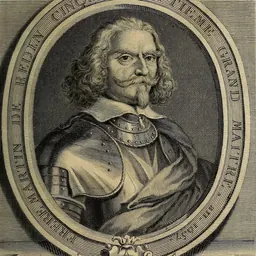
Related people
Same field, nearest in time





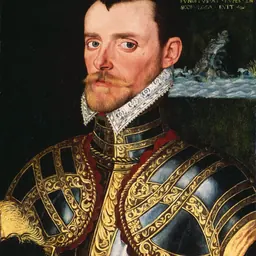
Contemporaries
People whose lives overlapped Chevalier Paul's






Frequently asked questions
Who was Chevalier Paul?
French admiral
When was Chevalier Paul born?
Chevalier Paul was born on 20 December 1597 in Marseille.
When did Chevalier Paul die?
Chevalier Paul died on 20 December 1667 in Toulon.
What was Chevalier Paul's occupation?
Chevalier Paul was a navigator.
What nationality was Chevalier Paul?
Chevalier Paul was French.
Sources & further reading
Cite this page
APA: Biography.guide. (2026). Chevalier Paul. https://biography.guide/chevalier-paul/
MLA: "Chevalier Paul." Biography.guide, https://biography.guide/chevalier-paul/.
Chicago: "Chevalier Paul." Biography.guide. https://biography.guide/chevalier-paul/.
Data last updated: 2026-09-20 · Spot an error? Report a correction.
Page generated 2026-09-27 05:19 UTC