
About Chevalier de Mailly
Lived 1657 – 1724 (aged 66–67). Chevalier de Mailly was a French writer and historian.
The courtesy title chevalier de Mailly is accorded in France to a younger brother of the marquis or the comte de Mailly in each generation. Though several have carried the designation, the celebrated Louis (or Jean), chevalier de Mailly ( -?1724)— possibly a brother of Louis II de Mailly (1662-1699), comte de Mailly, Lords of Rubempré, seigneur de Rieux, seigneur d'Haucourt— was the author of literary fairy tales, imaginary adventures, racy novels and romances, often published anonymously by necessity, sometimes published outside France. Departing from the formulas established by Mme d'Aulnoy, he introduced magic and marvels in his fairy tales to entertain his readers and bring his gallant lovers together. His fairy tales have often been reprinted and collected.
Life and works He appears to have become embroiled in a gay scandal in 1682, in which an aristocratic underground circle practicing le vice italien was uncovered. The supposed Confrérie italienne was even ascribed a constitution with a set of rules.
The chevalier de Mailly contributed a poem to the Mercure Galant December 1700, on the occasion of the departure for Spain of the duc d'Anjou as Felipe V. He declaimed his verses in the Café Procope, with the other wits of Paris.
Still, as a result of his scurrilous and anonymous secondary literary career, he could not fail to come to the attention of the lieutenant of police, Marc-Renée de Voyer d'Argenson, whose notes asserted that, far from being a godson of Louis XIV who had been wounded more than once in the armies of the King, he was actually the bastard of a maid in the hôtel de Mailly, brought up, out of charity by the marquise de Mailly. The wife of a bookseller, Auroy, who had advanced him 50 écus testified against him in 1702; it appeared to her that the manuscript, La Fille capitaine, instead of working up the personal memoirs of a well-known Parisian woman—originally thought to be the adventuress and singer Julie d'Aubigny , but later shown to have been Geneviève Prémoy, aka chevalier Baltazar —which Mme Auroy had entrusted to him; produced a result instead that proved to be too scandalous to publish: it featured bedroom scenes and an escaping nun setting fire to her convent. It appears that Mailly was required to quit Paris. A follow-up report of 15 September 1711 noted that he had returned to Paris and, being apprehended, spent a month in the Châtelet, following which he retired quietly to Rouen, where he seems to have remained, for his last work was printed there.
In the deductive reasoning shown by his princes of Serendip, taken up by Voltaire in Zadig, the chevalier de Mailly is sometimes credited as the originator of the clue-driven detective novel. The tale was retold in English by Horace Walpole, and the idea of serendipity passed into the English language.
Scholar Jack Zipes argues that de Mailly "display[ed] a wide knowledge of the literary sources" of 17th century French contes de fées, since at least three of his tales (namely, Blanche-Belle, Guérini and Fortunio) are reworkings of some of Straparola's tales. He also suggests that de Mailly had some knowledge of folkloric sources, as demonstrated by the aforementioned tales and the story Le Bienfaisant ou Quiribirini ("The Benefactor or Quiribirini").
Some works All of the following, partly as listed at www.worldcatlibraries.org, were published at Paris except as noted. The chevallier de Mailly's works were quickly reprinted at Amsterdam, for the most part. (1690) La Rome galante, ou Histoire secrète sous les règnes de Jules César et d'Auguste (1695/96) The author's name is given as L.C.D.M.. (1696). It was praised in the Journal des Savants ix (1697) and reprinted in 1742, according to Louis-Georges de Bréquigny, who panned the production in his preface to his maiden production, Histoire des révolutions de Gênes: depuis son établissement jusqu' à la conclusion de la Paix de 1748, 1753. (anonymously, 1698). These eleven fairy tales were often attributed to Madame d'Aulnoy. (on-line text) , a literary variant of tale type ATU 706, "The Maiden Without Hands", akin to Biancabella and the Snake. Fortunio, literary variant of ATU 316, The Nixie of the Mill-Pond Le Prince Guérini, a literary variant of type ATU 502, "The Wild Man as Helper", akin to Guerrino and the Savage Man Incarnat, blanc et noir, a literary variant of tale type ATU 408, "The Love for Three Oranges" La Reine de l'isle des fleurs (The Story of the Queen of the Flowery Isles), often misattributed to Madame d'Aulnoy (The Wizard King)
("The Benefactor or Quiribirini") (1697) and its sequel 1698. The author's name is given as L.C.D.M.. (anonymously, Amsterdam 1700) (1701)
(1701) (1702) ("1707", actually 1706) (1709) (1709) Le Voyage et les avantures des trois princes de Sarendip (1719), a reworking of Cristoforo Armeno, Peregrinaggio di tre giovanni figlioli del Rè di Serendippo... dalla Persiana nell'Italiana trappartato (1557). An English translation appeared in London in 1722. Horace Walpole's retelling introduced serendipity to the English language. (1723) (1723) (Rouen, 1723). This was his last work to appear.
Don’t just read it —
keep it.
Full-length biographies made to live with: read them, listen on the way to work, watch them tonight.
- E-book
- Audio
- Video
Instant download · yours to keep · every purchase keeps this site free
Important facts
People in Chevalier de Mailly's life
Named in this biography and alive at the same time
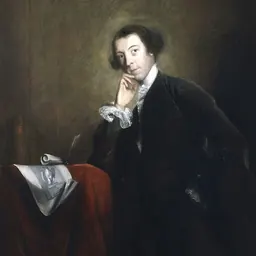

Related people
Same field, nearest in time




Contemporaries
People whose lives overlapped Chevalier de Mailly's



Frequently asked questions
Who was Chevalier de Mailly?
courtesy title accorded in France to a younger brother of the marquis in each generation
When was Chevalier de Mailly born?
Chevalier de Mailly was born in 1657 in Amiens.
When did Chevalier de Mailly die?
Chevalier de Mailly died in 1724 in Paris.
What was Chevalier de Mailly's occupation?
Chevalier de Mailly was a writer and historian.
What nationality was Chevalier de Mailly?
Chevalier de Mailly was French.
Sources & further reading
· Wikipedia: Chevalier de Mailly
· DBpedia: Chevalier de Mailly
Cite this page
APA: Biography.guide. (2026). Chevalier de Mailly. https://biography.guide/chevalier-de-mailly/
MLA: "Chevalier de Mailly." Biography.guide, https://biography.guide/chevalier-de-mailly/.
Chicago: "Chevalier de Mailly." Biography.guide. https://biography.guide/chevalier-de-mailly/.
Data last updated: 2026-09-20 · Spot an error? Report a correction.
Page generated 2026-09-27 05:12 UTC