
About Cheo Feliciano
Lived 1935 – 2014 (aged 78). Cheo Feliciano was an American singer, composer, songwriter, recording artist, musician and singing.
Cheo Feliciano (3 July 1922 – 17 April 2014) was a Puerto Rican singer and composer of salsa and bolero music. Feliciano was the owner of a recording company called "Coche Records". He was the first tropical singer to perform at the "Amira de la Rosa Theater" in Barranquilla, Colombia, and in 1987 he played the role of Roberto Clemente's father in the musical Clemente.
Early years Feliciano (birth name: José Luis Feliciano Vega ) was born in Ponce, Puerto Rico, where he was raised and educated. His parents were Prudencio Feliciano and Crescencia Vega. As a child, he was nicknamed "Cheo" by his family - a colloquial version of his name José, normally used by close friends and family. However, the name stuck and became part of his everyday name (using the nickname avoided confusion with José Feliciano, another major Puerto Rican singer to whom he is not related). At a young age he was influenced by the bolero music of the Trio Los Panchos. When he was only eight years old he formed his first group with his friends and named it "El Combo Las Latas". They were so poor that their musical instruments were made out of cans. After finishing his primary education, Feliciano attended the Escuela Libre de Música Juan Morel Campos in Ponce, where he studied percussion.
Musical career and singing debut In 1952, Feliciano moved with his family to New York City and settled down in Spanish Harlem. Here he auditioned as a percussionist in the "Ciro Rimac's Review" band - giving him his first professional musical job. Bandleader Tito Rodríguez, heard Feliciano play and offered him a job in his orchestra. He accepted, but after playing for some time with Tito, he left the band to play the conga for Luis Cruz. Despite leaving, he always remained on friendly terms with Tito. Feliciano also played percussion for Kako y su Trabuco orchestra. He was also a roadie for Mon Rivera. His increasing addiction led him to heroin, which in turn threatened his life and career. He decided to quit drugs "cold turkey" and eventually joined Puerto Rico's rehabilitation center, Hogares CREA. Feliciano credits Tite Curet Alonso, the author of most of his hits and his best friend, with pushing him through his rehabilitation. As a result, he was a vehement anti-drug spokesperson, who volunteered to assist in the rehabilitation of fellow salsa artists who fell prey to drug addiction.
In 1990, Feliciano recorded another album of bolero music, titled Los Feelings de Cheo. He also traveled all over Europe, Japan, Africa, and South America. In Venezuela, he had a reunion with Eddie Palmieri. In 1995, Feliciano won a Platinum Record Award for La Combinación Perfecta. Feliciano was very active and continued traveling and performing all over the world until his last day.
Health
In June 2013, Feliciano confirmed that he was suffering from liver cancer and was already undergoing chemotherapy. Doctors discovered the illness when they were treating him for a dislocated shoulder. Early in 2014, Feliciano celebrated being "cancer-free".
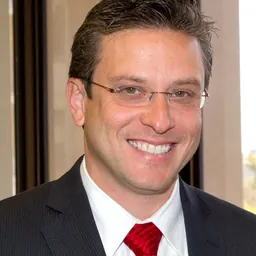
Death Feliciano died in the early hours of 17 April 2014 in a single car accident on Highway 176 in the San Juan's barrio of Cupey, after losing control of his vehicle and hitting a concrete utility pole. His wife, Coco, told reporters that Feliciano did not like to wear a seat belt. Puerto Rico Governor Alejandro Garcia Padilla declared three days of mourning.
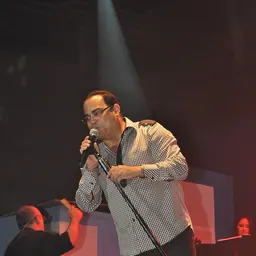
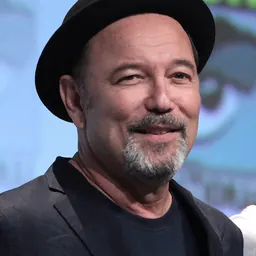
A memorial service in honor of Feliciano was held at the Roberto Clemente Coliseum in San Juan on 20 April 2014. The service was attended by thousands of people from all over the island. Many fellow artists paid their respects to Feliciano with songs and by keeping guard by Feliciano's coffin. Artists and groups like Danny Rivera, José Nogueras, Fania All-Stars, Gilberto Santa Rosa, Rubén Blades, Víctor Manuelle, Andy Montañez, and Tito Nieves were present. The next day, his body was taken to the city of Ponce, where he was born. A public service was held at the Ponce Convention Center, led by Governor Alejandro García Padilla and Mayor María "Mayita" Meléndez. After that, a private ceremony was held for the family and close friends inside La Piedad Cemetery. Although the public was not allowed entrance at first, the gates were opened once the family finished their memorial. Puerto Rico Department of Health does not allow for burials at the Panteon, but interment of remains are permitted after five years. Ponce Mayor Maria Melendez stated she would issue a municipal order to transfer Feliciano's remains to the Panteon, if possible after one year.
Influence
Through his career, Feliciano was recognized as a pioneer in the salsa genre, and many artists considered him an influence. Gilberto Santa Rosa, Ruben Blades, Alex D'Castro, Jerry Rivas (of El Gran Combo) and his friend Gerardo (of NG2) are among some of the singers that mentioned Feliciano as an influence. Rivas referred to him as "my inspiration", while Blades has admitted that he began his career copying Feliciano's style and tone.
Discography with Joe Cuba Sextet Cha Cha Cha's To Soothe The Savage Beast (1958) Steppin' Out (1962) Hangin' Out (1963) Diggin' the Most (1963) El Alma Del Barrio (1964) We Must Be Doing Something Right (1965) Comin' at You (1965) Bailadores (1965) Red Hot and Cha Cha (1966)
With Eddie Palmieri Champagne (1968); Eddie Palmieri (1981)
Solo
Cheo (1971) La Voz Sensual de Cheo (1972) Felicidades (1973) With a Little Help from My Friend (1973) Looking for Love (1974) The Singer (1976) Mi tierra y yo (1977) Estampas (1979) Sentimiento, tú (1980) Profundo (1982) Regresa el amor (1985) Sabor y sentimiento (1987) Te regalo mi sabor criollo (1987) Como tú lo Pediste (1988) Los Feelings de Cheo (1990)
Cantando (1991) Motivos (1993) Soñar (1996) Un Solo Beso (1996) El Eterno Enamorado (1997) Cheo en Cuba (1997) Pinceladas Navideñas (1998) Una voz... Mil recuerdos (1999) En la Intimidad (2002) Salsa Caliente De Nu York (2003) Romántico (2004) Navidad más excelente de Cheo Feliciano (2005) Pura salsa (2006) La herencia (2007) A Man And His Music (2009) Historia de la salsa (2009)
Popular singles
"A las Seis" (1962), "El Pito" (1967) "Busca lo Tuyo" (1968), Eddie Palmieri "Anacaona" (1971) "Mi Triste Problema" (1971) "Salomé" (1973) "Nabori" (1973) "Mapeye" (1973) "El Ratón" (1974), Fania All Stars "Canta" (1976) "Los Entierros" (1979) "Amada Mía" (1980) "Juan Albañil" (1980) "Sobre Una Tumba Humilde" (1980) "Ritmo Alegre" (1981), Eddie Palmieri "Trizas" (1982) "Yo No Soy Un Ángel" (1991) "Mentiras" (1991)
Awards and recognitions
1975 - The Golden Cup - Venezuela 1976 - "Most Popular Artist" by Latin New York magazine 1977 - Daily News Front Page Award for "Best Latin Vocalist" 1985 - Owl of Gold (Panama); The Silver Chin Award (Miami, Florida)' Golden Agueybana Award (Puerto Rico) 1983 & 1984 - Honorable Son of Ponce 1999 - A tribute in his honor from the Puerto Rican Senate 2008 - June 20 declared Cheo Feliciano Day in New York City 2008 - Latin Grammy Lifetime Achievement Award In Ponce, he is recognized at the Park for the Illustrious Ponce Citizens.
Don’t just read it —
keep it.
Full-length biographies made to live with: read them, listen on the way to work, watch them tonight.
- E-book
- Audio
- Video
Instant download · yours to keep · every purchase keeps this site free
Important facts
People in Cheo Feliciano's life
Named in this biography and alive at the same time




Related people
Same field, nearest in time



Contemporaries
People whose lives overlapped Cheo Feliciano's


Frequently asked questions
Who was Cheo Feliciano?
Puerto Rican musician (1935–2014)
When was Cheo Feliciano born?
Cheo Feliciano was born on 3 July 1935 in Ponce.
When did Cheo Feliciano die?
Cheo Feliciano died on 17 April 2014 in Cupey.
What was Cheo Feliciano's occupation?
Cheo Feliciano was a singer, composer, songwriter, recording artist, musician and singing.
What nationality was Cheo Feliciano?
Cheo Feliciano was American.
Sources & further reading
Cite this page
APA: Biography.guide. (2026). Cheo Feliciano. https://biography.guide/cheo-feliciano/
MLA: "Cheo Feliciano." Biography.guide, https://biography.guide/cheo-feliciano/.
Chicago: "Cheo Feliciano." Biography.guide. https://biography.guide/cheo-feliciano/.
Data last updated: 2026-09-20 · Spot an error? Report a correction.
Page generated 2026-09-27 05:19 UTC