
About Chenggang Xu
Born 1950. Chenggang Xu is an economist.
Chenggang Xu (born December 31, 1950) is a senior research scholar at the Stanford Center on China's Economic and Institutions, a visiting fellow at the Hoover Institution at Stanford University, and a visiting professor at the department of finance, Imperial College London, and a research fellow of the Centre for Economic Policy Research (CEPR).
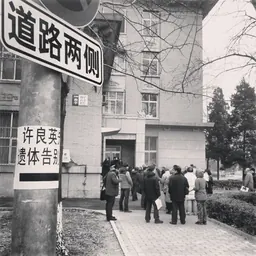
Life Xu was born in Hangzhou in 1950 and grew up in Beijing. He studied at Xiangshan Charity School and Tsinghua University Middle School. His father, Xu Liangying, was labeled a rightist in 1957, and his “crimes” were published in major media such as People's Daily and Guangming Daily, and he was forced to leave his job and work as a farmer in the countryside; his mother was expelled from the Communist Party and demoted from her post as a result of the incident. Before the Cultural Revolution, Xu served as the deputy leader for the Young Pioneers junior squadron at Tsinghua University Middle School; heavily influenced by his family, he deeply believed in communism.
At the outbreak of the Cultural Revolution in 1966, Xu Chenggang was a second-year student in Tsinghua University Middle School. He witnessed a stark contrast between communist ideals and reality, which shocked and confused him. In particular, socialism has been described as the transitional phase of a classless communist society, but he wondered why this transition was full of class struggle. How could class struggle destroy classes? This series of questions stimulated his interest in the in-depth study of communist systems and theories. At the end of 1967, in order to better understand China's class relations and rural reality, Xu Chenggang applied to go to the state-run farm in Heilongjiang. From the end of 1967 to 1969, he spent two years in the countryside, during which time he studied Das Kapital in depth, wrote a number of papers, and developed the idea of writing a book analyzing the socialist system and the Cultural Revolution. Because of his frequent discussions with local villagers and his classmates in Tsinghua via letters, he was branded as a counter-revolutionary in early 1970 and detained for more than a year for “organizing an inter-provincial counter-revolutionary group” and then forced to work for more than five years. During this time, he was forced to suspend the study and exploration of political economy until the end of the Cultural Revolution. This book explores the origins and evolution of China's institutions as well as communist totalitarianism more broadly, arguing that contemporary China's fundamental institutional structure is rooted in communist totalitarianism.
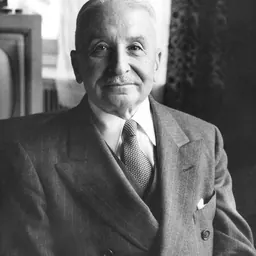
By introducing the concept of “institutional genes” (IGs), the book examines how the IGs of Soviet Russia merged with those of the Chinese imperial system, creating a durable totalitarian regime with Chinese characteristics – Regionally Administered Totalitarianism (RADT). Institutional Genes are fundamental institutional elements that self-replicate and guide institutional changes and are empirically identifiable. By analyzing the origins and evolution of these institutional genes across key historical epochs—including their roots in Europe and Russia, the Chinese Empire, the Chinese Communist Revolution, the Great Leap Forward, the Cultural Revolution, and post-Mao reforms—the book elucidates the rise and progression of communist totalitarianism in China. The ascent of communist China echoes Ludwig von Mises' warning that early efforts to halt totalitarianism have failed; reversing this trend, Xu argues, necessitates a thorough and rigorous understanding of totalitarian mechanisms.
RADT, Economic Reform and Economic Slowdown
Chenggang Xu defines Regionally Administered Totalitarianism (RADT) as a distinctive form of communist totalitarianism with Chinese characteristics. In his framework, RADT represents the institutional evolution of the Chinese Communist Party (CCP) from a Soviet-style centralized system into a more adaptable, regionally administered model that has endured to the present day. Under the RADT system, political power is absolutely centralized, while administration and enforcement are regionally organized. The CCP monopolizes all political authority, ideology, and personnel control, but delegates economic management and policy implementation to regional governments. These regions function as extensions of the central regime, responsible for executing central directives, maintaining social control, and fulfilling performance targets. Unlike the Soviet model of centralized command planning, RADT relies on regional bureaucratic competition and administrative mobilization rather than independent markets or rule-based institutions.
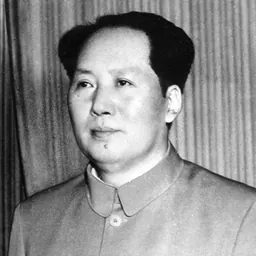
According to Xu, the RADT system emerged when China departed from the Soviet model during the Great Leap Forward (1958), as Mao Zedong devolved most centrally managed enterprises to local governments to bypass the technocratic bureaucracy, effectively dismantling Soviet-style planning. Local officials competed to meet political targets such as steel and grain production, generating massive economic waste, falsified statistics, and catastrophic famine. During the Cultural Revolution (1966–1976), the collapse of central ministries further empowered regional authorities, creating self-sufficient provincial economies under the Party’s ideological monopoly—a structure Xu identifies as the institutional foundation of RADT. Ultimately, he traces the roots of this system back to China’s imperial governance traditions of centralized rule with local administration, as well as the CCP’s wartime “liberated-area” system, which combined political obedience with economic autonomy.
In Xu’s framework, the economic reforms initiated after 1978 did not represent a fundamental political transformation, but rather a strategic adjustment essential for the CCP’s survival. Confronted with economic stagnation and a severe legitimacy crisis, the Party shifted its core objective from class struggle to economic growth. Under the RADT structure, local governments were encouraged to compete and experiment to drive development, attract investment, and promote innovation, while the CCP retained its absolute monopoly over ideology, personnel, and political power. This arrangement transformed regional competition into a powerful engine for growth, enabling pragmatic experiments such as rural household contracting, township and village enterprises, and special economic zones. Xu terms this relatively loosened phase Regionally Decentralized Authoritarianism (RDA) —a temporary period within the broader RADT system characterized by expanded local autonomy, flourishing private enterprise, and the re-emergence of limited civil-society activity. However, because the underlying institutions of RADT—such as state ownership, soft-budget constraints, and the absence of rule of law—remained intact, this RDA phase was inherently unstable and conditional.
Following the 2008 global financial crisis, these structural weaknesses—combined with rising CCP fears of a "color revolution" and social unrest—triggered a gradual re-centralization of power. The central government tightened its grip on finance, state-owned enterprises, media, and ideology, while simultaneously curtailing local discretion and strengthening political surveillance. Since the 2010s, China has reverted from RDA back to a consolidated RADT system, restoring comprehensive Party authority and reinforcing totalitarian governance while retaining the regional administrative mechanisms that once fueled its economic rise.
Xu argues that this unique RADT governance structure explains why the CCP’s totalitarian regime has proven more resilient than other historical communist systems. Yet, he also emphasizes that totalitarian regimes do not peacefully evolve into constitutional democracies; instead, they typically collapse before genuine systemic change can occur. Ultimately, Xu concludes that without a fundamental transformation of the political regime, sustained economic growth under totalitarian rule is impossible due to the systemic constraints of state ownership and the absolute absence of legal and institutional accountability.
Selected publications Xu C. Institutional Genes: Origins of China’s Institutions and Totalitarianism. Cambridge University Press; 2025
Katharina Pistor and Chenggang Xu, “Managers’ Fiduciary Duty and the Enforcement of Incomplete Corporate Law,” in (Curtis Milhaupt ed.), Global Markets, Domestic Institutions, New York: Columbia University Press, July 2003. pp.77-106.
Chenggang Xu and Xiaobo Zhang, “The Evolution of Chinese Entrepreneurial Firms: Township-Village Enterprises Revisited,” in Wu and Yao (eds.), Reform and Development in China, London and New York: Routledge, 2010; and in Ronald Coase (ed.), China’s Economic Transformation. James Kung, Chenggang Xu and Feizhou Zhou, “From Industrialization to Urbanization: The Social Consequences of Changing Fiscal Incentives on Local Governments’ Behavior,” in Joseph E. Stiglitz (ed.), Institutional Design for China’s Evolving Market Economy.
Julan Du and Chenggang Xu, “Market Socialism or Capitalism? Evidence from Chinese Financial Market Development,” in Janos Kornai and Yingyi Qian (eds.), Market and Socialism (the International Economic Association Conference Volume No. 146), New York and London, Palgrave Macmillan, 2008, 88-109
Don’t just read it —
keep it.
Full-length biographies made to live with: read them, listen on the way to work, watch them tonight.
- E-book
- Audio
- Video
Instant download · yours to keep · every purchase keeps this site free
Important facts
People in Chenggang Xu's life
Named in this biography and alive at the same time


Related people
Same field, nearest in time




Contemporaries
People whose lives overlapped Chenggang Xu's






Frequently asked questions
Who is Chenggang Xu?
Chinese Economist at Stanford University
When was Chenggang Xu born?
Chenggang Xu was born on 31 December 1950 in Hangzhou.
What is Chenggang Xu's occupation?
Chenggang Xu is an economist.
Sources & further reading
Cite this page
APA: Biography.guide. (2026). Chenggang Xu. https://biography.guide/chenggang-xu/
MLA: "Chenggang Xu." Biography.guide, https://biography.guide/chenggang-xu/.
Chicago: "Chenggang Xu." Biography.guide. https://biography.guide/chenggang-xu/.
Data last updated: 2026-09-20 · Spot an error? Report a correction.
Page generated 2026-09-27 05:22 UTC