
About Charlton Haw
Lived 1920 – 1993 (aged 72–73). Charlton Haw was a military personnel.
Charlton Haw, (8 May 1920 – November 1993) was a British fighter pilot of the Royal Air Force (RAF) during the Second World War. He is credited with the destruction of at least four aircraft and was one of only four RAF personnel to have received the Soviet award of the Order of Lenin.
From York, Haw joined the RAF's Volunteer Reserve in early 1939 and was called up on the outbreak of the Second World War. After completing his flying training, he was posted to No. 504 Squadron in June 1940 as a sergeant pilot. His first aerial victory was achieved during the Battle of Britain. In July 1941 his flight became of the basis of No. 81 Squadron and was sent to Soviet Russia with Hawker Hurricane fighters. Flying from Vaenga airfield, near Murmansk, he claimed more aerial victories. Towards the end of the year, the focus of the squadron was training Soviet pilots on the Hurricane and in November the RAF personnel returned to the United Kingdom. Haw was recognised for his services in Russia with the Distinguished Flying Medal and he was also awarded the Order of Lenin by the Soviets. Haw was commissioned in March 1942 and subsequently served with No. 122 Squadron. He was given command of his own squadron in February the following year for a brief period. After a course at Fighter Leaders School he returned to duty as commander of No. 129 Squadron, leading the unit through the Normandy landings.
Haw remained in the RAF in the postwar period, commanding No. 65 Squadron for a time, but left in 1951 after his vision deteriorated. He retired in 1985 after several years of running and owning businesses. He died in November 1993, aged 73.
Early life Charlton Haw was born in York, England, on 8 May 1920. Educated locally in York up until the age of 14, he went on to attend Leeds College of Technology. He was working as an apprentice lithographer when he joined the Royal Air Force Volunteer Reserve (RAFVR) in February 1939. He had aspired to fly since his childhood but an application to join the RAFVR the previous year had been unsuccessful after he failed the requisite medical tests. In addition to his service training, carried out at No. 4 Elementary and Reserve Flying Training School at Brough Aerodrome, he self-funded personal flying lessons and was granted his Aero Certificate by York and Leeming Flying Club in July. In September he was called up for service in the Royal Air Force (RAF) following the outbreak of the Second World War.
Second World War After a period of time at the Initial Training Wing at St Leonards-on-Sea learning military drills and practices, Haw proceeded to No. 5 Flying Training School at Sealands in mid-December. Rated an above-average pilot, his flying course was completed in June 1940, and he was subsequently posted to No. 504 Squadron. By this time, he was nicknamed 'Wag'.
Battle of Britain In early September, No. 504 Squadron moved south as a reinforcement for No. 11 Group. Based at Hendon, it was quickly and heavily engaged in the aerial fighting over London as the Luftwaffe escalated its operations over the southeast of England. Later in the month the squadron moved to Filton near Bristol. The day after its arrival at Filton, on 27 September, it was scrambled to defend against a bombing raid targeting Bristol. During this sortie, Haw engaged and destroyed a Messerschmitt Bf 110 heavy fighter over the English Channel; however, he himself was shot down and, uninjured, took to his parachute. He landed at Kilmington.
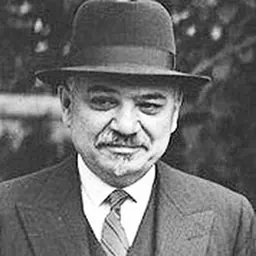
Commissioned as a pilot officer in March, Later that month he was also one of four RAF personnel to be awarded the Order of Lenin from the Soviet government, these being presented by the Soviet ambassador to the United Kingdom, Ivan Maisky.
Later war service After his commissioning, Haw rejoined No. 504 Squadron. Haw's final months of war service were spent as an administrative officer at Horsham St Faith.
Haw ended the war credited with having destroyed four German aircraft and damaged two more, one being shared with another pilot.
Postwar service After the war, Haw's service in the RAF was extended and in September 1946 he was appointed commander of No. 65 Squadron. This was based at Church Fenton and operated Spitfires, but the following year it converted to the de Havilland Hornet heavy fighter. Haw, who had been granted a permanent commission as a flight lieutenant in the RAF in June 1948, began to have trouble with his eyesight and soon was no longer able to fly. He relinquished his commission in the RAF in September 1951.
Later life Returning to civilian life, Haw ran a pub in Sussex for a number of years. Then, in 1957, he purchased a boarding kennel and concurrently with operating this facility, developed a pet food wholesale and retail business. He retired to Farnham, in Surrey, in 1985. The same year, as a recipient of the Order of Lenin he went to Moscow as a guest of the Soviet government to commemorate the 40th anniversary of the end of the Second World War. He died in November 1993.
Don’t just read it —
keep it.
Full-length biographies made to live with: read them, listen on the way to work, watch them tonight.
- E-book
- Audio
- Video
Instant download · yours to keep · every purchase keeps this site free
Important facts
People in Charlton Haw's life
Named in this biography and alive at the same time
Related people
Same field, nearest in time



Contemporaries
People whose lives overlapped Charlton Haw's



Frequently asked questions
Who was Charlton Haw?
British fighter pilot of WWII
When was Charlton Haw born?
Charlton Haw was born on 8 May 1920.
When did Charlton Haw die?
Charlton Haw died in 1993.
What was Charlton Haw's occupation?
Charlton Haw was a military personnel.
Sources & further reading
Cite this page
APA: Biography.guide. (2026). Charlton Haw. https://biography.guide/charlton-haw/
MLA: "Charlton Haw." Biography.guide, https://biography.guide/charlton-haw/.
Chicago: "Charlton Haw." Biography.guide. https://biography.guide/charlton-haw/.
Data last updated: 2026-09-20 · Spot an error? Report a correction.
Page generated 2026-09-27 05:24 UTC