
About Charlotte von Siebold
Lived 1788 – 1859 (aged 70). Charlotte von Siebold was a German physician, gynecologist and midwife.
Marian Theodore Charlotte Heidenreich von Siebold (12 September 1788, Heiligenstadt – 8 July 1859, Darmstadt) was a German medical doctor. She is regarded as the first gynecologist in Germany. She was the daughter of medical doctor Damian and Regina von Siebold and was an early assistant of her parents. She graduated with a degree in obstetrics at the Giessen University in 1817.
She assisted at both Queen Victoria's birth on 24 May 1819 at Kensington Palace in London and Queen Victoria's first cousin and husband Prince Albert of Saxe-Coburg and Gotha's birth on 26 August 1819 at Rosenau Palace near Coburg.
Life Origin and education Charlotte was the first child of Georg Heiland and his wife Regina. After Georg Heiland’s death, Regina Josepha Heiland married (Johann Theodor) Damian von Siebold (1769-1828), the city doctor and medical officer of Darmstadt. Known as the “Starstich” surgeon, he was a son of Carl Caspar von Siebold and as such also uncle to physician and pioneering Japan scholar Philip Franz von Siebold.
Damian of Siebold adopted Charlotte and her sister Therese, with both receiving his surname. To improve the family income, Josepha von Siebold worked in her husband’s practice. Later, she even studied medicine and received the , an honorary doctorate of childbirth, in 1815 from the University of Giessen.
In 1814, Charlotte passed the exam for obstetrics before the "Grand Duchy of Hesse Grand-Ducal Medicinal-Collegium" in Darmstadt and was allowed to practise as an obstetrician from then on. On 26 March 1817, she became a , a "doctor of obstetrics" with the thesis work titled "Using pregnancy outside the cervical and abdominal pregnancies in particular".
Tribute On 9 June 1854, the birthday of Louis III, Grand Duke of Hesse, she was the only woman to be awarded the Knight Cross of the Order of Philip the Magnanimous. In Darmstadt, the Heidenreichstraße is named after her. Founded after her death in Darmstadt, the Heidenreich-von Sieboldsche Stiftung zur Unterstützung von armen Wöchnerinnen was later transformed into Darmstädter Stiftung für Wohltätigkeitszwecke’. Since 2006, the Medical Faculty of the University of Göttingen has launched the ‘Heidenreich von Siebold Programm’ to support female scientists.
The Charlotte Heidenreich von Siebold Prize, named after her, is awarded every two years by the Entega Foundation.
Don’t just read it —
keep it.
Full-length biographies made to live with: read them, listen on the way to work, watch them tonight.
- E-book
- Audio
- Video
Instant download · yours to keep · every purchase keeps this site free
Important facts
People in Charlotte von Siebold's life
Named in this biography and alive at the same time

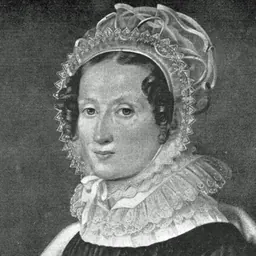
Related people
Same field, nearest in time




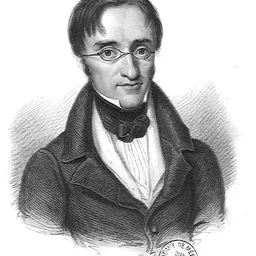
Contemporaries
People whose lives overlapped Charlotte von Siebold's



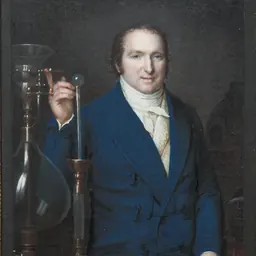
Frequently asked questions
Who was Charlotte von Siebold?
German physician (1788-1859)
When was Charlotte von Siebold born?
Charlotte von Siebold was born on 12 September 1788 in Heilbad Heiligenstadt.
When did Charlotte von Siebold die?
Charlotte von Siebold died on 8 July 1859 in Darmstadt.
What was Charlotte von Siebold's occupation?
Charlotte von Siebold was a physician, gynecologist and midwife.
What nationality was Charlotte von Siebold?
Charlotte von Siebold was German.
Sources & further reading
· Wikipedia: Charlotte von Siebold
· DBpedia: Charlotte von Siebold
Cite this page
APA: Biography.guide. (2026). Charlotte von Siebold. https://biography.guide/charlotte-von-siebold/
MLA: "Charlotte von Siebold." Biography.guide, https://biography.guide/charlotte-von-siebold/.
Chicago: "Charlotte von Siebold." Biography.guide. https://biography.guide/charlotte-von-siebold/.
Data last updated: 2026-09-26 · Spot an error? Report a correction.
Page generated 2026-09-27 05:15 UTC