
Charlotte Paulsen
German social reformer and women's rights activist
About Charlotte Paulsen
Lived 1797 – 1862 (aged 65). Charlotte Paulsen was a German social reformer and women's rights activist.
Charlotte Paulson (born Charlotte Thornton: 4 November 1797 – 15 November 1862) was a German social reformer and women's rights activist, most notably as a pioneer of education for girls.
Biography Provenance. early years and family Charlotte Thornton was the fourth of the fourteen children of the prosperous banker John Thornton (1764–1835) by his marriage to his second wife, born Maria Elisabeth Grupen. John Thornton's ancestors were from England, where he still had family connections. His wife came originally from Celle where her father's work involved, among other things, international finance between Hamburg and England. Charlotte's education came largely from governesses: she learned English, French, dancing, piano playing and the social accomplishments appropriate to her expected station in life.
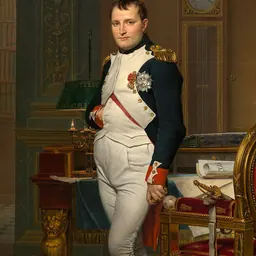
At the end of Summer in 1814, with Napoleon "safely out of the way", the Thorntons returned. Their wealth had been destroyed by Napoleon's trade wars, and they could no longer afford to live in Hamburg. They settled in Lübeck. On 18 August 1814, aged still not quite seventeen, Charlotte Thornton married the Hamburg estate agent Christian Paulsen, in compliance with her father's wishes. Twenty years older than she was, Paulsen was rather a dull fellow after all the admirers whose company she had enjoyed in London, but he was able to provide her with a relatively comfortable life. Although relatively little is known of him, he seems to have been a kindly and tolerant man with a strong social conscience: Charlotte was much changed by the marriage. Elisabeth, the couple's daughter, was born on 1 October 1815.
After the perceived failure in Germany of the 1848 revolution the women decided that their priority should be the creation of a new liberated generation through education. Back in 1840 the educational philosopher and pioneer Friedrich Fröbel had coined the word "Kindergarten" (loosely a "garden for cultivating children like plants in a garden" ), and called upon women in Germany to take inspiration from his experimental "play and activity" establishment in Bad Blankenburg and set up similar institutions across Germany. Charlotte Paulsen was far from unique in responding to these promptings. The Kindergarten movement was backed particularly strongly both by those advocating democratic structures for Germany and among middle-class women who saw the education of very young children as hugely important. During this period many so-called "Bewahrschulen" (loosely, "looking after schools") and "Kindertagesheime" ("Children's Day Homes") were established.
Don’t just read it —
keep it.
Full-length biographies made to live with: read them, listen on the way to work, watch them tonight.
- E-book
- Audio
- Video
Instant download · yours to keep · every purchase keeps this site free
Important facts
People in Charlotte Paulsen's life
Named in this biography and alive at the same time

Related people
Same field, nearest in time


Contemporaries
People whose lives overlapped Charlotte Paulsen's






Frequently asked questions
Who was Charlotte Paulsen?
German social reformer and women's rights activist
When was Charlotte Paulsen born?
Charlotte Paulsen was born on 4 November 1797 in Othmarschen.
When did Charlotte Paulsen die?
Charlotte Paulsen died on 15 November 1862 in Hamburg.
What was Charlotte Paulsen's occupation?
Charlotte Paulsen was a social reformer and women's rights activist.
What nationality was Charlotte Paulsen?
Charlotte Paulsen was German.
Sources & further reading
· Wikipedia: Charlotte Paulsen
Cite this page
APA: Biography.guide. (2026). Charlotte Paulsen. https://biography.guide/charlotte-paulsen/
MLA: "Charlotte Paulsen." Biography.guide, https://biography.guide/charlotte-paulsen/.
Chicago: "Charlotte Paulsen." Biography.guide. https://biography.guide/charlotte-paulsen/.
Data last updated: 2026-09-20 · Spot an error? Report a correction.
Page generated 2026-09-27 05:32 UTC