
Charlotte Lewis
American artist
About Charlotte Lewis
Lived 1934 – 1999 (aged 65). Charlotte Lewis was an American.
Charlotte Lewis (born Charlotte LaVerne Graves; May 1, 1934 – August 17, 1999) was an American multimedia painter, muralist, textile artist, commercial artist, and community activist. Her work is recognized for its beauty and vitality, as well as for the historically significant themes of Black art and feminism. Her pieces are infused with bright colors, whimsical figures, intricate symbols, and African themes.
Beyond her artistry, Lewis was known for her community activism. "Charlotte devoted herself to making art flourish in the community," according to Richard Brown, a friend, photographer, and community activist. She created outdoor murals highlighting racism and injustice, using her art to educate and inspire her Black community by illustrating its values, principles, and history. Today, her work is displayed in public and private spaces. multimedia sculptures, decorated gourds, and personal cards. She worked in multiple mediums, including oil, acrylic, watercolor, and textiles, and regularly produced multimedia pieces. Throughout her career, she also produced commercial illustrations for posters, brochures, children's books, and paintings that adorn McMenamins brewpubs and hotels. Her artwork includes Egyptian images to assert ancient Egyptian ancestry as belonging to the people of Africa and its diaspora, rather than those of the Western European culture, a key principle of the Harlem Renaissance movement. She also used African symbolism to emphasize a Black American identity before slavery, a core tenet of the Black Arts Movement. Her art pays tribute to Black heroes such as John Coltrane and Sojourner Truth and tells the story of Portland's racist history and illuminates efforts to rise above racism at John D. Kennedy Elementary School, now operated by McMenamins as a brewpub and hotel known as Kennedy School.
Additionally, Lewis employed textiles as an artistic medium, aligning with the feminist art traditions of the 20th century.
Outdoor murals Lewis collaborated on two outdoor murals in Portland and was the lead artist of another mural. She was a "vital team member" on Struggle and Hope (1988), a mural depicting the United States’ role in Central America during the 1970s and 1980s. Originally located at SW 14th and Yamhill in Portland, the mural was later stored and eventually donated to Portland Community College in 2015, where it is displayed on the Rock Creek Campus. Longtime friend, Susan Bloom, tells the story of how Lewis gracefully took questions from passers-by as she worked on the mural. "For Charlotte, the biggest part of the art was response."
Large-scale indoor murals Lewis created the African American panel for the "We Speak" traveling mural project, which was an artistic response to the five-hundredth anniversary of Columbus's arrival in the Western hemisphere. The project used fourteen portable panels to illustrate "that deep historical cultural traditions can flourish despite repression." Lewis painted one of the fourteen panels and named it Mama Africa (1992).
In another large-scale indoor wall painting, Lewis again made a statement about her Black community and African heritage. The large and vibrant yellow, blue, green, and red painting, Children of Humanity (1995), was created to inspire a strong relationship between the community's youth, elders, and authority figures. It was produced with the assistance of elders from the Northeast Multicultural Senior Center who helped paint the frame. The work is designed to give the community's youth a sense of ancestral pride.
Textiles
Lewis invited fellow artist Adriene Cruz to exhibit with her at a future Graystone Gallery show scheduled for May 1992. Cruz recalls the time as magical: “We worked outside until the sun went down and continued inside until the sun came up again. We were children discovering something new every day and our work was forever changed from that experience.” During this time Lewis created her first “fabric painting,” the vibrantly colored triptych Isis, (1992), permanently on display at the North Portland branch of Multnomah County Library. Lewis denotes the lone figure with the title of the piece, the Egyptian goddess Isis. She depicts the goddess as a Black woman and gives her wings, as she surfs on the back of a crocodile. Again, Lewis uses her art to claim African ancestry that long precedes slavery as a way to build Black pride. For a 1998 book, Lewis created twenty vibrant 7-by-5-inch watercolor paintings. In one of the paintings, Lewis makes her point using a real-life Black heroine, Sojourner Truth, the African American abolitionist and feminist who escaped slavery.
McMenamins brewpubs and hotels In 1997, Lewis began producing paintings for the Kennedy School, a closed elementary school under conversion to a hotel, theater, and brewpub by the McMenamins family. Like many of the properties owned by McMenamins, Kennedy School is in an historic building that is no longer used for its original purpose. When the company acquires a property, its historians conduct research and then hire artists to tell the property's story through art. The school is located north of the historically Black section of Portland. Among the pieces that Lewis worked on are a whimsical painting of a woman sitting at a piano, a group of schoolboys holding model sailboats, and a triptych in honor of the jazz artist, John Coltrane. Lewis illustrates this story in a fanciful painting featuring Jordan in the center at her piano surrounded by children who are unencumbered by the force of gravity. The painting incorporates an element of the maypole dance held at Kennedy School at one time. Going back to 1936, only boys took the manual arts classes where the boats were built and, like all Portland schools, Kennedy School had few Black students due to Oregon's early aggressive laws making it illegal for Black people to live in Oregon and later to real estate practices known as redlining that restricted Black residents from living in the Kennedy School district. When creating this painting, the artist chose to produce an accurate depiction of a difficult element of Portland's history. Lewis created the painting with vibrant shades of blue and yellow and decorated the background spaces with zig-zagging waves and swimming fish. According to Mike McMenamin, Lewis was a “huge fan” of Coltrane and proposed the idea of a work featuring the musician. The triptych that Lewis produced shows Coltrane in profile, playing his saxophone on one panel and without the saxophone on a second panel.
As she did in the Mrs. Jordan painting at Kennedy School, Lewis freely incorporated elements from various aspects of her life. Seemingly mysterious symbols on all three panels connect Black Americans to Africa. Lewis incorporated Egyptian imagery and West African Adinkra symbols to visually articulate her connection to her African ancestry. Lewis honors Black Americans’ connection to Western Africa with prayers to the Yoruba deities that are enclosed in colorful triangle shapes along the bottom of the artwork and spread across all three of the panels. On the middle panel, Lewis especially refers to Ogun, who is the god of iron, by including a tin spoon and small, decorative triangles of tin from a food can. Another element of the mixed-media painting is cowrie shells. Along with others, including Cruz, Lewis organized a Kwanzaa celebration at either the Interstate Firehouse Cultural Center or the library from 1993 to 1998.
Personal life Lewis never married and had no children.
Legacy Within the Portland Black community, Lewis was known for her dedication to art, education, and community. "Everything in Charlotte's life happened for art," according to Brown, the photographer and activist. Lewis was also committed to education. "First and foremost, Charlotte used art as a teaching tool," Cruz said, and added, "For her, it was about communication of community awareness." Anderson of the Black United Fund, noted "We're going to miss her making art so visible and accessible."
Works in public locations Isis (1992), Multnomah County Library, North Portland Library, Portland, Oregon Children of Humanity (1995), Portland Police Bureau, North Precinct, Community Room, Portland, Oregon Basket Weavers (1997) - Kennedy School front hallway, Portland, Oregon Shop Class Sailboats (1997) - Kennedy School front hallway, Portland, Oregon Martha Jordan (1997) - Kennedy School back hallway, Portland, Oregon Birdhouses (1997) - Kennedy School back hallway, Portland, Oregon Tea Party - Setting the Table (1997) - Kennedy School north hallway, Portland, Oregon Birdhouses (1997) - Kennedy School north hallway, Portland, Oregon Girls Jumproping (1997) - Kennedy School English Wing, Portland, Oregon John Coltrane Triptych (1998) - Kennedy School front hallway, Portland, Oregon Porter (1999) - Roseburg Station Pub and Brewery, Roseburg, Oregon The Walnut City (n.d.) - Hotel Oregon fourth floor hallway, McMinnville, Oregon
Don’t just read it —
keep it.
Full-length biographies made to live with: read them, listen on the way to work, watch them tonight.
- E-book
- Audio
- Video
Instant download · yours to keep · every purchase keeps this site free
Important facts
People in Charlotte Lewis's life
Named in this biography and alive at the same time


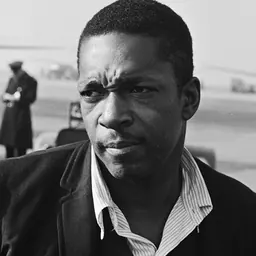



Contemporaries
People whose lives overlapped Charlotte Lewis's




Frequently asked questions
Who was Charlotte Lewis?
American artist (1930–2024)
When was Charlotte Lewis born?
Charlotte Lewis was born on 1 May 1934.
When did Charlotte Lewis die?
Charlotte Lewis died on 17 August 1999.
What nationality was Charlotte Lewis?
Charlotte Lewis was American.
Sources & further reading
· DBpedia: Charlotte Lewis (artist)
Cite this page
APA: Biography.guide. (2026). Charlotte Lewis. https://biography.guide/charlotte-lewis/
MLA: "Charlotte Lewis." Biography.guide, https://biography.guide/charlotte-lewis/.
Chicago: "Charlotte Lewis." Biography.guide. https://biography.guide/charlotte-lewis/.
Data last updated: 2026-09-20 · Spot an error? Report a correction.
Page generated 2026-09-27 05:30 UTC