
About Charlotte Grace O'Brien
Lived 1845 – 1909 (aged 63–64). Charlotte Grace O'Brien was an Irish poet, philanthropist, botanist, writer, botanical collector and scientific collector.
Charlotte Grace O'Brien (23 November 1845 – 3 June 1909) was an Irish author and philanthropist and an activist in nationalist causes and the protection of female emigrants. She is known also as a plant collector.
Life
Early life Born on 23 November 1845 at Cahirmoyle, County Limerick, she was the younger daughter in a family of five sons and two daughters. Her father was William Smith O'Brien, the Irish nationalist and her mother was Lucy Caroline, eldest daughter of Joseph Gabbett, of High Park, County Limerick. On her father's return in 1854 from the penal settlement in Tasmania, she rejoined him in Brussels, and stayed there until he came back to Cahirmoyle in 1856. On her mother's death in 1861, she moved with her father to Killiney, near Dublin, and was his constant companion till his death at Bangor, Wales, in 1864.
From 1864, O'Brien lived at Cahirmoyle with her brother Edward, caring for his motherless children, Nelly, Dermod and Lucy, until his remarriage in 1880. By 1879, Charlotte, who had been hard of hearing since childhood, had become entirely deaf. She went to live at Ardanoir near Foynes on the River Shannon, and spent time writing. She became a staunch supporter of Charles Stewart Parnell.
On behalf of emigrants A bad harvest in Ireland in 1879, combined with Irish political turmoil, caused many Irish people to emigrate to America. In articles and letters to newspapers and reviews, O'Brien exposed the awful conditions that existed in the Queenstown (Cobh) lodging houses, on board the emigrant ships, and in the dock slums of New York City, where the Irish had to stay upon landing. A notable piece she wrote was the Horrors of the Immigrant Ship which appeared in the Pall Mall Gazette 6 May 1881.
Queenstown A visit to Queenstown, the port of embarkation, and a tour of the White Star Line's Germanic led her to successfully lobby to get a Catholic priest aboard the emigrant ship to help ease the passage, at least spiritually. That achievement captured even more public attention by virtue of the fact that O'Brien herself was Protestant. Despite the limit of 1,000 passengers, she noted the steamer had carried as many as 1,775 at one time.
Between 1856 and 1921, 3.6 million emigrants left Ireland for North America. The majority of them were women. For every eight Irishmen who left between 1871 and 1951, ten Irishwomen emigrated. Eighty-nine percent of those women were single and younger than twenty-four. The Mission opened on 1 January 1884 with Rev. John J. Riordan appointed as the first chaplain at Castle Garden. Immigrant girls needing accommodation were placed in local boarding houses until 1 May when a Home for Immigrant Girls was opened at 7 Broadway with a Mrs. Boyle, a matron from the Labor Bureau, hired to look after the residents. In 1885, the James Watson House at 7 State Street was purchased from Isabella Wallace for the Mission of Our Lady of the Rosary for the Protection of Irish Immigrant Girls to serve as a way station for young immigrant women. Between 1884 and 1890, the Mission provided assistance to 25,000 Irish immigrant women. When she returned to Ireland in 1883, she found herself suspected of being a British agent whose Emigrant Boarding house and whose plans for an American home for Irish immigrant girls, facilitated the government's assisted emigrant scheme. Supposedly, this would be the scheme that would help landlords clear their estates of poor tenants. In fact, O'Brien opposed assisted emigration, but she would continue to assist those who were sent to her. is not as well known as O'Brien's 1878 novel, Light and Shade, a tale of the Fenian rising of 1867. The material she had gathered from Fenian leaders, and contains a protest against the conditions in Mountjoy Prison. A Tale of Venice, a drama, and Lyrics appeared in 1880.
Her nephew, Stephen Gwynn, wrote her biography.
Don’t just read it —
keep it.
Full-length biographies made to live with: read them, listen on the way to work, watch them tonight.
- E-book
- Audio
- Video
Instant download · yours to keep · every purchase keeps this site free
Important facts
People in Charlotte Grace O'Brien's life
Named in this biography and alive at the same time

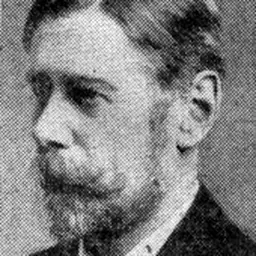


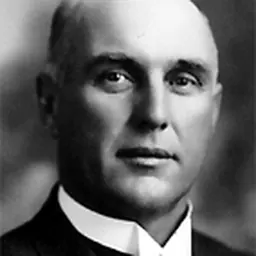

Related people
Same field, nearest in time
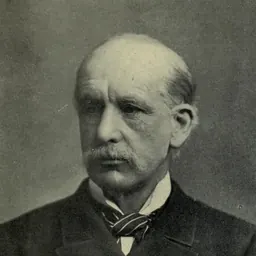

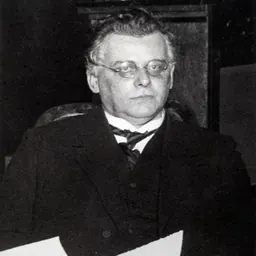
Contemporaries
People whose lives overlapped Charlotte Grace O'Brien's

Frequently asked questions
Who was Charlotte Grace O'Brien?
Irish writer (1845-1909)
When was Charlotte Grace O'Brien born?
Charlotte Grace O'Brien was born in 1845.
When did Charlotte Grace O'Brien die?
Charlotte Grace O'Brien died in 1909.
What was Charlotte Grace O'Brien's occupation?
Charlotte Grace O'Brien was a poet, philanthropist, botanist, writer, botanical collector and scientific collector.
What nationality was Charlotte Grace O'Brien?
Charlotte Grace O'Brien was Irish.
Sources & further reading
· Wikipedia: Charlotte Grace O'Brien
· DBpedia: Charlotte Grace O'Brien
Cite this page
APA: Biography.guide. (2026). Charlotte Grace O'Brien. https://biography.guide/charlotte-grace-o-brien/
MLA: "Charlotte Grace O'Brien." Biography.guide, https://biography.guide/charlotte-grace-o-brien/.
Chicago: "Charlotte Grace O'Brien." Biography.guide. https://biography.guide/charlotte-grace-o-brien/.
Data last updated: 2026-09-20 · Spot an error? Report a correction.
Page generated 2026-09-27 05:22 UTC